
AskSia
Plus

solve question d,ei,eii,eiii,eiv,ev
c. Explain how the shape of the graph can be...
May 13, 2024

solve question d,ei,eii,eiii,eiv,ev


Generated Graph
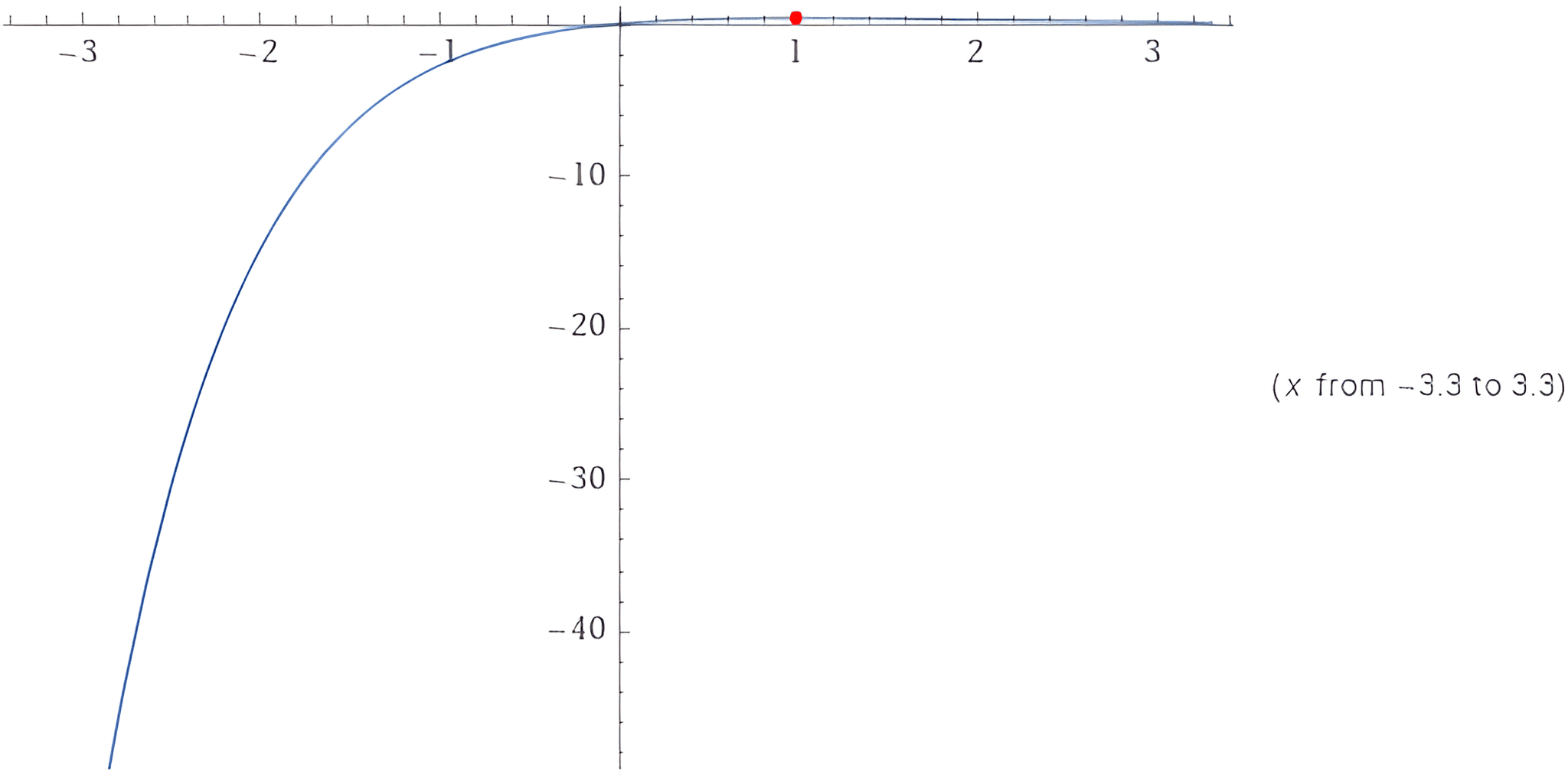
Solution by Steps
step 1
To explain the shape of the graph of c(t)=te−t, consider the component functions y=t and y=e−t
step 2
The graph of y=t is a straight line passing through the origin with a slope of 1
step 3
The graph of y=e−t is an exponential decay function, with a y-intercept at (0,1) and approaching the t-axis as an asymptote as t goes to infinity
step 4
The graph of c(t) will have a y-intercept at (0,0) since c(0)=0⋅e0=0
step 5
The graph of c(t) will have no x-intercepts other than the origin, as c(t) is never zero for t > 0
step 6
The graph of c(t) will approach the t-axis as an asymptote as t goes to infinity, similar to y=e−t
step 7
The maximum value of c(t) occurs at t=1, which can be found by setting the derivative equal to zero and solving for t
[question d] Answer
The function c(t)=te−t would not be suitable for modelling the concentration of a safe and effective drug because it approaches zero as t approaches infinity, implying that the drug would eventually have no effect. Additionally, the concentration increases initially and then decreases, which may not be desirable for maintaining a therapeutic level.
Key Concept
Model suitability based on function behavior
Explanation
A suitable drug concentration model should maintain a therapeutic level over time, not decrease to zero.
step 1
To find the new rule after dilation by a factor of 3 from the t-axis, multiply the original function c(t) by 3
step 2
The new function is c3(t)=3te−t
[question ei] Answer
The new rule after dilation is c3(t)=3te−t.
Key Concept
Dilation of functions
Explanation
Multiplying a function by a constant factor dilates the graph vertically by that factor.
step 1
To determine if c3(t)=3te−t is suitable for modelling the concentration of an effective drug, consider the behavior of the function
step 2
The function c3(t) has a maximum value greater than that of c(t), which may allow for a higher initial concentration
step 3
However, like c(t), c3(t) also approaches zero as t approaches infinity, which may not be ideal for maintaining a therapeutic level over time
[question eii] Answer
The function c3(t)=3te−t may not be suitable for modelling the concentration of an effective drug as it still approaches zero over time.
Key Concept
Long-term behavior of drug concentration models
Explanation
A model that approaches zero may not maintain the necessary therapeutic level over time.
step 1
To determine the range of values for k where k∈Z+ such that ck(t)=kte−t is suitable for modelling drug concentration, consider the maximum value and long-term behavior
step 2
The function must have a sufficient maximum value to reach therapeutic levels but should not approach zero too quickly
step 3
Since the maximum value of c(t) is 1/e and ck(t) is k/e, k must be chosen to ensure the maximum value is within the desired therapeutic range
[question eiii] Answer
The range of values for k must be chosen such that the maximum value of ck(t) is within the therapeutic range and does not approach zero too quickly.
Key Concept
Therapeutic range and maximum value
Explanation
The maximum value of the drug concentration model should be within the therapeutic range for effectiveness.
step 1
Choosing the minimum suitable value of k is advisable to avoid excessive concentration, which could lead to toxicity
[question eiv] Answer
It is advisable to choose the minimum suitable value of k to avoid potential toxicity.
Key Concept
Minimizing risk of toxicity
Explanation
A lower value of k reduces the risk of the drug concentration becoming too high.
step 1
To choose a suitable value of k, consider the therapeutic range and the maximum value of ck(t)
step 2
Sketch the graph of ck(t) based on the chosen value of k and compare the maximum value to that of c(t)
step 3
Ensure that the graph of ck(t) has a maximum value within the therapeutic range and does not approach zero too quickly
[question ev] Answer
A suitable value of k should be chosen based on the therapeutic range, and the graph of ck(t) should be sketched to compare the maximum values.
Key Concept
Choosing k based on therapeutic range
Explanation
The value of k determines the maximum concentration and should be chosen to ensure effectiveness without risking toxicity.
Solve question fi,fii,g,hi,hii,

Solution by Steps
step 1
To construct a suitable rule cm(t) for the dilation factor m from the y-axis, we need to multiply the function f(t) by m
step 2
The rule for cm(t) is cm(t)=m⋅f(t)
step 3
To find the minimum suitable integer value of m, we need to ensure that the maximum concentration is less than 3mg/litre and the concentration is greater than 1mg/litre for at least 6 hours
step 4
Without the specific function f(t), we cannot calculate the exact value of m. However, we can say that m must be chosen such that the conditions are met
[fi] Answer
The rule is cm(t)=m⋅f(t), and the minimum suitable integer value of m depends on the specific function f(t).
Key Concept
Dilation from the y-axis
Explanation
The rule cm(t) represents the concentration of the drug after dilation, and m must be chosen to satisfy the given conditions for drug effectiveness.
Solution by Steps
step 1
Choose an appropriate integer value of m based on the conditions given for the drug to be effective
step 2
Sketch the graph of cm(t) on a suitable domain, ensuring that the maximum concentration occurs within 1−6 hours and does not exceed 3mg/litre
step 3
Identify all key features of the graph, including the maximum point, the duration where the concentration is above 1mg/litre, and any intercepts with the axes
[fii] Answer
The appropriate integer value of m and the sketch of cm(t) depend on the specific function f(t) and must meet the conditions for drug effectiveness.
Key Concept
Graphing and Conditions for Effectiveness
Explanation
The graph of cm(t) must be sketched to visually confirm that the chosen value of m results in a model that satisfies all the required conditions for an effective drug.
Solution by Steps
step 1
To determine suitable values for m and k, we need to consider the conditions for the drug to be effective
step 2
The value of m affects the y-axis dilation, and k affects the x-axis dilation
step 3
Choose m and k such that the maximum concentration is less than 3mg/litre, the concentration is greater than 1mg/litre for at least 6 hours, and the maximum concentration occurs within 1−6 hours
step 4
Without the specific function f(t), we cannot provide exact values for m and k. However, we can state that they must be chosen to satisfy the given conditions
[g] Answer
Suitable values for m and k depend on the specific function f(t) and must be chosen to satisfy the conditions for drug effectiveness.
Key Concept
Choosing Dilation Factors
Explanation
The values of m and k must be chosen to ensure that the model of the drug concentration meets the effectiveness criteria.
Solution by Steps
step 1
State the rule for cm(t) using the chosen values of m and k
step 2
The rule is cm(t)=m⋅f(kt)
[hi] Answer
The rule for the chosen values of m and k is cm(t)=m⋅f(kt).
Key Concept
Rule for Dilation
Explanation
The rule cm(t) incorporates both the dilation from the y-axis by m and the dilation from the x-axis by k.
Solution by Steps
step 1
Provide graphical and/or algebraic evidence that the model satisfies the conditions for an effective drug
step 2
Graphically, ensure that the graph of cm(t) shows the concentration above 1mg/litre for at least 6 hours, below 3mg/litre, and the maximum within 1−6 hours
step 3
Algebraically, demonstrate that for the domain of t where the drug is effective, the inequalities 1 < c_m(t) < 3 hold true
step 4
Without the specific function f(t), we cannot provide the exact graphical or algebraic evidence. However, the evidence must show that all conditions are met
[hii] Answer
Graphical and algebraic evidence must confirm that the model meets the conditions for an effective drug, but specific evidence depends on the function f(t).
Key Concept
Evidence of Effectiveness
Explanation
The model must be supported by evidence, either graphical or algebraic, that demonstrates the drug concentration remains within the effective range for the required duration.
© 2023 AskSia.AI all rights reserved