
AskSia
Plus

\begin{tabular}{|c|c|c|c|c|c|c|}
\hline & 1 & 2 & 3 & 4 & 5 & 6 \\
\hline 1 & $...
Nov 1, 2024



Generated Graph
Solution by Steps
step 1
Identify the outcomes when rolling two dice. There are a total of 36 outcomes, as each die has 6 faces
step 2
Count the winning outcomes: You win $12 for rolling a double. The doubles are (1,1), (2,2), (3,3), (4,4), (5,5), (6,6), totaling 6 outcomes
step 3
Count the losing outcomes: You lose $6 if the sum is 7. The combinations that yield a sum of 7 are (1,6), (2,5), (3,4), (4,3), (5,2), (6,1), totaling 6 outcomes
step 4
Calculate the remaining outcomes: The total outcomes are 36, and the outcomes that are either a double or sum to 7 are 12 (6 doubles + 6 sums of 7). Thus, the remaining outcomes are 36 - 12 = 24
step 5
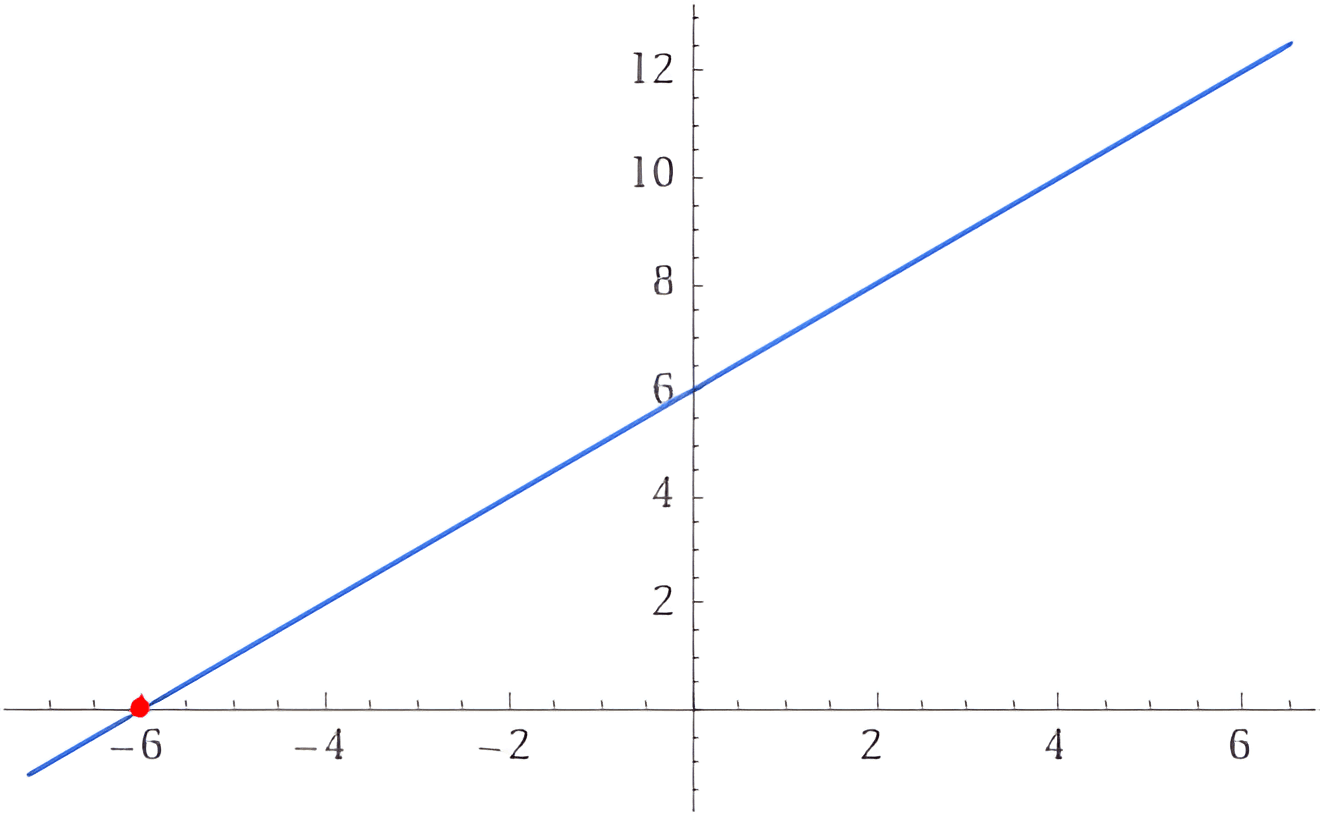
Let x be the amount you win or lose for the remaining outcomes. To make the game fair, the expected value must equal zero: 366⋅12+6⋅(−6)+24⋅x=0
step 6
Simplifying the equation: 72−36+24x=0 leads to 36+24x=0
step 7
Solving for x: 24x=−36 gives x=−2436=−23=−1.5
Answer
You should lose $1.50 if the sum is not 7 and the roll is not a double for the game to be fair.
Key Concept
Expected value in probability helps determine fair outcomes in games.
Explanation
The expected value calculation ensures that the game is balanced, meaning the average outcome over time will be zero, making it fair for both players.

Generated Graph
Solution by Steps
step 1
Let P(C) be the probability of having cancer, which is given as P(C)=0.02 (2% of 1000 adults)
step 2
Let P(T|C) be the probability of testing positive given that the person has cancer, which is P(T∣C)=0.98
step 3
Let P(T|C') be the probability of testing positive given that the person does not have cancer, which is P(T∣C′)=0.01
step 4
The probability of not having cancer is P(C′)=1−P(C)=0.98
step 5
We can use Bayes' theorem to find P(C∣T):
P(C∣T)=P(T)P(T∣C)⋅P(C)
where P(T)=P(T∣C)⋅P(C)+P(T∣C′)⋅P(C′)
step 6
Calculate P(T):
P(T)=(0.98⋅0.02)+(0.01⋅0.98)=0.0196+0.0098=0.0294
step 7
Now substitute back into Bayes' theorem:
P(C∣T)=0.02940.98⋅0.02≈0.667
Answer
The probability that a randomly chosen person has cancer given that the test indicates cancer is approximately 0.667 or 66.7%.
Key Concept
Bayes' theorem is used to find conditional probabilities based on prior knowledge.
Explanation
The answer shows how to calculate the probability of having cancer given a positive test result, taking into account the accuracy of the test and the prevalence of the disease.
© 2023 AskSia.AI all rights reserved