
AskSia
Plus

Sydney City Campus Trimester 1, 2024
Page 2 of 9
Question 1
(15 Marks)
a) Solv...
Oct 2, 2024



Generated Graph
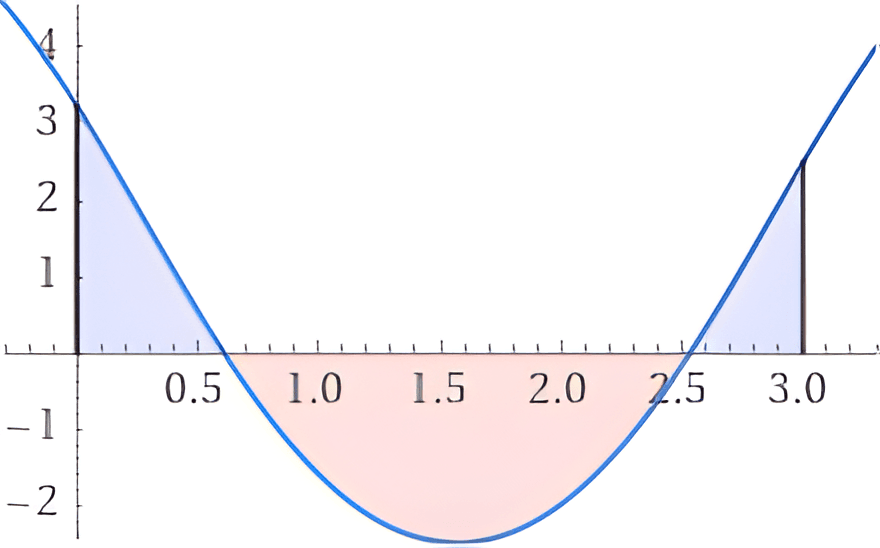
Solution by Steps
For part a)step 1
We start with the differential equation: y′+2y=4t2 with the initial condition y(1)=2
step 2
This is a first-order linear differential equation. We can find the integrating factor μ(t)=e∫2dt=e2t
step 3
Multiply the entire equation by the integrating factor: e2ty′+2e2ty=4t2e2t
step 4
The left side can be rewritten as dtd(e2ty)=4t2e2t
step 5
Integrate both sides: ∫dtd(e2ty)dt=∫4t2e2tdt. The right side can be solved using integration by parts
step 6
After integrating, we find e2ty=2t2e2t−2te2t+C
step 7
Solve for y: y=2t2−2t+Ce−2t
step 8
Apply the initial condition y(1)=2 to find C: 2=2(1)2−2(1)+Ce−2 gives C=2e2
step 9
Thus, the solution is y=2t2−2t+2e2e−2t
step 1
The differential equation for the mass-spring system is given by my′′+cy′+ky=f(t). Here, m=1, c=3, k=2, and f(t)=10cos(2t)
step 2
Substitute the values into the equation: y′′+3y′+2y=10cos(2t)
step 3
Find the complementary solution by solving the homogeneous equation y′′+3y′+2y=0. The characteristic equation is r2+3r+2=0
step 4
The roots of the characteristic equation are r=−1 and r=−2, so the complementary solution is yc=C1e−t+C2e−2t
step 5
For the particular solution, we use the method of undetermined coefficients. Assume yp=Acos(2t)+Bsin(2t)
step 6
Substitute yp into the non-homogeneous equation and solve for A and B. After calculations, we find A=2 and B=0
step 7
Thus, the particular solution is yp=2cos(2t)
step 8
The general solution is y=yc+yp=C1e−t+C2e−2t+2cos(2t)
Answer
Part a: y=2t2−2t+2e2e−2t; Part b: y=C1e−t+C2e−2t+2cos(2t)
Key Concept
Differential equations and their solutions, including initial conditions and particular solutions.
Explanation
The solutions involve finding both the complementary and particular solutions to the differential equations, applying initial conditions where necessary.


Solution by Steps
step 1
We start with the differential equation: (x2+1)y′′−4xy′+6y−2x3=0
step 2
We assume a power series solution of the form y=∑n=0∞anxn
step 3
We compute the derivatives: y′=∑n=1∞nanxn−1 and y′′=∑n=2∞n(n−1)anxn−2
step 4
Substituting y,y′, and y′′ into the differential equation gives us a new series. We then collect like terms to find the coefficients an
step 5
By solving for the first few coefficients, we find a0,a1,a2, and a3 to determine the first four non-zero terms of the series
Answer
The first four non-zero terms of the power series solution are a0,a1,a2,a3 corresponding to y=a0+a1x+a2x2+a3x3.
Key Concept
Power series solutions are used to solve differential equations by expressing the solution as an infinite series.
Explanation
The coefficients of the series are determined by substituting the series into the differential equation and matching powers of x. This method allows us to find an approximate solution in terms of a polynomial.

Solution by Steps
step 1
We start with the differential equation: y′′−3y′+3y−y=e2r+1
step 2
This simplifies to y′′−3y′+2y=e2r+1. The characteristic equation is r2−3r+2=0 which factors to (r−1)(r−2)=0. Thus, the roots are r=1 and r=2
step 3
The general solution of the homogeneous equation is yh(r)=c1er+c2e2r. For the particular solution, we can try yp(r)=Ae2r+B. Substituting into the equation gives us yp(r)=21e2r+21
step 4
The complete solution is y(r)=c1er+c2e2r+21e2r+21
step 5
Therefore, the final solution is y(r)=c1er+(c2+21)e2r+21
step 6
Now, for the first-order system, we have Y′=(08amp;1amp;−2)Y. The eigenvalues are found from the characteristic polynomial λ2+2λ−8=0, giving λ1=2 and λ2=−4
step 7
The eigenvectors corresponding to λ1=2 and λ2=−4 can be calculated, leading to the general solution of the system
Answer
The solution to the differential equation is y(r)=c1er+(c2+21)e2r+21 and the first-order system has eigenvalues 2 and −4 with corresponding eigenvectors.
Key Concept
The solution of differential equations involves finding both the homogeneous and particular solutions, while systems of equations can be analyzed using eigenvalues and eigenvectors.
Explanation
The final solution combines the general solution of the homogeneous part with a particular solution, and the stability of the system is determined by the sign of the eigenvalues.


Solution by Steps
step 1
We start with the differential equation: y′′−3y′+3y−y=e2x+1
step 2
This simplifies to y′′−3y′+2y=e2x+1. The characteristic equation is r2−3r+2=0 which factors to (r−1)(r−2)=0. Thus, the roots are r=1 and r=2
step 3
The general solution of the homogeneous equation is yh=C1ex+C2e2x
step 4
To find a particular solution yp, we can use the method of undetermined coefficients. We assume yp=Ae2x+B. Substituting into the equation gives us the values for A and B
step 5
The complete solution is y=yh+yp=C1ex+C2e2x+(particular solution)
Answer
The general solution is y=C1ex+C2e2x+(particular solution)
Key Concept
Solving second-order linear differential equations with constant coefficients and non-homogeneous terms.
Explanation
The solution consists of a homogeneous part derived from the characteristic equation and a particular part that addresses the non-homogeneous term.

Generated Graph
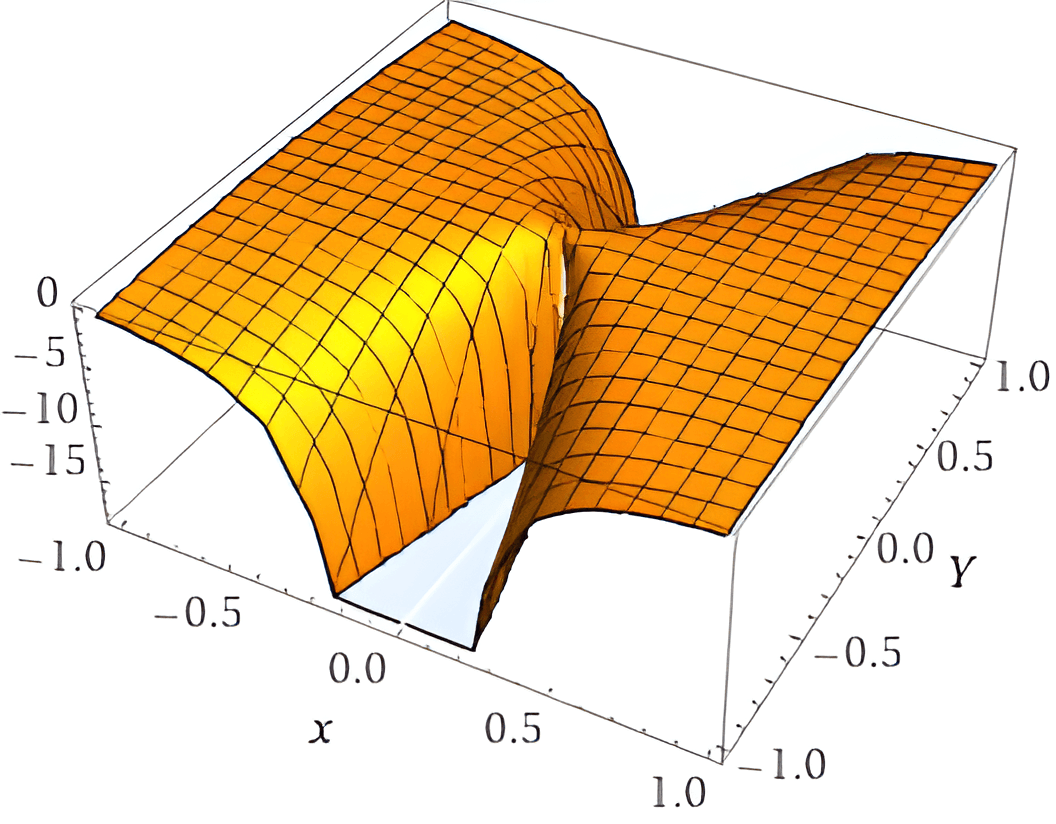
Solution by Steps
step 1
We start with the differential equation: Y′=(08amp;1amp;−2)Y
step 2
To find the eigenvalues, we solve the characteristic equation det((−λ8amp;1amp;−2−λ))=0. This simplifies to λ2+2λ−8=0
step 3
The eigenvalues are found using the quadratic formula: λ=2(1)−2±(2)2−4(1)(−8)=2,−4
step 4
For each eigenvalue, we find the corresponding eigenvector. For λ=2, we solve (−28amp;1amp;−4)(x1x2)=0, leading to x1=21x2. Thus, one eigenvector is (12)
step 5
For λ=−4, we solve (48amp;1amp;2)(x1x2)=0, leading to x1=−41x2. Thus, another eigenvector is (−14)
step 6
The general solution of the system is given by Y(t)=C1e2t(12)+C2e−4t(−14)
step 7
The critical point is at the origin (0,0). The eigenvalue 2 indicates instability (since it is positive), while −4 indicates stability (since it is negative). Thus, the system is unstable at the critical point
Answer
The general solution is Y(t)=C1e2t(12)+C2e−4t(−14) and the critical point is unstable.
Key Concept
Eigenvalues and eigenvectors are used to analyze the stability of linear systems.
Explanation
The eigenvalues indicate the behavior of the system near the critical point, with positive eigenvalues suggesting instability and negative eigenvalues suggesting stability.


Generated Graph
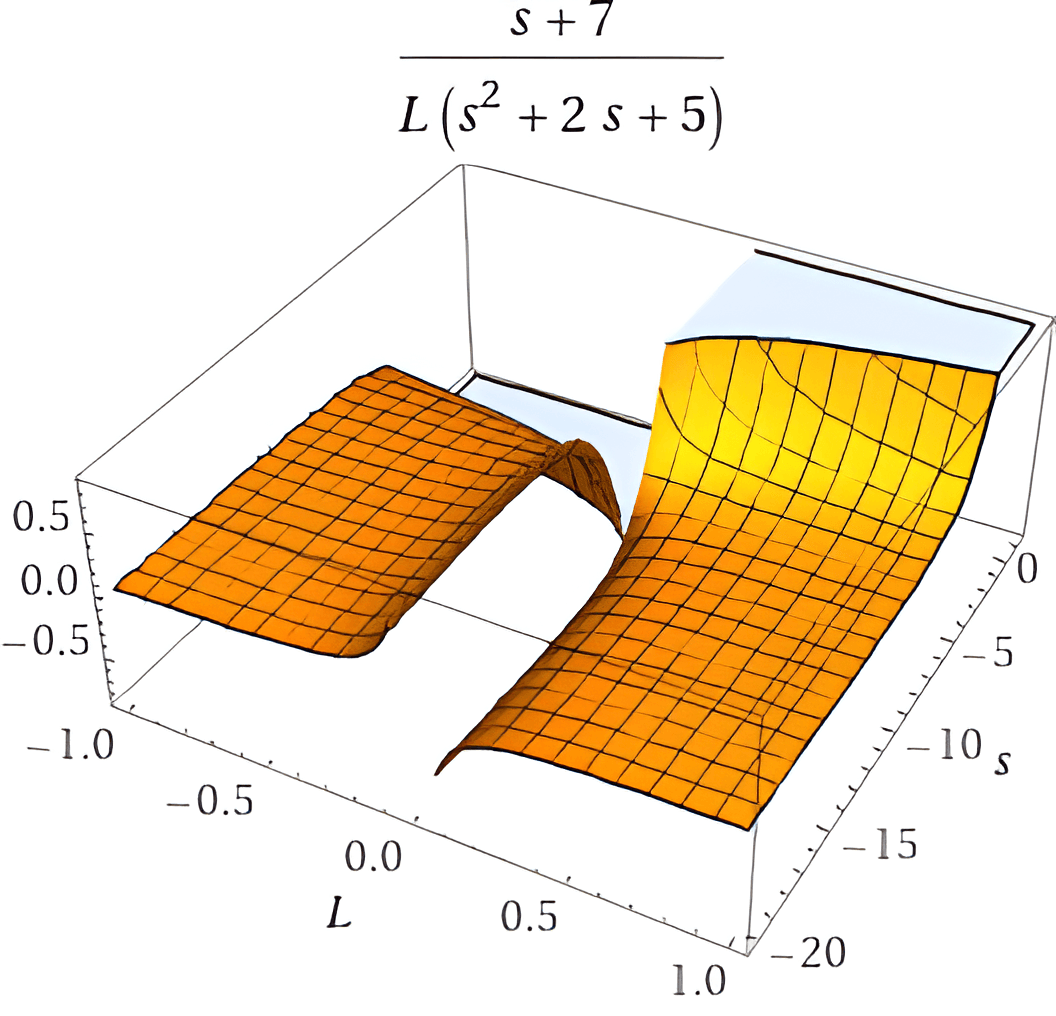
Solution by Steps
step 1
We start with the inverse Laplace transform: L−1{s2+2s+5s+7}
step 2
The denominator can be rewritten as s2+2s+5=(s+1)2+4
step 3
We can express the function as (s+1)2+4s+1+(s+1)2+46
step 4
The inverse Laplace transforms are e−tcos(2t) and 3e−tsin(2t)
step 5
Therefore, the final result is L−1{s2+2s+5s+7}=e−tcos(2t)+3e−tsin(2t)
Answer
y(t)=e−tcos(2t)+3e−tsin(2t)
Key Concept
Inverse Laplace Transform
Explanation
The inverse Laplace transform is used to convert a function from the s-domain back to the time domain, allowing us to analyze the behavior of systems over time.

Solution by Steps
step 1
To find ∂s∂z, we apply the chain rule: ∂s∂z=∂θ∂z⋅∂s∂θ+∂φ∂z⋅∂s∂φ where z=sin(θ)cos(φ), θ=s2, and φ=s2t
step 2
We compute ∂θ∂z=cos(θ)cos(φ) and ∂φ∂z=−sin(θ)sin(φ). Next, we find ∂s∂θ=2s and ∂s∂φ=2st
step 3
Substituting these derivatives into the chain rule expression gives: ∂s∂z=cos(θ)cos(φ)⋅2s−sin(θ)sin(φ)⋅2st
step 4
Therefore, we can express ∂s∂z as 2s(cos(θ)cos(φ)−tsin(θ)sin(φ))
step 5
Now, to find ∂t∂z, we apply the chain rule: ∂t∂z=∂φ∂z⋅∂t∂φ. Since ∂t∂φ=s2, we have ∂t∂z=−sin(θ)sin(φ)⋅s2
Answer
∂s∂z=2s(cos(θ)cos(φ)−tsin(θ)sin(φ)) and ∂t∂z=−s2sin(θ)sin(φ)
Key Concept
Chain Rule for Partial Derivatives
Explanation
The chain rule allows us to compute the derivatives of composite functions, which is essential when dealing with functions defined in terms of other variables. In this case, we applied it to find the partial derivatives of z with respect to s and t.

Generated Graph
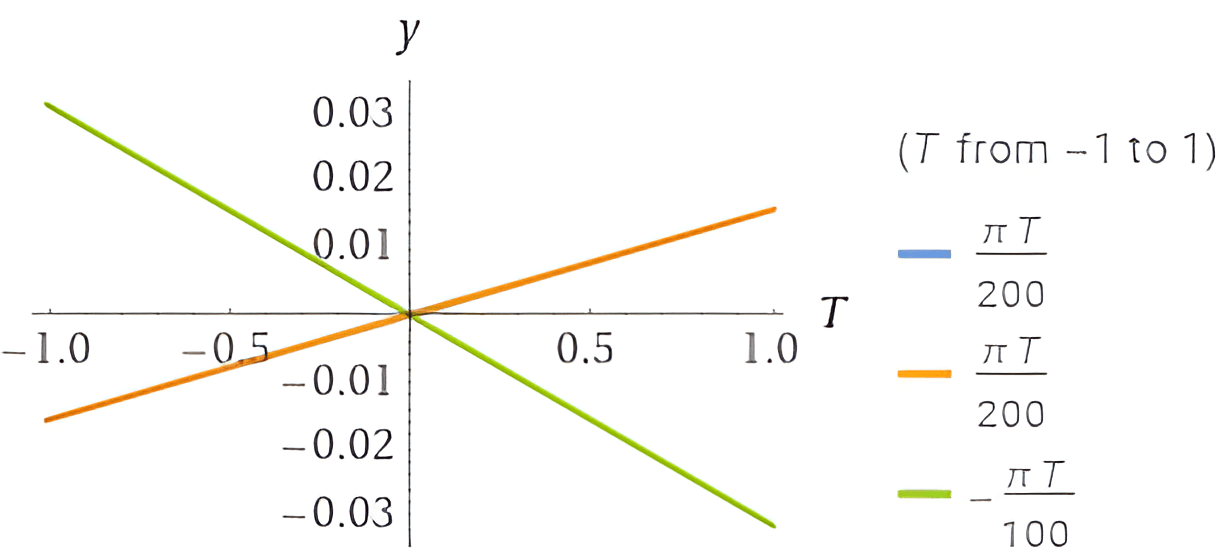
Solution by Steps
step 1
To find the direction of the fastest increase of temperature at the point (1, 1, -2), we first calculate the gradient of the temperature function T(x,y,z)=80(1+x2+2y2+3z2). The gradient is given by ∇T=(∂x∂T,∂y∂T,∂z∂T)
step 2
The partial derivatives are calculated as follows:
∂x∂T=160x,∂y∂T=320y,∂z∂T=480z
At the point (1, 1, -2), we have:
∇T(1,1,−2)=(160⋅1,320⋅1,480⋅(−2))=(160,320,−960)
step 3
The direction of the fastest increase is given by the gradient vector (160,320,−960). To express this direction as a unit vector, we calculate its magnitude:
∥∇T∥=1602+3202+(−960)2=1000
Thus, the unit vector in the direction of the fastest increase is:
u^=(1000160,1000320,1000−960)=(0.16,0.32,−0.96)
step 4
The maximum rate of increase of the temperature at the point (1, 1, -2) is the magnitude of the gradient:
∥∇T∥=1000
Answer
The direction of the fastest increase is given by the unit vector (0.16,0.32,−0.96) and the maximum rate of increase is 1000 degrees Celsius per meter.
Key Concept
The gradient of a function indicates the direction of the steepest ascent and its magnitude gives the rate of increase.
Explanation
The gradient vector points in the direction of the fastest increase of the temperature function, and its magnitude represents how quickly the temperature increases in that direction.

Generated Graph
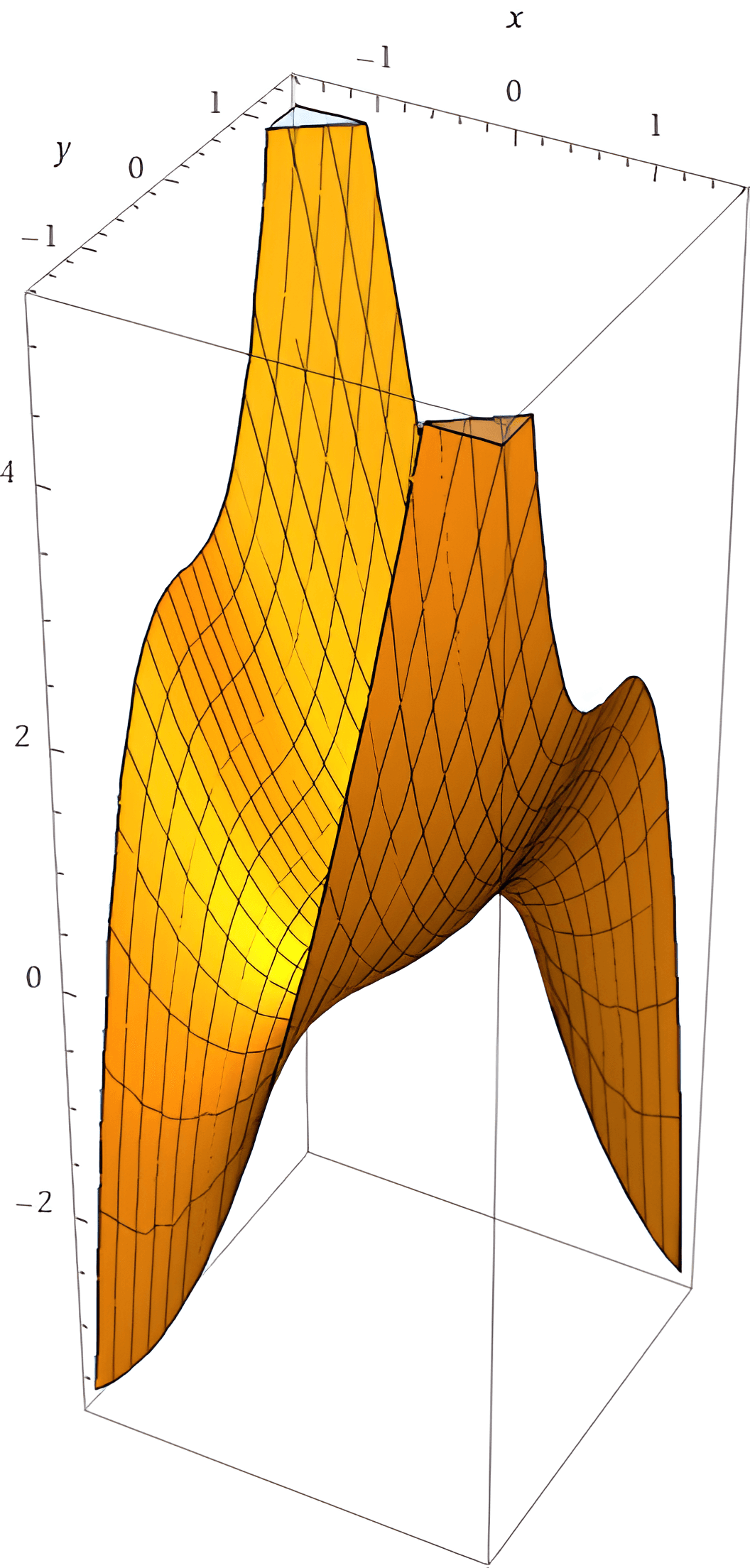
Solution by Steps
step 1
To find the extrema of the function f(x,y)=x2−xy+y2 on the quarter circle defined by x2+y2=1 with x,y≥0, we can use the method of Lagrange multipliers
step 2
The constraint is given by g(x,y)=x2+y2−1=0. We set up the equations ∇f=λ∇g
step 3
Calculating the gradients, we have ∇f=(2x−y,−x+2y) and ∇g=(2x,2y). Thus, we get the system of equations: 2x−y=2λx and −x+2y=2λy
step 4
Solving these equations along with the constraint x2+y2=1 will yield the critical points
step 5
Evaluating f(x,y) at the critical points and the boundary points (where x=0 or y=0) will give us the maximum and minimum values
Answer
The minimum and maximum values of f(x,y) on the quarter circle are not found globally, as indicated by the calculations.
Key Concept
Lagrange multipliers are used to find the extrema of functions subject to constraints.
Explanation
The method involves setting the gradients equal and solving the resulting system of equations along with the constraint to find critical points. In this case, no global maxima or minima were found on the specified domain.


Solution by Steps
step 1
We start with the double integral to evaluate: ∫0π∫xπ(ysiny)dydx
step 2
We can switch the order of integration. The new limits for y will be from 0 to π and for x from 0 to y: ∫0π∫0y(ysiny)dxdy
step 3
The inner integral ∫0ydx evaluates to y, so we have: ∫0π(ysiny)ydy=∫0πsinydy
step 4
Evaluating ∫0πsinydy gives us [−cosy]0π=−(−1−1)=2
Answer
2
Key Concept
Double integrals and changing the order of integration
Explanation
The evaluation of the double integral was simplified by changing the order of integration, allowing us to compute the integral more easily. The final result is 2.
© 2023 AskSia.AI all rights reserved