
AskSia
Plus

Solve question 1-9
Chapter 16 Hypothesis testing for the mean: Assignment
Name Q...
Jun 17, 2024

Solve question 1-9


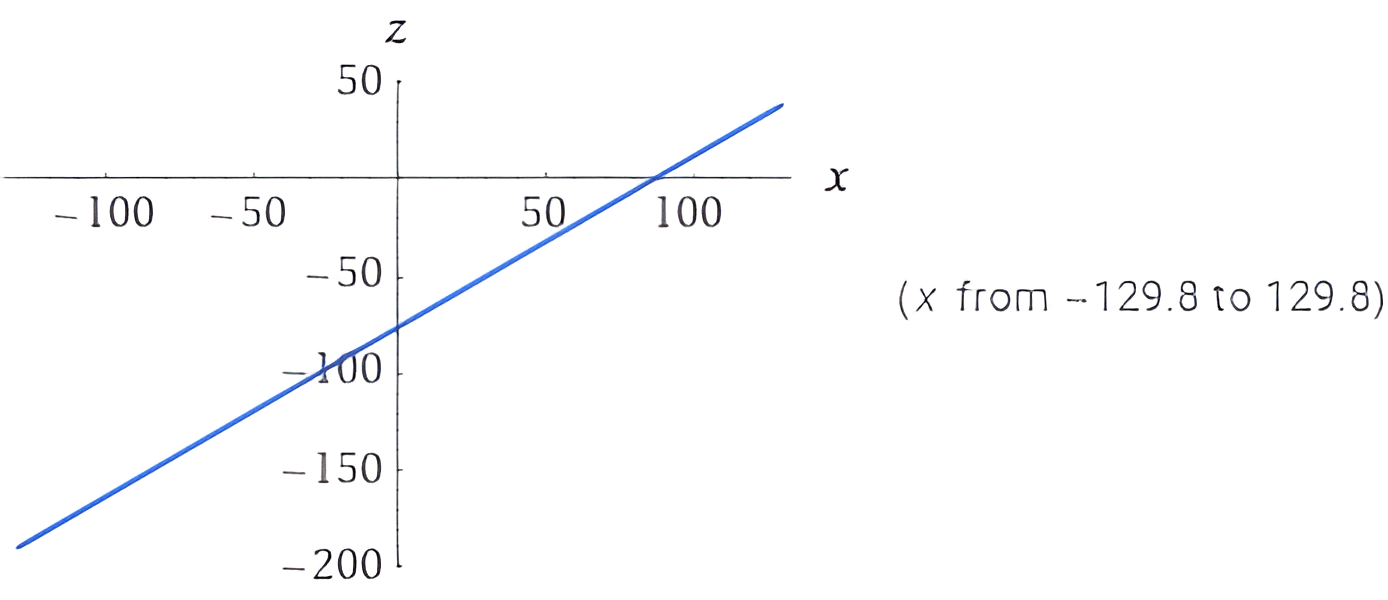
Generated Graph
Solution by Steps
step 1
To find the 90% confidence interval for the mean, we use the formula for the confidence interval: xˉ±zα/2(ns)
step 2
For a 90% confidence interval, zα/2=1.645
step 3
Calculate the margin of error: 1.645(487.9)=1.876
step 4
Compute the confidence interval: 86.5±1.876=(84.624,88.376)
step 1
For a 95% confidence interval, zα/2=1.96
step 2
Calculate the margin of error: 1.96(487.9)=2.234
step 3
Compute the confidence interval: 86.5±2.234=(84.266,88.734)
step 1
For a 99% confidence interval, zα/2=2.576
step 2
Calculate the margin of error: 2.576(487.9)=2.937
step 3
Compute the confidence interval: 86.5±2.937=(83.563,89.437)
Answer
(a) (84.624, 88.376)
(b) (84.266, 88.734)
(c) (83.563, 89.437)
Key Concept
Confidence Interval Calculation
Explanation
The confidence interval is calculated using the sample mean, standard deviation, and the z-value corresponding to the desired confidence level.
step 1
To find the 98% confidence interval for the mean, we use the formula for the confidence interval: xˉ±zα/2(ns)
step 2
For a 98% confidence interval, zα/2=2.33
step 3
Calculate the margin of error: 2.33(3812)=4.53
step 4
Compute the confidence interval: 68±4.53=(63.47,72.53)
Answer
(63.47, 72.53)
Key Concept
Confidence Interval Calculation
Explanation
The confidence interval is calculated using the sample mean, standard deviation, and the z-value corresponding to the desired confidence level.
step 1
To find the 95% confidence interval for the mean, we use the formula for the confidence interval: xˉ±zα/2(ns)
step 2
For a 95% confidence interval, zα/2=1.96
step 3
Calculate the margin of error: 1.96(6114)=3.51
step 4
Compute the confidence interval: 48±3.51=(44.49,51.51)
step 1
To find the required sample size, we use the formula: n=(Ezα/2⋅s)2
step 2
For a 95% confidence interval, zα/2=1.96
step 3
Calculate the sample size: n=(51.96⋅14)2=30.75≈31
Answer
(a) (44.49, 51.51)
(b) 31
Key Concept
Confidence Interval and Sample Size Calculation
Explanation
The confidence interval is calculated using the sample mean, standard deviation, and the z-value corresponding to the desired confidence level. The sample size is calculated to achieve a specified margin of error.
step 1
To find the 99% confidence interval for the mean, we use the formula for the confidence interval: xˉ±zα/2(ns)
step 2
For a 99% confidence interval, zα/2=2.576
step 3
Calculate the margin of error: 2.576(3010)=4.71
step 4
Compute the confidence interval: 58±4.71=(53.29,62.71)
step 1
For a 95% confidence interval, zα/2=1.96
step 2
Calculate the margin of error: 1.96(3010)=3.58
step 3
Compute the confidence interval: 58±3.58=(54.42,61.58)
step 1
For a 90% confidence interval, zα/2=1.645
step 2
Calculate the margin of error: 1.645(3010)=3.00
step 3
Compute the confidence interval: 58±3.00=(55.00,61.00)
Answer
(a) (53.29, 62.71)
(b) (54.42, 61.58)
(c) (55.00, 61.00)
Key Concept
Confidence Interval Calculation
Explanation
The confidence interval is calculated using the sample mean, standard deviation, and the z-value corresponding to the desired confidence level.
step 1
To find the 99% confidence interval for the mean, we use the formula for the confidence interval: xˉ±zα/2(ns)
step 2
For a 99% confidence interval, zα/2=2.576
step 3
Calculate the margin of error: 2.576(475.7)=2.14
step 4
Compute the confidence interval: 14.6±2.14=(12.46,16.74)
step 1
To find the required sample size, we use the formula: n=(Ezα/2⋅s)2
step 2
For a 99% confidence interval, zα/2=2.576
step 3
Calculate the sample size: n=(12.576⋅5.7)2=215.4≈216
Answer
(a) (12.46, 16.74)
(b) 216
Key Concept
Confidence Interval and Sample Size Calculation
Explanation
The confidence interval is calculated using the sample mean, standard deviation, and the z-value corresponding to the desired confidence level. The sample size is calculated to achieve a specified margin of error.
step 1
The null hypothesis is H0:μ=100 and the alternative hypothesis is H1:μ=100
step 2
The p-value is 0.0419, which is less than the significance level α=0.05
step 3
Since the p-value is less than α, we reject the null hypothesis
Answer
Reject the null hypothesis
Key Concept
Hypothesis Testing
Explanation
If the p-value is less than the significance level, we reject the null hypothesis.
step 1
The null hypothesis is H0:μ=12 and the alternative hypothesis is H_1: \mu < 12
step 2
The p-value is 0.035, which is less than the significance level α=0.05
step 3
Since the p-value is less than α, we reject the null hypothesis
step 1
For a two-tailed test, the p-value is doubled: 2×0.035=0.07
step 2
The p-value for the two-tailed test is 0.07, which is greater than the significance level α=0.05
step 3
Since the p-value is greater than α, we fail to reject the null hypothesis
Answer
(a) Reject the null hypothesis
(b) Fail to reject the null hypothesis
Key Concept
Hypothesis Testing
Explanation
If the p-value is less than the significance level, we reject the null hypothesis. For a two-tailed test, the p-value is doubled.
step 1
The null hypothesis is H0:μ=5 and the alternative hypothesis is H_1: \mu > 5
step 1
The dot plot shows the distribution of sample means under the null hypothesis
step 2
The observed sample mean is 5.2, which is greater than the null hypothesis mean of 5
step 3
The p-value is the proportion of sample means greater than or equal to 5.2
step 4
From the dot plot, the p-value is approximately 0.03
step 1
The p-value of 0.03 indicates moderate evidence against the null hypothesis
step 1
Since the p-value is less than the significance level α=0.05, we reject the null hypothesis
Answer
(a) H0:μ=5, H_1: \mu > 5
(b) p-value ≈ 0.03
(c) Moderate evidence against the null hypothesis
(d) Reject the null hypothesis
Key Concept
Hypothesis Testing and p-value Interpretation
Explanation
The p-value is the probability of observing the sample mean under the null hypothesis. If the p-value is less than the significance level, we reject the null hypothesis.
step 1
The null hypothesis is H0:μ=60 and the alternative hypothesis is H1:μ=60
step 2
The p-value is 0.0339, which is less than the significance level α=0.05
step 3
Since the p-value is less than α, we reject the null hypothesis
step 4
The p-value is 0.0339, which is greater than the significance level α=0.01
step 5
Since the p-value is greater than α, we fail to reject the null hypothesis
step 1
If the sample size is reduced to 25, the standard error increases, leading to a higher p-value
step 2
With a higher p-value, the likelihood of rejecting the null hypothesis decreases
Answer
(a) (i) Reject the null hypothesis (ii) Fail to reject the null hypothesis
(b) (i) Higher p-value (ii) Likely to fail to reject the null hypothesis
Key Concept
Hypothesis Testing and Sample Size Effect
Explanation
The p-value is the probability of observing the sample mean under the null hypothesis. A larger sample size results in a smaller standard error and a lower p-value.
© 2023 AskSia.AI all rights reserved