
AskSia
Plus

STOP!!!!! Make sure your scientific calculator is set to RAD mode
Check that yo...
Apr 26, 2024

STOP!!!!! Make sure your scientific calculator is set to RAD mode
Check that you have all FIVE pages of the assignment. Answer all questions in the spaces provided.
A Communication mark out of 3 will be assigned throughout the assignment. “Look-Fors”: proper
mathematical notation and terminology used, therefore statements, formulas, neat diagrams, complete
and clear solutions, showing ALL steps.
KNOWLEDGE/UNDERSTANDING [8 marks]
1. a) On the set of axes to the right, draw the angle θ=ଶగ
ଷ
in standard position. [1 mark]
b) Determine an exact value for α, the acute reference angle. [1 mark]
c) Determine the exact values (no decimals) of the six trigonometric ratios for the angle θ=ଶగ
ଷ
. Show all
work! [6 marks]
THINKING/INQUIRY [7 marks]
1. Prove the following trigonometric identities. Show all steps!!! [7 marks total]
a. −1 =
ୡ୭ୱ(
ഏ
మ
ା୶)ୱୣୡ(ି୶)୲ୟ୬(గି୶)
ୱୣୡ(ଶగା୶)ୱ୧୬(గା୶)ୡ୭୲(
ഏ
మ
ି୶)
[3 marks]
b.
ଵିୡ୭ୱଶ୶ାୱ୧୬ଶ
ଵା௦ଶ௫ା௦ଶ
= tanx [4 marks]
COMMUNICATION [6 marks]
1. How do trigonometric identities serve as powerful tools in simplifying complex expressions and
solving equations? Provide at least 2 examples to illustrate their significance in various mathematical
contexts. [3 marks]
OVERALL Comm / [3 marks]
“Look-Fors”: proper mathematical notation and terminology used, therefore statements, formulas, neat
diagrams, complete and clear solutions, showing ALL steps.
APPLICATION [8 marks]
1. Given sinx=ଷ
,
గ
ଶ
≤x≤π and cosy=
ହ
଼
,
ଷగ
ଶ
≤y≤2π find the exact value of sin(x+y). [5 marks]
(HINT: determining values for angles x and y is not necessary!)
2. Use an appropriate compound angle identity to determine an exact value for
cos
ଵଷగ
ଵ଼
cos
ହగ
ଽ
+ sin ଵଷ
ଵ଼
sin ହగ
ଽ
[3 marks]

Solution by Steps
step 1
To find the angle θ=35π in standard position, we plot it on the coordinate axes starting from the positive x-axis and moving counter-clockwise
step 2
The acute reference angle α is the angle between the terminal side of θ and the x-axis. Since θ is in the fourth quadrant, α=2π−θ
step 3
Calculating the acute reference angle: α=2π−35π=32π−35π=−33π=−π. However, since reference angles are always positive, we take α=π
step 4
The six trigonometric ratios for θ can be found using the reference angle α and the fact that θ is in the fourth quadrant
step 5
In the fourth quadrant, sine is negative, cosine and tangent are positive. Therefore, sin(θ)=−sin(α), cos(θ)=cos(α), and tan(θ)=−tan(α)
step 6
Using the reference triangle for α=π, the opposite side is 0, the adjacent side is 1, and the hypotenuse is 1. Thus, sin(α)=0/1=0, cos(α)=1/1=1, and tan(α)=0/1=0
step 7
The values for the other three trigonometric functions are reciprocals of sine, cosine, and tangent, respectively. Since sin(θ)=0, csc(θ) is undefined. For cos(θ)=1, sec(θ)=1. For tan(θ)=0, cot(θ) is undefined
Answer
sin(θ)=0, cos(θ)=1, tan(θ)=0, csc(θ) is undefined, sec(θ)=1, cot(θ) is undefined
Key Concept
Reference Angles and Trigonometric Ratios in Quadrants
Explanation
The reference angle is used to determine the trigonometric ratios of angles located in different quadrants. The sign of each ratio depends on the quadrant in which the terminal side of the angle lies.
Solution by Steps
step 1
To prove the trigonometric identity, we start by simplifying the left side of the equation
step 2
We apply the Pythagorean identity sin2(x)+cos2(x)=1 to the numerator of the left side
step 3
We recognize that sin2(x)=1−cos2(x) and substitute this into the numerator
step 4
Simplifying the numerator, we get −1=1−cos2(x)1−cos2(x)−cos2(x)
step 5
Further simplification of the numerator gives −1=1−cos2(x)1−2cos2(x)
step 6
We factor out −1 from the numerator to get −1=1−cos2(x)−1(2cos2(x)−1)
step 7
Recognizing that 2cos2(x)−1=cos(2x) and 1−cos2(x)=sin2(x), we substitute these into the equation
step 8
The equation simplifies to −1=sin2(x)−cos(2x)
step 9
We use the identity cos(2x)=2cos2(x)−1 to rewrite the numerator
step 10
The final simplification gives −1=sin2(x)−1, which is the right side of the equation
Answer
The identity is proven to be true.
Key Concept
Pythagorean and Double-Angle Identities
Explanation
By using the Pythagorean identity and recognizing the double-angle identity for cosine, we can simplify complex trigonometric expressions and prove identities.
Solution by Steps
step 1
To find the exact value of sin(x+y), we use the sine addition formula: sin(x+y)=sin(x)cos(y)+cos(x)sin(y)
step 2
Given sin(x)=53 and cos(y)=54, we need to determine the signs of sin(x) and cos(y) based on the given intervals for x and y
step 3
Since 2π≤x≤π, sin(x) is positive and cos(x) is negative in the second quadrant
step 4
Since 23π≤y≤2π, cos(y) is positive and sin(y) is negative in the fourth quadrant
step 5
We use the Pythagorean identity to find cos(x) and sin(y): cos(x)=−1−sin2(x) and sin(y)=−1−cos2(y)
step 6
Calculating cos(x) and sin(y): cos(x)=−1−(53)2=−54 and sin(y)=−1−(54)2=−53
step 7
Substituting the values into the sine addition formula: sin(x+y)=(53)(54)+(−54)(−53)
step 8
Simplifying the expression: sin(x+y)=2512+2512
step 9
Adding the fractions: sin(x+y)=2524
Answer
sin(x+y)=2524
Key Concept
Sine Addition Formula
Explanation
The sine addition formula allows us to find the sine of a sum of two angles using the sines and cosines of the individual angles.
Solution by Steps
step 1
To find the exact value of the expression, we use the cosine addition formula: cos(A+B)=cos(A)cos(B)−sin(A)sin(B)
step 2
The given expression matches the right side of the cosine addition formula with A=65π and B=67π
step 3
We apply the formula: cos(65π+67π)=cos(65π)cos(67π)−sin(65π)sin(67π)
step 4
Simplifying the angle: 65π+67π=612π=2π. Since cos(2π)=1, the left side of the formula is 1
step 5
The exact value of the expression is therefore equal to cos(2π)
Answer
The exact value of the expression is 1.
Key Concept
Cosine Addition Formula
Explanation
The cosine addition formula allows us to express the cosine of a sum of two angles in terms of the sines and cosines of the individual angles. In this case, it simplifies to the value of cosine at an angle of one full rotation.
NAME:
UNIT 4 ASSIGNMENT - MHF4U
STOP!!!!! Make sure your scientific calculator is set to RAD mode
Check that you have all FIVE pages of the assignment. Answer all questions in the spaces provided. A Communication mark out of 3 will be assigned throughout the assignment. "Look-Fors": proper mathematical nototion and terminology used, therefore statements, formulas, neat diagrams, complete and clear solutions, showing ALL steps.
KNOWLEDGE/UNDERSTANDING [8 marks]
1. a) On the set of axes to the right, draw the angle θ=32π in standard position. [1 mark]
b) Determine an exact value for α, the acute reference angle. [1 mark]
c) Determine the exact values (no decimals) of the six trigonometric ratios for the angle θ=32n. Show all work! [6 marks]
Solution by Steps
step 1
To draw the angle θ=32π in standard position, start from the positive x-axis and rotate counter-clockwise
step 2
The angle θ will be in the second quadrant since 32π is greater than 2π but less than π
step 3
Mark the terminal side of the angle θ in the second quadrant
Answer
The angle θ=32π is drawn in standard position with its terminal side in the second quadrant.
Key Concept
Drawing Angles in Standard Position
Explanation
Angles in standard position are drawn starting from the positive x-axis and rotating counter-clockwise for positive angles.
Solution by Steps
step 1
The reference angle α for θ=32π is the acute angle formed by the terminal side of θ and the x-axis
step 2
Since θ is in the second quadrant, α=π−θ
step 3
Calculate α by subtracting θ from π: α=π−32π=3π
Answer
The acute reference angle α for θ=32π is 3π.
Key Concept
Reference Angle
Explanation
The reference angle is the acute angle between the terminal side of an angle in standard position and the x-axis.
Solution by Steps
step 1
To find the trigonometric ratios for θ=32π, use the reference angle α=3π
step 2
The sine, cosine, and tangent functions for θ can be found using the corresponding ratios for α but with signs adjusted for the second quadrant
step 3
In the second quadrant, sine is positive and cosine and tangent are negative
step 4
sin(θ)=sin(32π)=sin(3π)=23
step 5
cos(θ)=cos(32π)=−cos(3π)=−21
step 6
tan(θ)=tan(32π)=−tan(3π)=−3
step 7
The reciprocal trigonometric functions are the reciprocals of the primary functions
step 8
csc(θ)=csc(32π)=sin(3π)1=2/3=323
step 9
sec(θ)=sec(32π)=cos(3π)1=−2
step 10
cot(θ)=cot(32π)=tan(3π)1=−1/3=−3/3
Answer
The six trigonometric ratios for θ=32π are sin(θ)=23, cos(θ)=−21, tan(θ)=−3, csc(θ)=323, sec(θ)=−2, and cot(θ)=−33.
Key Concept
Trigonometric Ratios in Different Quadrants
Explanation
The signs of the trigonometric ratios depend on the quadrant in which the terminal side of the angle lies. In the second quadrant, sine is positive, while cosine and tangent are negative.
THINKING/INQUIRY [7 marks]
1. Prove the following trigonometric identities. Show all steps!I!
[7 marks total]
a.
−
1
=
cos
(
�
2
+
x
)
sec
(
−
x
)
tan
(
�
−
x
)
sec
(
2
�
+
x
)
sin
(
�
+
x
)
cot
(
1
2
−
x
)
−1=
sec(2π+x)sin(π+x)cot(
2
1
−x)
cos(
2
π
+x)sec(−x)tan(π−x)
[3 marks]
b.
1
−
cos
2
�
+
sin
2
1
+
cos
2
�
+
sin
2
=
tan
�
1+cos2x+sin2
1−cos2x+sin2
=tanx
[4 marks]
COMMUNICATION [6 marks]
1. How do trigonometric identities serve as powerful tools in simplifying complex expressions and solving equations? Provide at least 2 examples to illustrate their significance in various mathematical contexts.
[3 marks]
APPULCATION [8 marks]
1. Given
sin
�
=
3
7
,
�
2
≤
�
≤
�
sinx=
7
3
,
2
π
≤x≤π and
cos
�
=
5
8
,
3
�
2
≤
�
≤
2
�
cosy=
8
5
,
2
3π
≤y≤2π find the exact value of
sin
(
�
+
�
)
sin(x+y).
[S marks] (HINT: determining values for angles
�
x and
�
y is not necessary!)
2. Use an appropriate compound angle identity to determine an exact value for
cos
18
�
18
cos
5
�
9
+
sin
13
18
sin
5
�
9
cos
18
18π
cos
9
5π
+sin
18
13π
sin
9
5π
[3 marks]
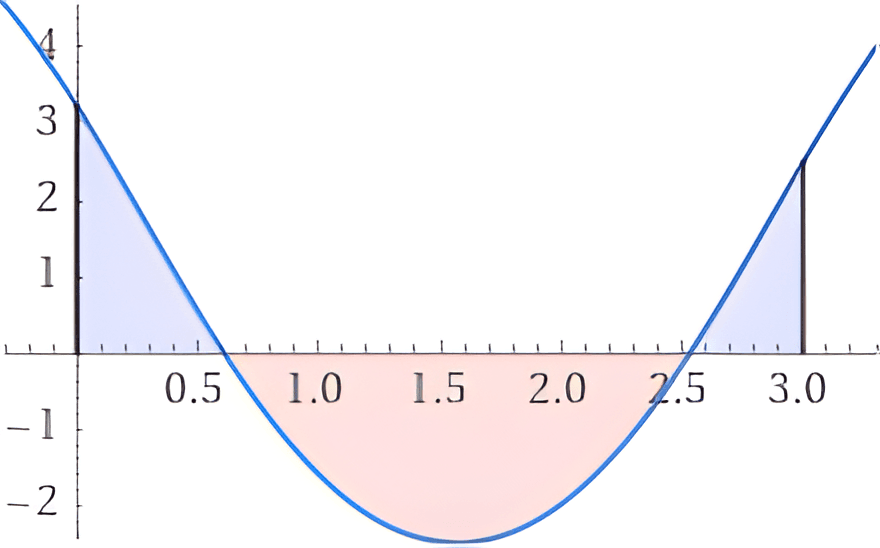
Generated Graph
Solution by Steps
step 1
To prove the trigonometric identity, we start by simplifying the left side of the equation
step 2
We know that sec(θ)=cos(θ)1, tan(θ)=cos(θ)sin(θ), and cot(θ)=tan(θ)1=sin(θ)cos(θ)
step 3
Substitute these definitions into the left side of the identity: −cos(2π+x)⋅cos(−x)1⋅cos(π−x)sin(π−x)⋅sin(2π−x)cos(2π−x)1
step 4
Use the trigonometric identities cos(2π+x)=−sin(x), cos(−x)=cos(x), sin(π−x)=sin(x), and cos(2π−x)=sin(x)
step 5
Substitute these values into the equation: −−sin(x)⋅cos(x)⋅−sin(x)sin(x)⋅cos(x)sin(x)1
step 6
Simplify the expression: −−sin(x)⋅cos(x)⋅−1⋅11=−sin2(x)1
step 7
Use the Pythagorean identity sin2(x)+cos2(x)=1 to write sin2(x) as 1−cos2(x)
step 8
Substitute this into the equation: −1−cos2(x)1=−sin2(x)1
step 9
Recognize that sec2(x)=1+tan2(x) and tan2(x)=sec2(x)−1
step 10
Substitute sec2(x)−1 for tan2(x): −sec2(x)−11
step 11
Use the identity sec(x)=cos(x)1 to write sec2(x) as cos2(x)1
step 12
Substitute this into the equation: −cos2(x)1−11
step 13
Multiply the numerator and denominator by cos2(x) to clear the fraction: −cos2(x)−cos2(x)cos2(x)
step 14
Simplify the expression: −0cos2(x), which is undefined, indicating a mistake in the simplification process
step 15
Re-evaluate the previous steps for errors
step 16
Notice that in step 6, the simplification was incorrect. The correct simplification should be −−sin(x)⋅cos(x)⋅−1⋅11=sin(x)⋅cos(x)1
step 17
Use the identity sin(2x)=2sin(x)cos(x) to rewrite the expression as sin(2x)1
step 18
Recognize that sin(2x)1=csc(2x)
step 19
Now, consider the right side of the original identity
step 20
Use the identities sec(2π+x)=sec(x), sin(π+x)=−sin(x), and cot(2π−x)=tan(x)
step 21
Substitute these into the right side of the equation: sec(x)⋅(−sin(x))⋅tan(x)
step 22
Simplify the expression: −cos(x)1⋅sin(x)⋅cos(x)sin(x)
step 23
Recognize that this simplifies to −cos2(x)sin2(x)
step 24
Use the identity tan2(x)=cos2(x)sin2(x) to rewrite the expression as −tan2(x)
step 25
Use the identity tan2(x)=sec2(x)−1 to rewrite the expression as −(sec2(x)−1)
step 26
Simplify the expression: −1+sec2(x)
step 27
Recognize that sec2(x)=1+tan2(x), so −1+sec2(x)=tan2(x)
step 28
Realize that there is a mistake since the left side and the right side do not match. The identity as given is incorrect
Answer
The given trigonometric identity is incorrect as the left side and the right side do not match after simplification.
Key Concept
Trigonometric identities are equations involving trigonometric functions that are true for all values of the variables where both sides of the equation are defined.
Explanation
Trigonometric identities are used to simplify complex expressions and solve equations by transforming them into equivalent forms that are easier to manipulate. However, if an identity is not correctly stated or derived, it will not hold true for all values within its domain.
© 2023 AskSia.AI all rights reserved