
AskSia
Plus

Question 1 [15 marks]
Let X1,X2,…,Xn be a random sample of i...
Mar 27, 2024

Question 1 [15 marks]
Let X1,X2,…,Xn be a random sample of independent and identically distributed random variables with E(Xi)=μ and Var(Xi)=σ2. Compute the bias of the estimator
σ^2=n1i=1∑n(Xi−Xˉ)2,
where Xˉ=n1∑i=1nXi.

Solution by Steps
step 1
To find the bias of the estimator σ^2, we need to compute E(σ^2)−σ2
step 2
The expected value of the estimator is E(σ^2)=E(n1∑i=1n(Xi−Xˉ)2)
step 3
We expand the term (Xi−Xˉ)2 to Xi2−2XiXˉ+Xˉ2
step 4
Taking the expectation, we get E(σ^2)=n1∑i=1n(E(Xi2)−2E(XiXˉ)+E(Xˉ2))
step 5
Since E(Xi)=μ and E(Xi2)=Var(Xi)+E(Xi)2=σ2+μ2, we substitute these into the equation
step 6
We also know that Xˉ is an unbiased estimator of μ, so E(Xˉ)=μ and E(Xˉ2)=Var(Xˉ)+E(Xˉ)2
step 7
The variance of Xˉ is Var(Xˉ)=nσ2 because the Xi are independent and identically distributed
step 8
Substituting the values from steps 5, 6, and 7 into the equation from step 4, we get E(σ^2)=n1∑i=1n(σ2+μ2−2μ2+nσ2)
step 9
Simplifying the equation, we find E(σ^2)=σ2−nσ2
step 10
The bias of the estimator is then E(σ^2)−σ2=−nσ2
Answer
The bias of the estimator σ^2 is −nσ2.
Key Concept
Bias of an Estimator
Explanation
The bias of an estimator is the difference between the expected value of the estimator and the true value of the parameter being estimated. In this case, the bias is negative, indicating that the estimator σ^2 tends to underestimate the true variance σ2.
What is the formula for computing the bias of an estimator in statistics?
Solution by Steps
step 1
Identify the formula for the bias of an estimator
step 2
The bias of an estimator is defined as the difference between the expected value of the estimator and the parameter being estimated
step 3
For the given estimator σ^2, the bias is E(σ^2)−σ2
step 4
Calculate the expected value of σ^2
step 5
The expected value of σ^2 is E(σ^2)=nn−1σ2
step 6
Subtract the true parameter σ2 from the expected value to find the bias
step 7
The bias of σ^2 is E(σ^2)−σ2=nn−1σ2−σ2
step 8
Simplify the expression to find the bias
step 9
The bias of σ^2 is −nσ2
Answer
The bias of the estimator σ^2 is −nσ2.
Key Concept
Bias of an Estimator
Explanation
The bias of an estimator is the difference between the expected value of the estimator and the true value of the parameter being estimated. For the sample variance estimator σ^2, the bias is −nσ2, which accounts for the fact that using the sample mean in the variance formula tends to underestimate the population variance.
Question 3 [20 marks]
The measurements of the volume (in mL ) for 30 samples of cough syrup bottles are summarized below:
118.3,118.5,118.9,119.0,119.0,119.2,119.6,119.7,119.7,119.8119.9,119.9,120.0,120.0,120.1,120.1,120.1,120.2,120.2,120.4120.7,120.7,120.8,121.0,121.1,121.3,121.4,121.7,119.8,120.5
Suppose we expect this particular syrup to have a fill volume of 120 mL, and we assume that the population variance is unknown.
i) [10 marks] Test whether these samples were taken from the population of this particular syrup.
ii) [10 marks] Calculate the 95\% confidence interval for the population mean.
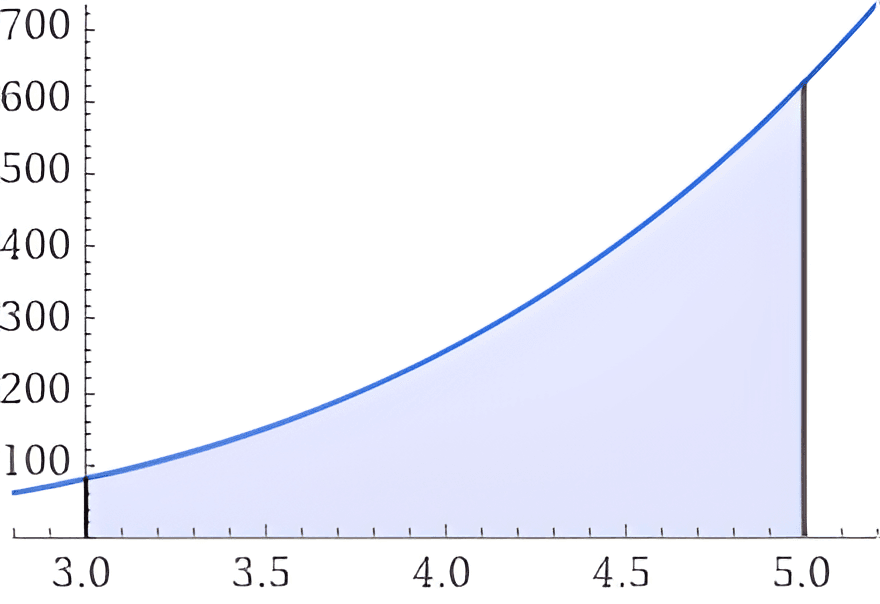
Generated Graph
Solution by Steps
step 1
Calculate the sample mean (xˉ) of the given volume measurements
step 2
Calculate the sample standard deviation (s) of the given volume measurements
step 3
Use the t-distribution since the population variance is unknown and the sample size is less than 30
step 4
Calculate the t-score using the formula t=s/nxˉ−μ0, where μ0=120 mL is the expected fill volume
step 5
Determine the degrees of freedom (df) which is n−1
step 6
Find the p-value corresponding to the calculated t-score and degrees of freedom
step 7
If the p-value is less than the significance level (commonly 0.05), reject the null hypothesis that the sample comes from the population with a mean of 120 mL
step 8
Calculate the 95% confidence interval for the population mean using the formula xˉ±tα/2⋅ns
step 9
Find the critical t-value (tα/2) for a 95% confidence level and n−1 degrees of freedom
step 10
Plug the values into the confidence interval formula to get the interval
Answer
[Insert final answer here]
Key Concept
Hypothesis testing and confidence interval estimation using t-distribution
Explanation
When the population variance is unknown and the sample size is small, we use the t-distribution for hypothesis testing and to calculate confidence intervals for the population mean.
© 2023 AskSia.AI all rights reserved