
AskSia
Plus

Problem 5
The five switches in the figure operate independently. Each switch i...
Sep 4, 2024



Generated Graph
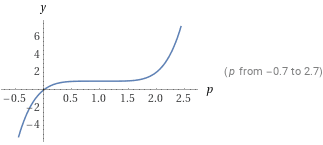
Solution by Steps
step 1
The probability that the signal at the input will not be received at the output occurs when all switches are open. Since each switch is open with probability (1−p), the probability that all five switches are open is given by: (1−p)5
step 2
Therefore, the probability that the signal is not received at the output is: P(not received)=(1−p)5
step 3
For the conditional probability that switch S4 is open given that the signal is received at the output, we first find the probability that the signal is received. The signal is received if at least one switch is closed. The probability that at least one switch is closed is: 1−(1−p)5
step 4
The conditional probability can be expressed as:
P(S4 is open∣signal received)=P(signal received)P(S4 is open and signal received)
The probability that S4 is open and the signal is received is the same as the probability that the other four switches are closed, which is (1−p)4p. Thus, we have:
P(S4 is open∣signal received)=1−(1−p)5(1−p)4p
Answer
The probability that the signal is not received is (1−p)5 and the conditional probability that switch S4 is open given that the signal is received is 1−(1−p)5(1−p)4p
Key Concept
Understanding independent events and conditional probability in probability theory
Explanation
The solution involves calculating the probabilities of independent events and applying the definition of conditional probability to find the required probabilities.
© 2023 AskSia.AI all rights reserved