
AskSia
Plus

Problem 3. A small frictionless cart is attached to the wall by a spring. At ti...
Oct 25, 2024



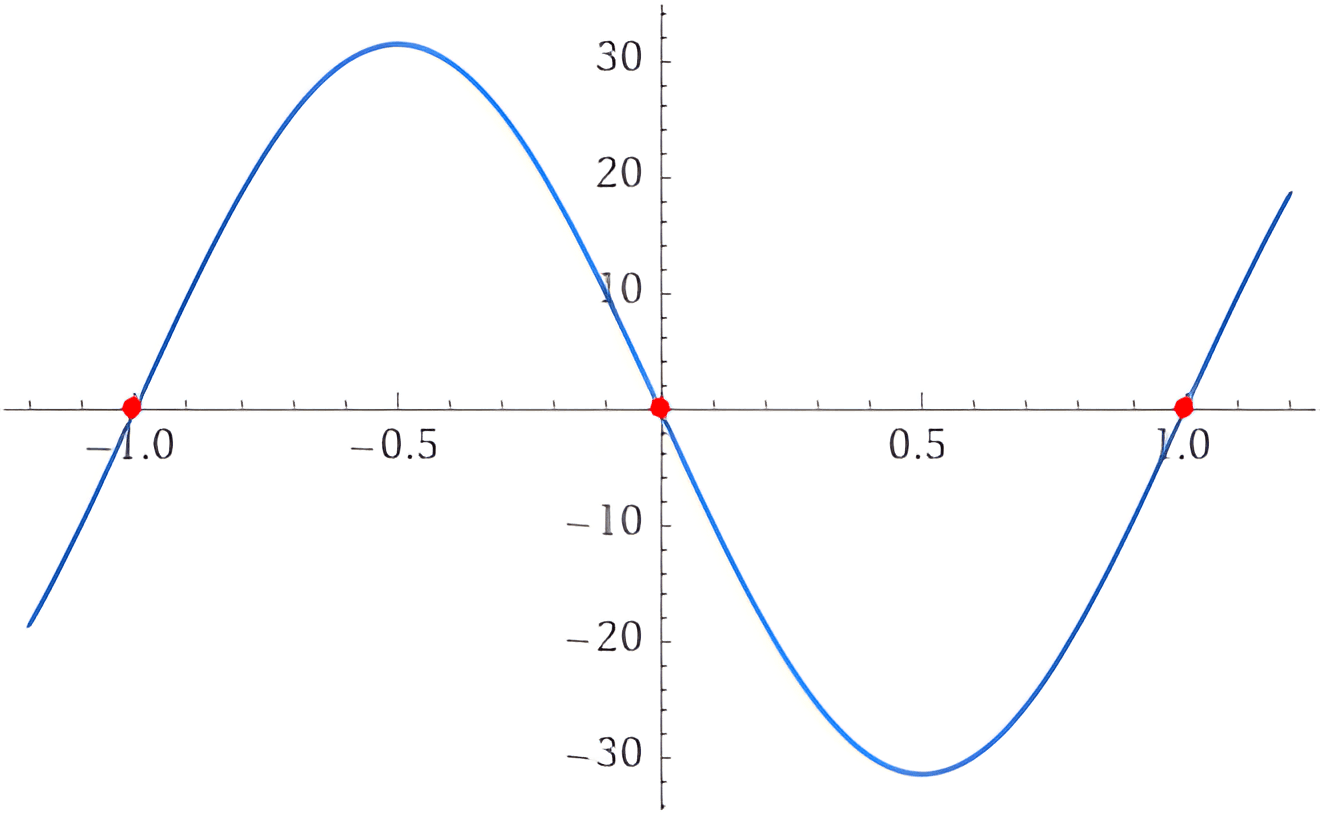
Generated Graph
Solution by Steps
step 1
To find the cart's maximum speed, we first need to determine the velocity function by differentiating the position function s(t)=10cos(πt). The velocity v(t) is given by: v(t)=dtds=−10πsin(πt)
step 2
The maximum speed occurs when ∣sin(πt)∣=1. This happens at t=21+n for n∈Z. The maximum speed is ∣v(t)∣=10π
step 3
The cart is moving the fastest at the positions where s(t)=10cos(πt) when sin(πt)=±1. Thus, the positions are s(21)=10cos(2π)=0
step 4
To determine the acceleration of the cart as a function of time, we differentiate the velocity function: a(t)=dtdv=−10π2cos(πt)
step 5
The magnitude of the acceleration is greatest when ∣cos(πt)∣=1, which occurs at t=n for n∈Z. The maximum acceleration is ∣a(t)∣=10π2
step 6
The position of the cart when the magnitude of the acceleration is greatest is s(n)=10cos(0)=10 cm at t=0 and t=1 seconds. The speed at this point is v(0)=0 and v(1)=0
Answer
Maximum speed: 10π cm/s; occurs at t=21+n seconds. Fastest position: s=0 cm. Acceleration function: a(t)=−10π2cos(πt). Greatest acceleration: 10π2 cm/s² at s=10 cm, speed at this point: 0 cm/s.
Key Concept
The motion of a cart attached to a spring can be analyzed using calculus to find speed and acceleration.
Explanation
By differentiating the position function, we can find the velocity and acceleration, allowing us to determine maximum speed and acceleration points.
© 2023 AskSia.AI all rights reserved