
AskSia
Plus

Find the antiderivative of f(x)=3x2.
May 7, 2024

Find the antiderivative of f(x)=3x2.

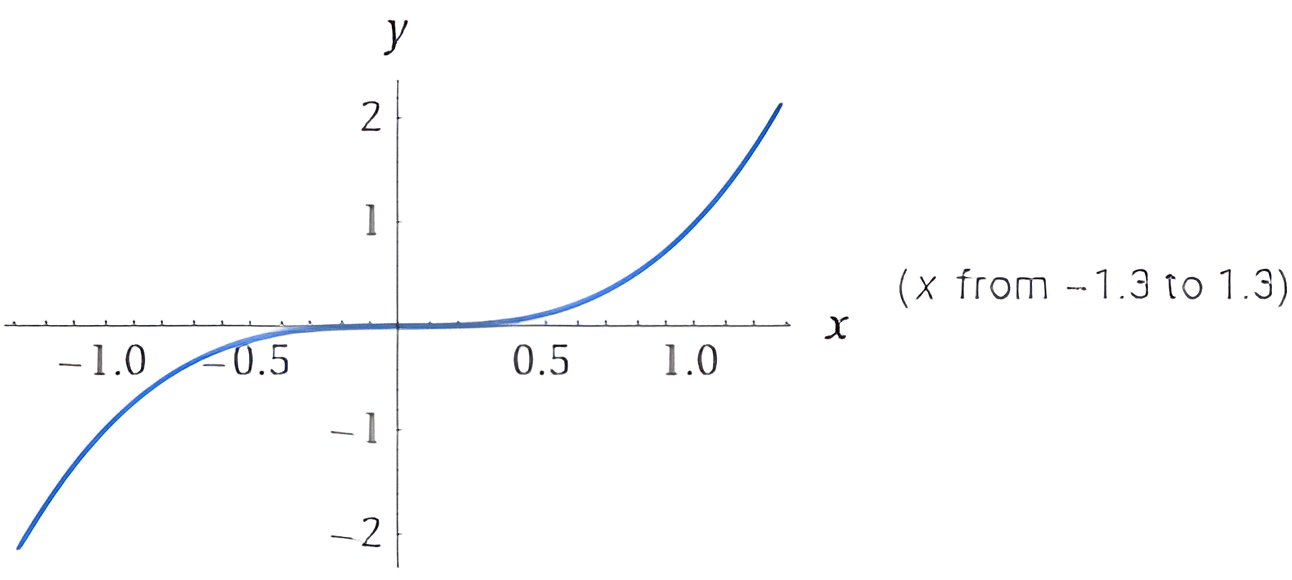
Generated Graph
Solution by Steps
step 1
To find the antiderivative of f(x)=3x2, we integrate the function with respect to x
step 2
The integral of 3x2 with respect to x is ∫3x2dx
step 3
Applying the power rule for integration, which states that ∫xndx=n+1xn+1+C for any real number n=−1, we get ∫3x2dx=3⋅2+1x2+1+C
step 4
Simplifying the expression, we have 3⋅3x3+C
step 5
The constant multiples can be cancelled out, resulting in x3+C
Answer
The antiderivative of f(x)=3x2 is x3+C.
Key Concept
Power Rule for Integration
Explanation
The power rule for integration is used to find the antiderivative of a function of the form xn, resulting in n+1xn+1+C when n=−1.
© 2023 AskSia.AI all rights reserved