
AskSia
Plus

Example 3
Self Tutor
Find k given that 3k+1,k, and -3 are consecutive ter...
Aug 21, 2024



Generated Graph
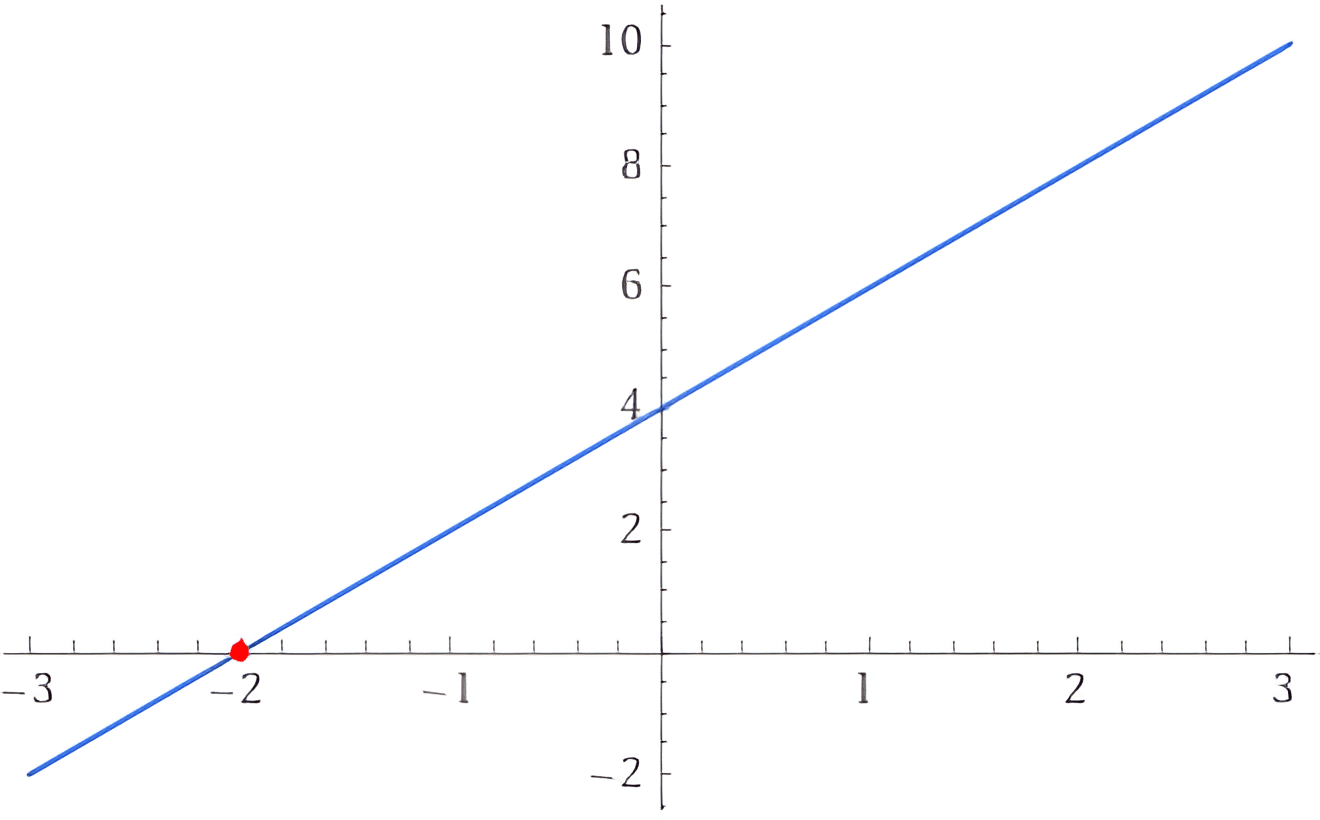
Solution by Steps
step 1
We know that for three terms to be consecutive in an arithmetic sequence, the middle term must be the average of the other two. Thus, we can set up the equation: k=2(3k+1)+(−3)
step 2
Simplifying the equation gives us: k=23k−2
step 3
Multiplying both sides by 2 to eliminate the fraction results in: 2k=3k−2
step 4
Rearranging the equation leads to: 2=3k−2k or k=−2
Answer
The value of k is -2
Key Concept
In an arithmetic sequence, the middle term is the average of the two outer terms.
Explanation
We derived the value of k by setting up an equation based on the property of arithmetic sequences and solving for k.
© 2023 AskSia.AI all rights reserved