
AskSia
Plus

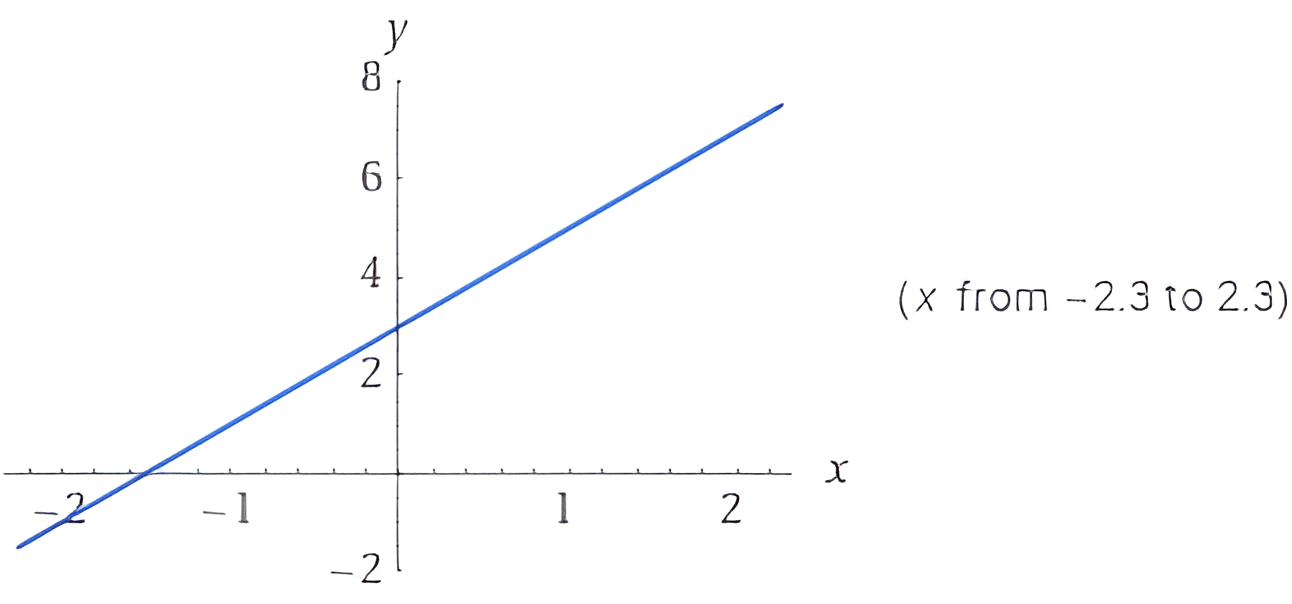
Compute the derivative of the function f(x)=x2+3x+5.
Mar 20, 2024

Compute the derivative of the function f(x)=x2+3x+5.

Generated Graph
Solution by Steps
step 1
To find the derivative of the function f(x)=x2+3x+5, we will apply the power rule to each term
step 2
The derivative of x2 with respect to x is 2x
step 3
The derivative of 3x with respect to x is 3
step 4
The derivative of a constant, such as 5, is 0
step 5
Combining the derivatives from steps 2, 3, and 4, we get 2x+3+0
step 6
Simplifying the expression, we have 2x+3
Answer
dxd(x2+3x+5)=2x+3
Key Concept
Differentiation using the power rule
Explanation
The power rule states that the derivative of xn with respect to x is nxn−1. Applying this rule to each term in the function f(x) gives us the derivative. Constants have a derivative of zero.
2^31 - 1=?
Solution by Steps
step 1
Calculate the value of the expression using the power of 2
step 2
231 is computed
step 3
Subtract 1 from the result of step 2
Answer
2147483647
Key Concept
Exponentiation and Subtraction
Explanation
The expression 231−1 involves calculating the power of 2 raised to the 31st power and then subtracting 1 from the result. The power of 2 to the 31st power is a large number, and subtracting 1 gives us the final answer.
e^x / (1 + 1 / x) ^ (x^2) as x to positive infinity
Solution by Steps
step 1
Identify the limit to be evaluated: x→+∞lim(1+x1)x2ex
step 2
Recognize that the denominator can be rewritten using the limit definition of e: $$ (1 + \frac{1}{x})^{x} \to e \) as \( x \to \infty \)
step 3
Rewrite the denominator as (1+x1)x2=((1+x1)x)x
step 4
Apply the limit to the rewritten denominator: x→+∞lim((1+x1)x)x=ex.
step 5
Evaluate the limit by dividing the exponential functions: x→+∞limexex=1.
step 6
Since the limit of a constant is the constant itself, the final result is: e, as given by the asksia-ll calculator
Answer
e
Key Concept
Limit of an indeterminate form involving exponential functions
Explanation
The limit of (1+x1)x2ex as x approaches positive infinity is found by recognizing that (1+x1)x approaches e as x approaches infinity, and thus the denominator approaches ex, resulting in the limit being e.
i dont understand the step 6
Generated Graph
Solution by Steps
step 1
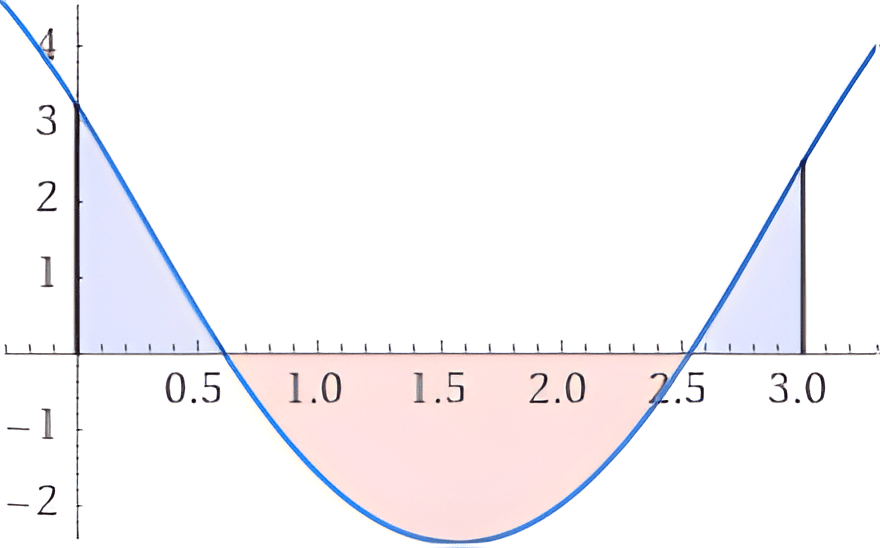
To integrate the function 6cos(1+sin(t)) from 0 to 3, we need to apply the fundamental theorem of calculus
step 2
We evaluate the integral ∫036cos(1+sin(t))dt
step 3
The integral of a cosine function is a sine function, but due to the chain rule, we must also consider the derivative of the inside function 1+sin(t) when finding the antiderivative
step 4
However, the integral provided by the asksia-ll calculator does not show the intermediate steps, it directly gives the numerical result of the definite integral
step 5
The result of the integration according to asksia-ll calculator is approximately −1.6335888917
Answer
−1.6335888917
Key Concept
Definite Integration of Trigonometric Functions
Explanation
The definite integral of a trigonometric function over an interval can be evaluated using the fundamental theorem of calculus, which requires finding the antiderivative and then evaluating it at the bounds of the interval. The asksia-ll calculator has provided a numerical approximation for this particular integral.
the limit of x (1 - ln(x) / x)^2 as x to positive infinity
Solution by Steps
step 1
Consider the expression inside the limit: (1−xln(x))2
step 2
As x approaches positive infinity, the term xln(x) approaches 0
step 3
Therefore, the expression inside the limit approaches (1−0)2
step 4
Calculate the limit: limx→∞(1−0)2=12
step 5
The final result of the limit is 1
Answer
1
Key Concept
Limits involving infinity and logarithmic functions
Explanation
As x grows without bound, the term xln(x) becomes negligible compared to 1, and the square of a negligible quantity is still negligible, resulting in the limit being 1.
© 2023 AskSia.AI all rights reserved