
AskSia
Plus

Background
The growth rate of abalone can be monitored using a statistic known ...
May 23, 2024



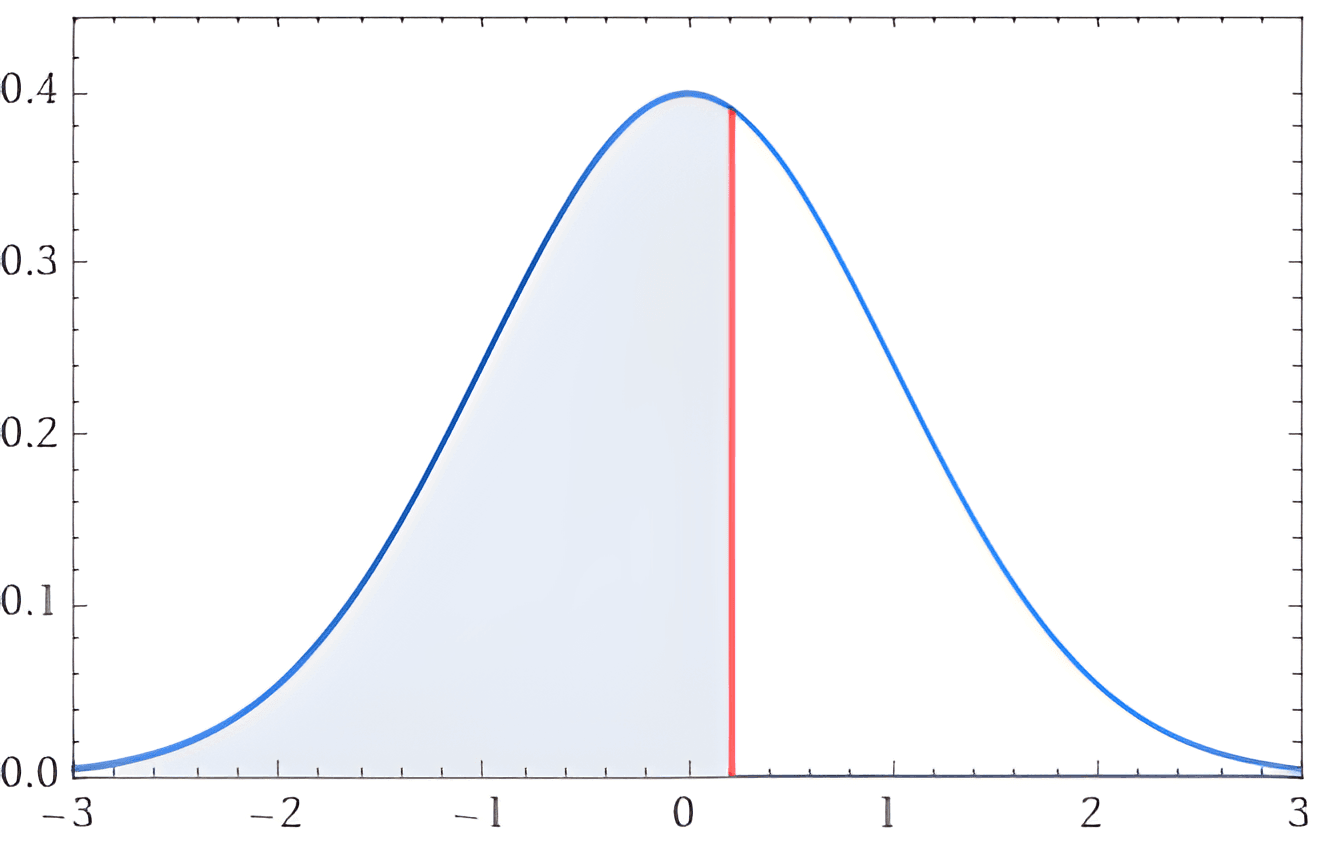
Generated Graph
Solution by Steps
step 1
We start by calculating the probabilities for the normal distribution with mean values given in the table and standard deviation σ=0.215
step 2
For each mean SGR value, we calculate the cumulative distribution function (CDF) at 0.56 to determine the probability of choosing Option 1
step 3
Using the CDF values, we can determine the probabilities for Options 2 and 3
step 4
For the mean SGR of 0.6, the CDF at 0.56 is 0.4149. Therefore, the probability of choosing Option 1 is 0.4149
step 5
The probability of choosing Option 2 is the difference between the CDF values at 0.60 and 0.56
step 6
The probability of choosing Option 3 is 1−CDF at 0.60
step 7
Repeat steps 4-6 for each mean SGR value in the table
step 8
For the proportion of saleable abalone, we calculate 1−CDF at 0.56 for each mean SGR value
step 9
For the binomial distribution, we use the proportion of saleable abalone to calculate the probabilities of having at least 50,60,70,80, and 90 acceptable abalone out of 100
step 10
For the profit probability, we use the binomial distribution results to determine the probability of making a profit under Options 2 and 3
Answer
The probabilities and proportions for each mean SGR value are calculated using the normal and binomial distributions.
Key Concept
Normal and Binomial Distributions
Explanation
The normal distribution is used to model the SGR values, and the binomial distribution is used to calculate the probabilities of having a certain number of acceptable abalone.
© 2023 AskSia.AI all rights reserved