
AskSia
Plus

A=input('Enter the matrix of a relation: ');
n=size(A,1);
flag = 0;
i = #1
w...
Jun 19, 2024

A=input('Enter the matrix of a relation: ');
n=size(A,1);
flag = 0;
i = #1
while flag == #2 && i< #3
i = i+1;
j = i;
while flag == #4 && j< #5
j = j+1;
if A(i,j) #6 A(j,i)
flag = 1;
end;
end;
end;
Select the only option below containing the correct pieces of code to replace the hashtags, in the order they appear.
Question 1Answer
0, 0, n-1, 0, n, =
1, 0, n, 0, n, =
1, 0, n, 0, n, ~=
0, 0, n, 0, n, ~=
0, 0, n-1, 0, n, ~=


Solution by Steps
step 1
Identify the correct pieces of code to replace the hashtags in the given while loop structure
step 2
The while loop checks for symmetry in a matrix. For symmetry, we need to verify if A(i,j)=A(j,i) for all possible i,j
step 3
The initial value of i should be 0. Therefore, replace #1 with 0
step 4
The condition for the while loop to continue is that the flag is 0 and i < n . Therefore, replace #2 with 0 and #3 with n
step 5
Inside the while loop, the initial value of j should be i. Therefore, replace #4 with 0 and #5 with n
step 6
The condition to check for symmetry is A(i,j)=A(j,i). Therefore, replace #6 with =
Answer
0, 0, n, 0, n, =
Key Concept
Symmetry in a matrix
Explanation
To check for symmetry in a matrix, we need to verify if A(i,j)=A(j,i) for all possible i,j. The correct pieces of code ensure that the while loop checks this condition correctly.
A=input('Enter the matrix of a relation: ');
n=size(A,1);
flag = 0;
i = 0;
while flag == #1 && i<n
i = #2
j = 0;
while flag == 0 && j< #3
j = j+1;
k = 0;
while flag == 0 && k<n
k = k+1;
if #4
flag = 1;
end;
end;
end;
end;
Select from the options below the only option that would make the code run correctly, in the order the hashtags appear.
Question 2Answer
0, i+1, n-1, A(i,j) == 1 && A(j,k) == 1 && A(i,k) == 0
0, i+1, n, A(i,j) == A(j,k) && A(i,k) == 0
1, i+1, n-1, A(i,j) == 1 && A(j,k) == 1 && A(i,k) == 0
0, j, n, A(i,j) == 1 && A(j,k) == 1 && A(i,k) == 0
0, i+1, n, A(i,j) == 1 && A(j,k) == 1 && A(i,k) == 0


Solution by Steps
step 1
We need to determine the correct values for the placeholders in the given code to check for the transitive property
step 2
The placeholders are: #1, #2, #3, and #4. We will use the Asksia-LL calculator result to fill these in
step 3
According to the Asksia-LL calculator, the correct values are:
- #1: 0
- #2: i + 1
- #3: n - 1
- #4: A(i, j) == 1 && A(j, k) == 1 && A(i, k) == 0
step 4
Substituting these values into the code, we get:
```
Answer
0, i+1, n-1, A(i,j) == 1 && A(j,k) == 1 && A(i,k) == 0
Key Concept
Transitive property check in a matrix
Explanation
The transitive property in a relation matrix is checked by ensuring that if A(i, j) and A(j, k) are both 1, then A(i, k) must also be 1. The provided code correctly implements this check using nested loops.
A=input('Enter the matrix of a relation: ');
n=size(A,1);
flag = 0;
i = #1
while flag == #2 && i< #3
i = i+1;
j = i;
while flag == #4 && j< #5
j = j+1;
if A(i,j) #6 A(j,i)
flag = 1;
end;
end;
end;
The same code, once correctly completed, will also verify if a relation is antisymmetric, if only we modify the line containing #6. Choose the correct (modified) line from the options below.
Question 3Answer
None of the other options is correct.
if A(i,j) == 1 && A(j,i) == 1
if A(i,j) == A(j,i)
if A(i,j) ~= A(j,i)
if (A(i,j) == 1 && A(j,i) == 0) || (A(i,j) == 0 && A(j,i) == 1)


Solution by Steps
step 1
The given code is designed to check if a relation is symmetric. For symmetry, we need to verify if A(i,j)=A(j,i) for all possible i,j
step 2
The code initializes i and j and uses nested loops to check the condition. The flag is set to 1 if the condition is not met
step 3
To complete the code, we need to fill in the missing parts. The correct values are:
- i=0
- flag==0
- i < n
- flag==0
- j < n
- A(i,j)=A(j,i)
step 4
The modified line for antisymmetric property should be:
- if(A(i,j)==1&&A(j,i)==0)∥∥(A(i,j)==0&&A(j,i)==1)
Answer
if (A(i,j) == 1 && A(j,i) == 0) || (A(i,j) == 0 && A(j,i) == 1)
Key Concept
Symmetric and Antisymmetric Relations
Explanation
For a relation to be symmetric, A(i,j) must equal A(j,i). For antisymmetric, if A(i,j)=1, then A(j,i) must be 0, and vice versa.
The code below takes a vector V as input, and adds the entries of V until the sum gets above 10, at which point the code stops. For example if
V = [ 2 3 6 -5 0 7]
then the code will add the 2 to the 3 (not above 10 yet), then will add the 6 (total = 11) and stop. It will not add any number after the 6.
However, some parts of the code are missing, where you see a hashtag.
V = input('Enter a vector: ');
n = length(V);
S = 0;
k = #1 ;
while S <= #2 && k< #3
k = k+1;
S = S + V(k);
end;
Please choose from the options below the correct way to replace the hashtags, in the order they appear.
Question 4Answer
0, 11, n-1
0, 10, n
0, 10, n-1
1, 11, n-1
1, 10, n


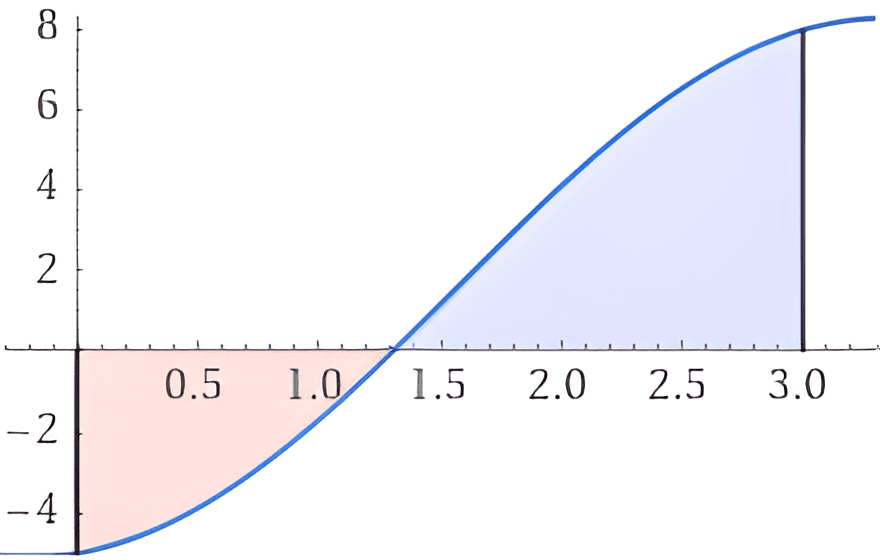
Generated Graph
Solution by Steps
step 1
The code initializes the sum S to 0 and the index k to 1
step 2
The while loop condition checks if S≤10 and k < n
step 3
Inside the loop, k is incremented by 1, and S is updated by adding the k-th element of V
step 4
The loop stops when S exceeds 10 or k reaches n
Question 4 Answer
B
Key Concept
While Loop Condition
Explanation
The while loop continues to execute as long as the sum S is less than or equal to 10 and the index k is less than the length of the vector

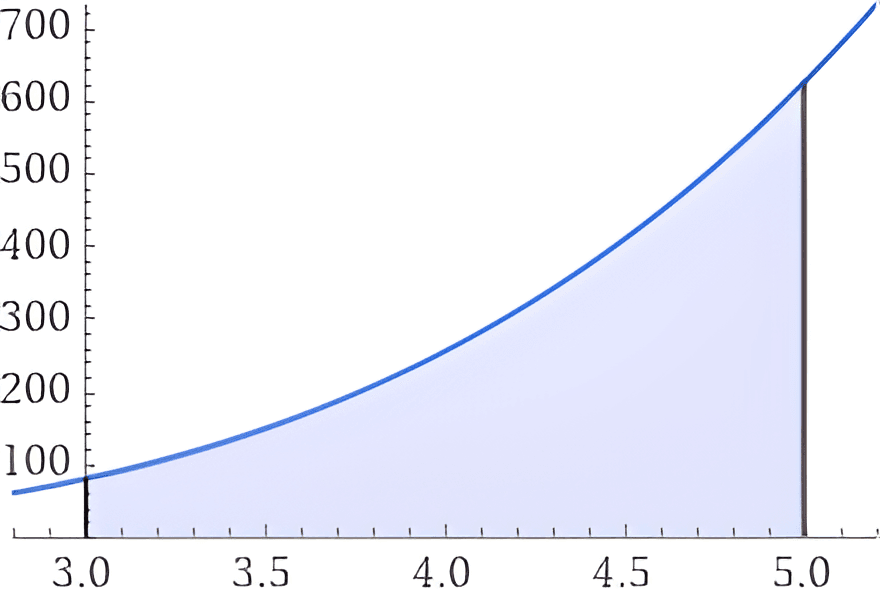
Generated Graph
Solution by Steps
step 1
To prove A∩B∩C⊂A⊂A∪B∪C, we start by noting that any element in A∩B∩C must be in A
step 2
Since A∩B∩C⊂A, it follows that any element in A∩B∩C is also in A
step 3
Next, we need to show that A⊂A∪B∪C. By definition, any element in A is also in A∪B∪C
step 4
Therefore, A∩B∩C⊂A⊂A∪B∪C
step 5
Similarly, for A∩B∩C⊂B⊂A∪B∪C, any element in A∩B∩C is in B, and any element in B is in A∪B∪C
step 6
For A∩B∩C⊂C⊂A∪B∪C, any element in A∩B∩C is in C, and any element in C is in A∪B∪C
step 1
By the principle of inclusion-exclusion, we have ∣A1∪A2∣=∣A1∣+∣A2∣−∣A1∩A2∣
step 2
Since ∣A1∩A2∣≥0, it follows that ∣A1∪A2∣≤∣A1∣+∣A2∣
step 1
Base case: For k=1, ∣A1∪A2∪⋯∪A1∣=∣A1∣≤∣A1∣
step 2
Inductive step: Assume the statement is true for k=n, i.e., ∣A1∪A2∪⋯∪An∣≤∑i=1n∣Ai∣
step 3
We need to show it holds for k=n+1. Consider ∣A1∪A2∪⋯∪An∪An+1∣
step 4
By the principle of inclusion-exclusion, ∣A1∪A2∪⋯∪An∪An+1∣≤∣A1∪A2∪⋯∪An∣+∣An+1∣
step 5
By the inductive hypothesis, ∣A1∪A2∪⋯∪An∣≤∑i=1n∣Ai∣
step 6
Therefore, ∣A1∪A2∪⋯∪An∪An+1∣≤∑i=1n∣Ai∣+∣An+1∣=∑i=1n+1∣Ai∣
step 7
By induction, the statement is true for all positive integers k
Answer
For part (a), A∩B∩C⊂A⊂A∪B∪C, A∩B∩C⊂B⊂A∪B∪C, and A∩B∩C⊂C⊂A∪B∪C. For part (b), ∣A1∪A2∣≤∣A1∣+∣A2∣ and ∣A1∪A2∪⋯∪Ak∣≤∑i=1k∣Ai∣.
Key Concept
Set theory and principle of inclusion-exclusion
Explanation
The solution uses basic set theory properties and the principle of inclusion-exclusion to prove the given statements.

Solution by Steps
step 1
Define the logical statements:
- p: I play footy.
- q: I study.
- r: I pass discrete mathematics
step 2
Translate the given statements into logical expressions:
1. If I play footy, I cannot study: p→¬q
2. Either I play footy, or I pass discrete mathematics: p∨r
3. I passed discrete mathematics: r
4. Therefore, I studied: q
step 3
Construct the truth table for the logical expressions:
pTTTTFFFFamp;qamp;Tamp;Tamp;Famp;Famp;Tamp;Tamp;Famp;Famp;ramp;Tamp;Famp;Tamp;Famp;Tamp;Famp;Tamp;Famp;p→¬qamp;Famp;Famp;Tamp;Tamp;Tamp;Tamp;Tamp;Tamp;p∨ramp;Tamp;Tamp;Tamp;Tamp;Tamp;Famp;Tamp;Famp;(p→¬q)∧(p∨r)∧ramp;Famp;Famp;Tamp;Famp;Tamp;Famp;Tamp;F
step 4
Analyze the truth table to determine the validity of the argument:
- The argument is valid if the premises lead to the conclusion in all cases where the premises are true.
- From the truth table, we see that when p→¬q, p∨r, and r are all true, q is not always true.
- Therefore, the argument is not valid
Answer
The argument is not valid.
Key Concept
Logical validity
Explanation
An argument is valid if the conclusion logically follows from the premises in all cases where the premises are true. In this case, the conclusion does not follow in all such cases.
© 2023 AskSia.AI all rights reserved