
AskSia
Plus

A government office is responsible for reviewing applications for rebates suppo...
Aug 24, 2024



Solution by Steps
step 1
To find the capacity of each individual stage, we first calculate the effective capacity for each stage using the formula:
Capacity=(Unit Processing Time (in hours)Number of Employees×Hours per Day per Employee)×(1−Rejection Rate)
step 2
For the Clerk stage:
CapacityClerk=(60105×8)×(1−0.10)=40×0.90=36 units/day
step 3
For the Review <$1K stage:
\[
\text{Capacity}_{\text{Review <1K}} = \left(\frac{12 \times 8}{\frac{30}{60}}\right) \times (1 - 0.60) = 32 \times 0.40 = 12.8 \text{ units/day}
\]
step 4
For the Review >$1K stage:
\[
\text{Capacity}_{\text{Review >1K}} = \left(\frac{15 \times 8}{\frac{45}{60}}\right) \times (1 - 0.50) = 24 \times 0.50 = 12 \text{ units/day}
\]
step 5
For the Commercial Review stage:
CapacityCommercial Review=(609020×4)×(1−0.10)=16×0.90=14.4 units/day
step 6
For the Electrician stage:
CapacityElectrician=(606024×5)×(1−0.15)=120×0.85=102 units/day
step 7
For the Approval stage:
CapacityApproval=(60108×3)×(1−0.05)=144×0.95=136.8 units/day
step 8
Now, we summarize the capacities for each stage:
- Clerk: 36 units/day
- Review <1K: 12.8 units/day
- Review >1K: 12 units/day
- Commercial Review: 14.4 units/day
- Electrician: 102 units/day
- Approval: 136.8 units/day
step 9
To find the overall process capacity, we take the minimum capacity from all stages:
Process Capacity=min(36,12.8,12,14.4,102,136.8)=12 units/day
Answer
The capacity of each individual stage is as follows: Clerk: 36, Review <1K: 12.8, Review >1K: 12, Commercial Review: 14.4, Electrician: 102, Approval: 136.8. The overall process capacity is 12 units/day.
Key Concept
Capacity analysis in a process helps identify bottlenecks and optimize workflow.
Explanation
The capacity of each stage is calculated based on the number of employees, their working hours, processing time, and rejection rates, leading to the identification of the overall process capacity.

Solution by Steps
step 1
To find the capacity of each individual stage, we first calculate the effective capacity for each stage using the formula:
step 2
For the Clerk stage: Number of Employees = 5, Hours per Day = 8, Unit Processing Time = 10 min (which is 61 hours), Rejection Rate = 10\%. Thus, the capacity is:
step 3
For the Review < 1K stage: Number of Employees = 12, Hours per Day = 8, Unit Processing Time = 30 min (which is 21 hours), Rejection Rate = 60\%. Thus, the capacity is:
step 4
For the Review > 1K stage: Number of Employees = 15, Hours per Day = 8, Unit Processing Time = 45 min (which is 43 hours), Rejection Rate = 50\%. Thus, the capacity is:
step 5
For the Commercial Review stage: Number of Employees = 20, Hours per Day = 4, Unit Processing Time = 1.5 hours, Rejection Rate = 10\%. Thus, the capacity is:
step 6
For the Electrician stage: Number of Employees = 24, Hours per Day = 5, Unit Processing Time = 1 hour, Rejection Rate = 15\%. Thus, the capacity is:
step 7
For the Approval stage: Number of Employees = 8, Hours per Day = 3, Unit Processing Time = 10 min (which is 61 hours), Rejection Rate = 5\%. Thus, the capacity is:
step 8
The overall process capacity is determined by the stage with the minimum capacity. The capacities are: Clerk: 216, Review < 1K: 76.8, Review > 1K: 80, Commercial Review: 48, Electrician: 102, Approval: 136.8. Thus, the overall process capacity is:
Answer
The utilization among electricians is 48 units/day.
Key Concept
Utilization is the measure of how much of a resource is being used compared to its total capacity.
Explanation
The utilization among electricians is determined by the capacity of the stage with the lowest throughput, which in this case is the Commercial Review stage with a capacity of 48 units/day.
Supposing that the entrance flowrate is actually 200 applications per day, what is the
utilization among electricians as a percentage value?
Solution by Steps
step 1
To find the utilization among electricians, we first need to determine the capacity of the electricians. The capacity is calculated using the formula:
step 2
For the Electrician stage: Number of Employees = 20, Hours per Day = 5, Unit Processing Time = 1.5 hours, Rejection Rate = 10\%. Thus, the capacity is:
step 3
Given that the entrance flowrate is 200 applications per day, the utilization among electricians can be calculated as:
step 4
Since utilization cannot exceed 100%, this indicates that electricians are over-utilized, and we need to express this as a percentage of their capacity:
Answer
The utilization among electricians is approximately 333%.
Key Concept
Utilization measures how effectively resources are being used in a process.
Explanation
In this case, the utilization percentage indicates that electricians are overwhelmed with the number of applications compared to their processing capacity.
what assumption is made to know that that the enterance flowrate is constant throughout ?
Solution by Steps
step 1
To find the utilization among electricians, we first need to determine the capacity of the electricians. The capacity is calculated using the formula:
\[ \text{Capacity} = \left( \frac{\text{Number of Employees} \times \text{Hours per Day per Employee}}{\text{Unit Processing Time (in hours)}} \right) \times (1 - \text{Rejection Rate}) \]
step 2
For the Electrician stage: Number of Employees = 20, Hours per Day = 5, Unit Processing Time = 1.5 hours, Rejection Rate = 10\%. Thus, the capacity is:
\[ \text{Capacity} = \left( \frac{20 \times 5}{1.5} \right) \times (1 - 0.1) = \left( \frac{100}{1.5} \right) \times 0.9 = 60 \text{ units/day} \]
step 3
Given that the entrance flowrate is 200 applications per day, the utilization among electricians is calculated as:
\[ \text{Utilization} = \frac{\text{Flowrate}}{\text{Capacity}} = \frac{200}{60} \approx 3.33 \text{ or } 333\% \]
Answer
The utilization among electricians is approximately 333%.
Key Concept
Utilization measures how much of a resource's capacity is being used.
Explanation
In this case, the utilization of electricians is calculated by comparing the actual flowrate of applications to their processing capacity, resulting in a utilization of 333%, indicating they are over capacity.

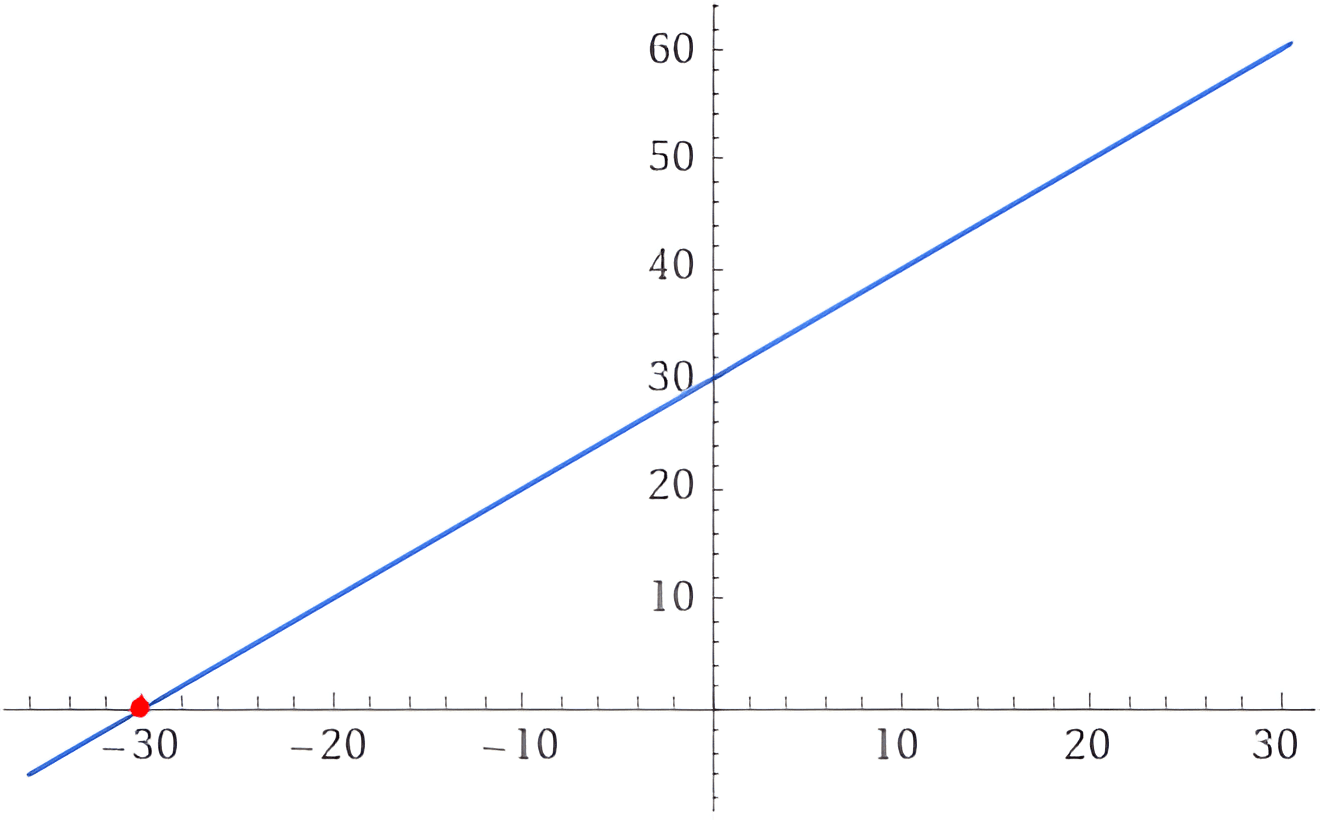
Generated Graph
Solution by Steps
step 1
To find the capacity of each individual stage, we first calculate the effective capacity for each stage using the formula:
step 2
For the Clerk stage: Number of Employees = 5, Hours per Day = 8, Unit Processing Time = 10 min (which is 61 hours), Rejection Rate = 10%. Thus, the capacity is:
step 3
For the Review < 1K stage: Number of Employees = 12, Hours per Day = 8, Unit Processing Time = 30 min (which is 21 hours), Rejection Rate = 60%. Thus, the capacity is:
step 4
For the Review > 1K stage: Number of Employees = 15, Hours per Day = 8, Unit Processing Time = 45 min (which is 43 hours), Rejection Rate = 50%. Thus, the capacity is:
step 5
For the Commercial Review stage: Number of Employees = 20, Hours per Day = 4, Unit Processing Time = 1.5 hours, Rejection Rate = 10%. Thus, the capacity is:
step 6
For the Electrician stage: Number of Employees = 24, Hours per Day = 5, Unit Processing Time = 1 hour, Rejection Rate = 15%. Thus, the capacity is:
step 7
For the Approval stage: Number of Employees = 8, Hours per Day = 3, Unit Processing Time = 10 min (which is 61 hours), Rejection Rate = 5%. Thus, the capacity is:
step 8
The overall process capacity is determined by the bottleneck stage, which is the stage with the lowest capacity. In this case, the bottleneck is the Review < 1K stage with a capacity of 48 units/day
Answer
The overall process capacity is 48 units/day.
Key Concept
Capacity calculation in a process flow
Explanation
The capacity of each stage is calculated based on the number of employees, hours worked, processing time, and rejection rates, with the overall capacity determined by the bottleneck stage.
© 2023 AskSia.AI all rights reserved