
AskSia
Plus

8. 已知函数 f(x) 的定义域为 R,f(x)>f(x−1)+f(x−2), 且当 x<3 时, f(x)=x,则下列...
Aug 14, 2024



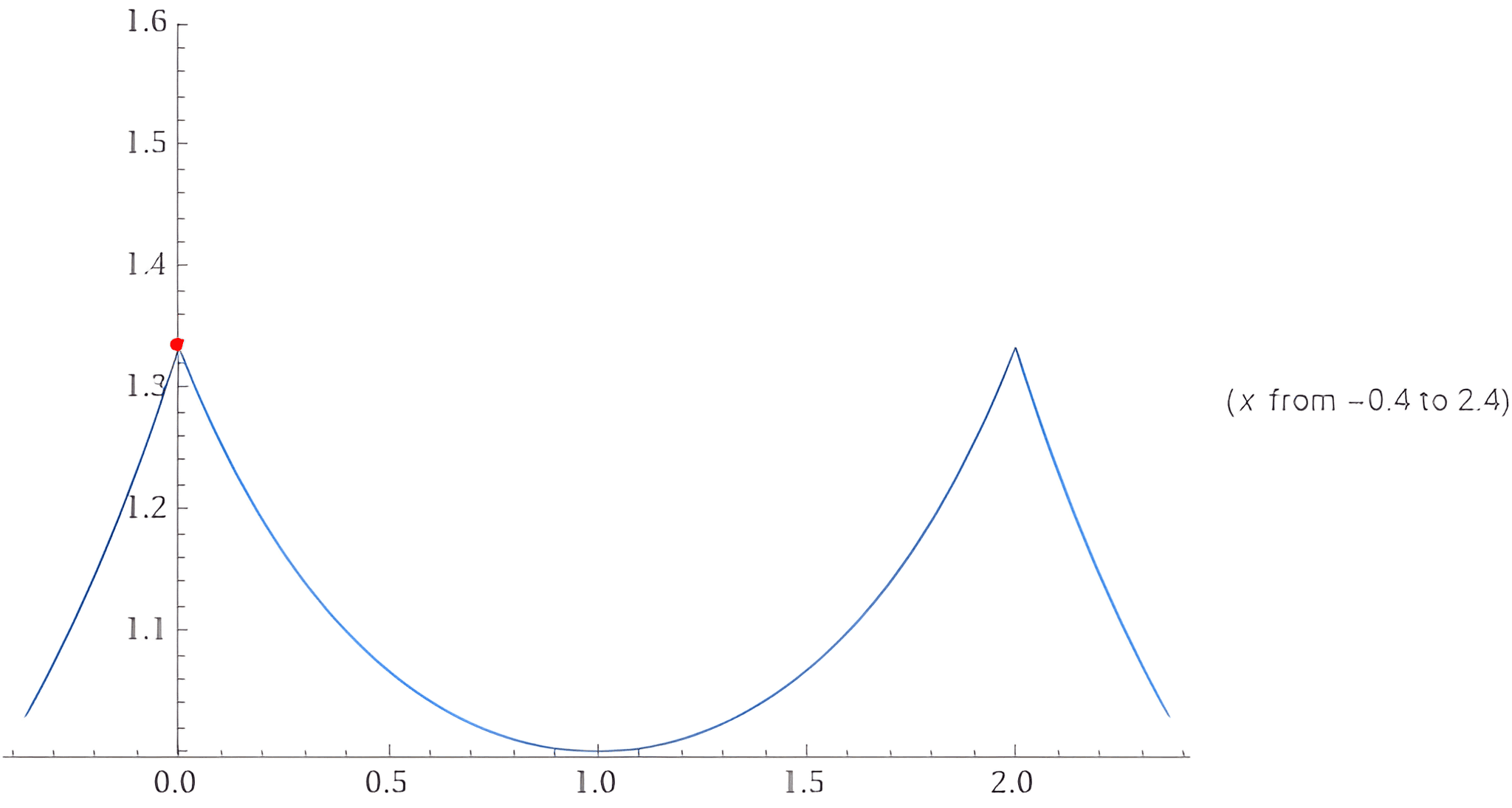
Generated Graph
Solution by Steps
step 2
For x=0,1,2, we have f(0)=0, f(1)=1, and f(2)=2. We can calculate f(3) using the inequality: f(3) > f(2) + f(1) = 2 + 1 = 3. Thus, f(3) > 3
step 3
Continuing this process, we find f(4) > f(3) + f(2) > 3 + 2 = 5, so f(4) > 5. Similarly, we can derive that f(5) > f(4) + f(3) > 5 + 3 = 8, and so on
step 4
This pattern suggests that f(n) grows faster than the Fibonacci sequence, which implies that f(10) and f(20) will be significantly larger than 100 and 1000, respectively
step 5
Therefore, we can conclude that f(10) > 100 and f(20) > 1000, making options A and B correct. However, we need to determine which statements are definitely true based on the growth pattern
A
Key Concept
Inequalities and function growth rates
Explanation
The function f(x) grows faster than linear due to the recursive inequality, leading to values exceeding 100 and 1000 for larger inputs.
© 2023 AskSia.AI all rights reserved