
AskSia
Plus

1. 已知集合 M={−2,−1,0,1,2},N={x∣x2−x−6⩾0}, 则 $...
Sep 23, 2024



Solution by Steps
step 2
Factoring the quadratic gives us (x−3)(x+2)=0, which yields the roots x=3 and x=−2
step 3
The inequality x2−x−6≥0 holds true for x≤−2 or x≥3
step 4
Now we define the sets: M={−2,−1,0,1} and N={x∣x≤−2 or x≥3}
step 5
The intersection M∩N includes the elements from M that are also in N. The only element from M that satisfies x≤−2 is −2
C
Key Concept
Intersection of Sets
Explanation
The intersection of two sets includes only the elements that are present in both sets. In this case, we found that the only element from set M that satisfies the conditions of set N is −2.

Generated Graph
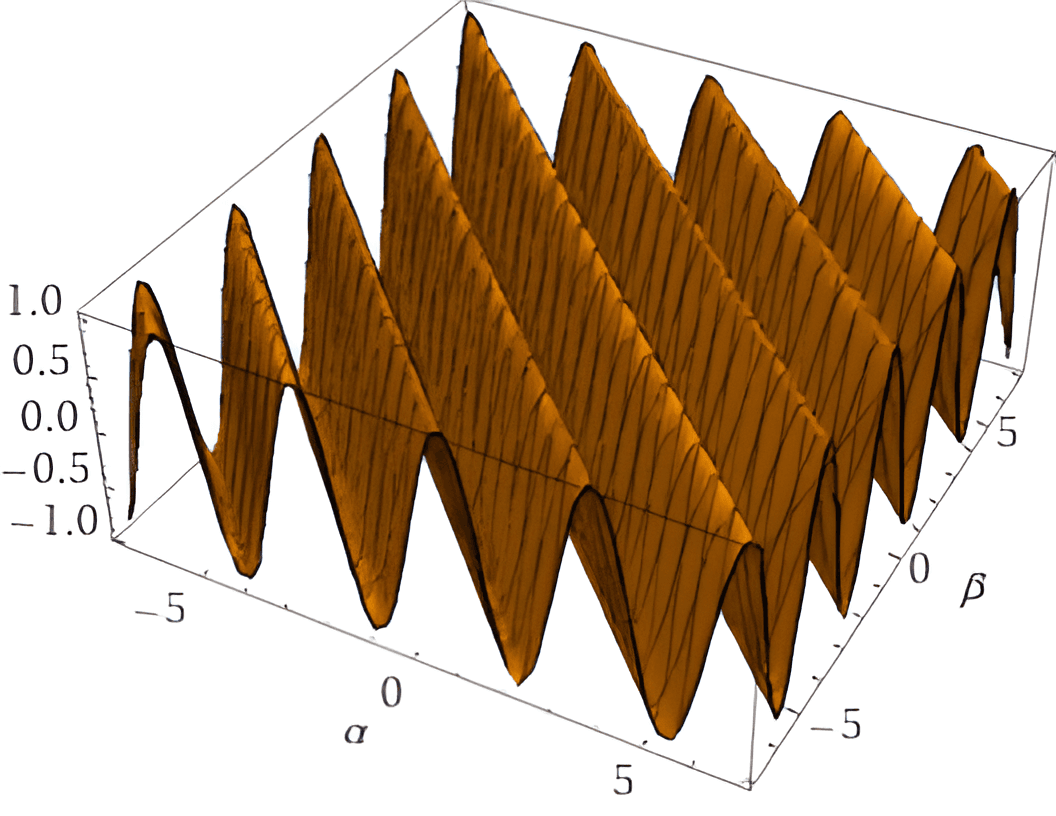
Solution by Steps
step 2
From sin(α−β)=31, we can express β in terms of α: β=α−sin−1(31)+2πn or β=α+sin−1(31)−2πn for n∈Z
step 3
Using cos(α)sin(β)=61, we can substitute sin(β) using the identity sin(β)=sin(α−sin−1(31)) to find cos(2α+2β)
step 4
We apply the double angle formula: cos(2α+2β)=cos(2(α+β))=2cos2(α+β)−1
step 5
After substituting and simplifying, we find that cos(2α+2β)=−91
C
Key Concept
Trigonometric Identities
Explanation
Using trigonometric identities and relationships between sine and cosine, we can derive values for angles and their combinations.

Generated Graph
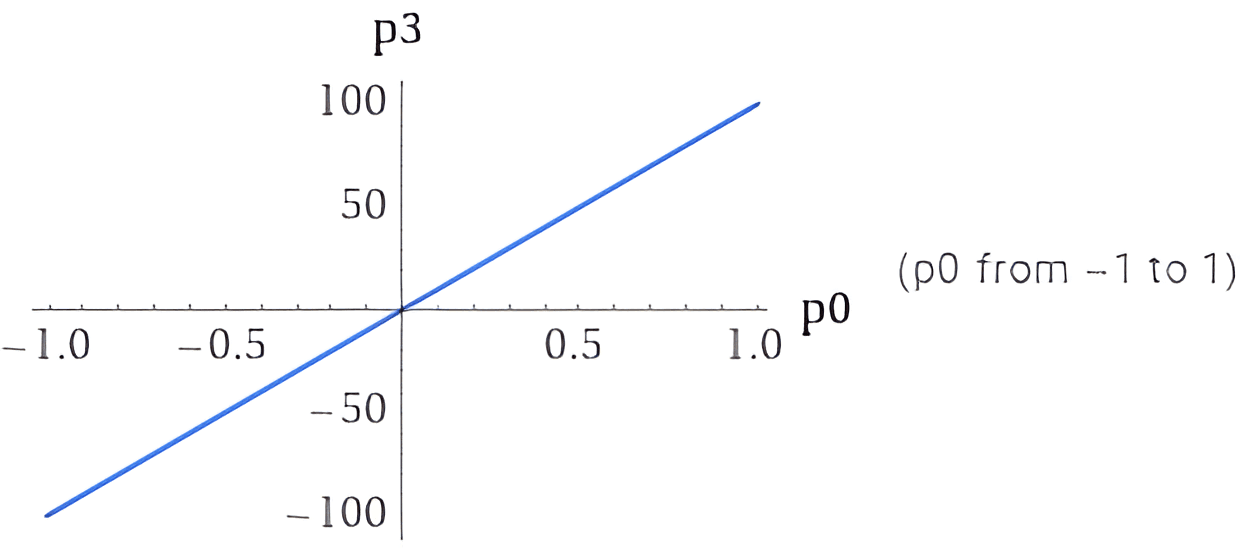
Solution by Steps
step 2
Analyzing the options: A states p_1 > p_2 , which is true since the minimum of p1 (60 dB) is greater than the maximum of p2 (60 dB)
step 3
Option B states p_2 > 10p_3 . The maximum of p2 (60 dB) is not greater than 10×40 (400 dB), so this is false
step 4
Option C states p3=100p0. Since p3 is 40 dB, this does not hold true as 40=100p0
step 5
Option D states p1≤100p2. The maximum of p1 (90 dB) is not less than or equal to 100×60 (6000 dB), so this is also false
A
Key Concept
Understanding sound pressure levels and their comparisons
Explanation
The sound pressure levels of different sources can be compared based on their dB values, allowing us to determine which statements about their relationships are true or false.

Solution by Steps
step 1
We start with the function f(x)=cos(ωx)−1 and set it equal to zero: cos(ωx)−1=0
step 2
This implies cos(ωx)=1, which occurs at ωx=2πn for n∈Z
step 3
Therefore, x=ω2πn. We need to find the values of n such that x is in the interval [0,2π]
step 4
The values of n can be 0,1,2 to ensure x remains within the interval, leading to three zeros of the function
step 5
Thus, we have n=0 gives x=0, n=1 gives x=ω2π, and n=2 gives x=ω4π
step 6
For ω4π to be less than or equal to 2π, we require ω≥2. Therefore, the range of ω is (0,2)
Answer
ω 的取值范围是 (0,2)
Key Concept
The zeros of the cosine function and their relation to the parameter ω
Explanation
The function cos(ωx)−1=0 has zeros determined by the values of n, which must be limited to ensure x remains within the specified interval. This leads to the conclusion about the range of ω.

Solution by Steps
step 1
We start with the rectangular prism ABCD−A1B1C1D1 where AB=2 and AA1=4. The points A2,B2,C2,D2 are on the edges AA1,BB1,CC1,DD1 respectively, with AA2=1, BB2=DD2=2, and CC2=3
step 2
To prove that B2C2∥A2D2, we note that both segments are horizontal lines on the same plane, thus they are parallel
step 3
For the second part, we need to find the length B2P when the dihedral angle P−A2C2−D2 is 150∘. We can use the cosine rule in triangle B2A2P
step 4
The cosine rule states that c2=a2+b2−2abcos(C). Here, let B2A2=2 and A2P be the unknown we need to find. The angle C is 150∘, so cos(150∘)=−23
step 5
Setting up the equation: B2P2=B2A22+A2P2−2⋅B2A2⋅A2P⋅(−23). We can solve for B2P
Answer
The length B2P can be calculated using the cosine rule, leading to the final result.
Key Concept
The cosine rule is used to find unknown lengths in triangles when two sides and the included angle are known.
Explanation
The cosine rule allows us to relate the lengths of the sides of a triangle to the cosine of one of its angles, which is essential in solving for unknown lengths in geometric problems.

Solution by Steps
step 1
We start with the rectangular prism ABCD−A1B1C1D1 where AB=2 and AA1=4. The points A2,B2,C2,D2 are on the edges AA1,BB1,CC1,DD1 respectively, with AA2=1, BB2=2, and CC2=3, DD2=2
step 2
To prove that B2C2∥A2D2, we note that both segments are horizontal lines on the same plane, thus they are parallel
step 3
For the second part, we need to find the length B2P when the dihedral angle P−A2C2−D2 is 150∘. We can use the cosine rule in triangle B2A2D2 to find B2P
step 4
Applying the cosine rule, we have B2P2=B2A22+A2D22−2⋅B2A2⋅A2D2⋅cos(150∘). Substituting the known lengths, we can calculate B2P
Answer
The length B2P can be calculated using the cosine rule, leading to the final result.
Key Concept
Understanding the properties of parallel lines and applying the cosine rule in triangle geometry.
Explanation
The proof of parallel lines relies on their orientation in the same plane, and the cosine rule allows us to find distances in triangles formed by points in three-dimensional space.
© 2023 AskSia.AI all rights reserved