
AskSia
Plus

1. PDF of random variable X is:
\begin{tabular}{|l|l|l|l|l|l|l|l|}
\hline X &...
Aug 4, 2024



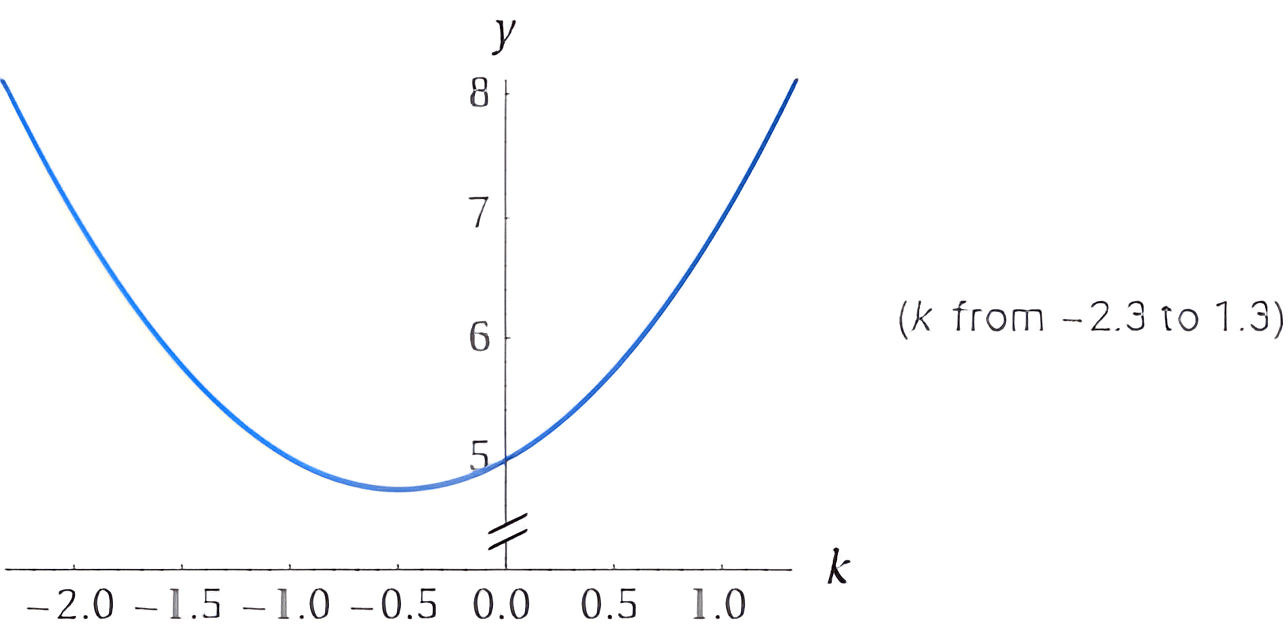
Generated Graph
Solution by Steps
step 1
Given the table of values for X and P(X), we need to find the value of k such that the sum of all probabilities equals 1
step 2
The sum of probabilities is given by:
k+2+3+k2+(k2+k)+2k2+4k2=1
Simplify the equation:
k+2+3+k2+k2+k+2k2+4k2=1
k+k+2+3+k2+k2+2k2+4k2=1
2k+5+8k2=1
step 3
Rearrange the equation to solve for k:
8k2+2k+5=1
8k2+2k+4=0
Divide the entire equation by 2:
4k2+k+2=0
step 4
Solve the quadratic equation using the quadratic formula:
k=2a−b±b2−4ac
where a=4, b=1, and c=2:
k=2⋅4−1±12−4⋅4⋅2
k=8−1±1−32
k=8−1±−31
k=8−1±i31
step 5
Since k must be a real number, there is no real solution for k. Therefore, we need to re-evaluate the problem or check for any possible errors in the given data
step 6
Calculate P(X < 5):
P(X < 5) = P(X=1) + P(X=2) + P(X=3) + P(X=4)
P(X < 5) = k + 2 + 3 + k^2
P(X < 5) = k + 5 + k^2
step 7
Calculate P(1≤X≤5):
P(1≤X≤5)=P(X=1)+P(X=2)+P(X=3)+P(X=4)+P(X=5)
P(1≤X≤5)=k+2+3+k2+(k2+k)
P(1≤X≤5)=k+5+k2+k2+k
P(1≤X≤5)=2k+5+2k2
Answer
The value of k cannot be determined as a real number from the given equation.
Key Concept
Sum of probabilities must equal 1
Explanation
The sum of all probabilities in a probability distribution must equal 1. In this case, solving the equation for k resulted in a complex number, indicating a possible error in the given data or assumptions.

Generated Graph
Solution by Steps
step 1
Given the table of values for X and P(X), we need to find the value of k such that the sum of all probabilities equals 1
step 2
The sum of probabilities is given by:
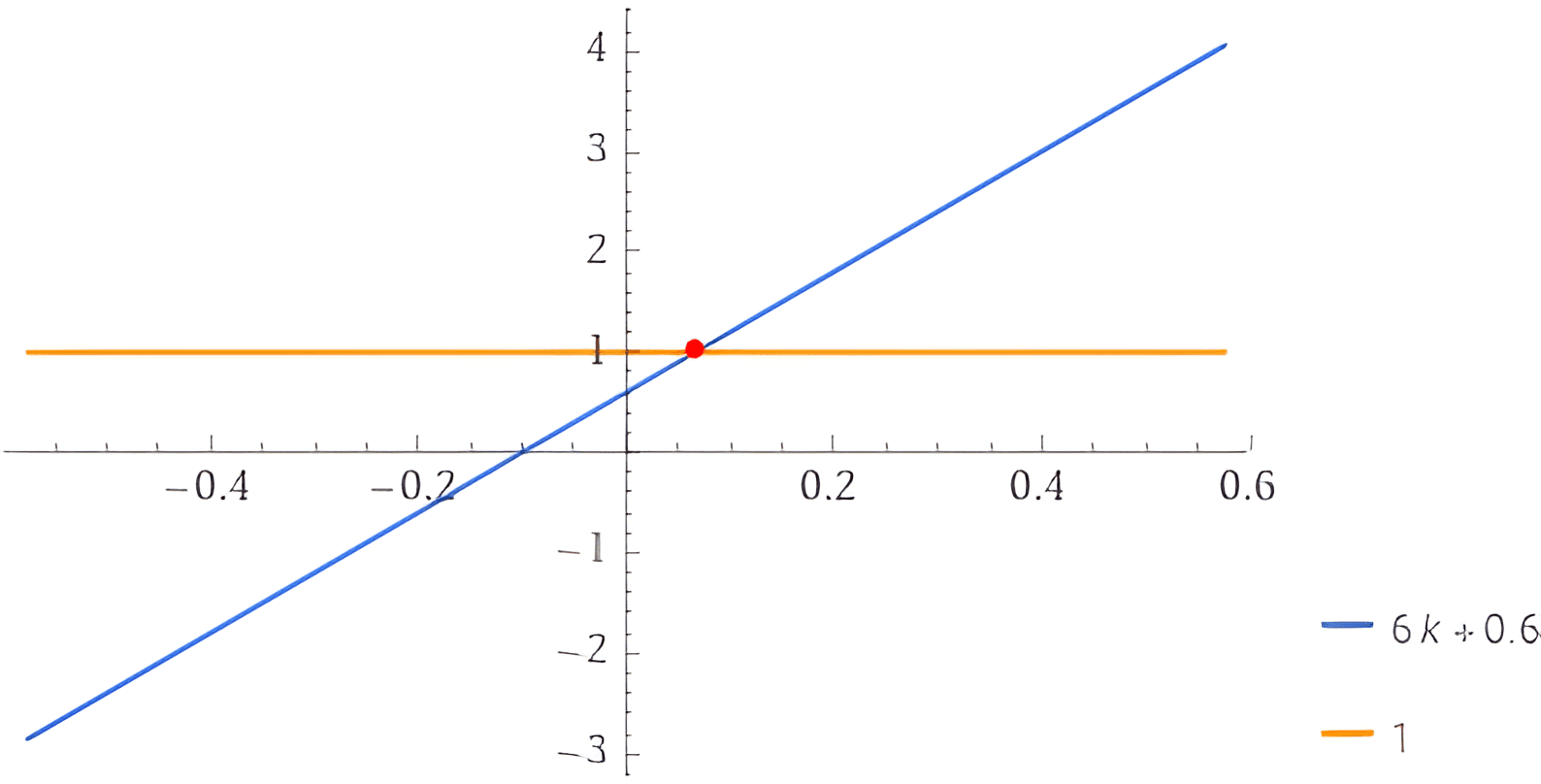
0.1+k+0.2+2k+0.3+3k=1
Simplify the equation:
0.1+0.2+0.3+k+2k+3k=1
0.6+6k=1
step 3
Solve for k:
6k=1−0.6
6k=0.4
k=60.4
k=151
step 4
To find P(X < 2), sum the probabilities for X=−2,−1,0,1:
P(X < 2) = 0.1 + k + 0.2 + 2k
Substitute k=151:
P(X < 2) = 0.1 + \frac{1}{15} + 0.2 + 2 \cdot \frac{1}{15}
P(X < 2) = 0.1 + 0.0667 + 0.2 + 0.1333
P(X < 2) = 0.5
step 5
To find the cumulative distribution function (CDF), we need to calculate the cumulative probabilities for each value of X:
F(X)=⎩⎨⎧00.10.1+k0.1+k+0.20.1+k+0.2+2k0.1+k+0.2+2k+0.31amp;if Xamp;if −2≤Xamp;if −1≤Xamp;if 0≤Xamp;if 1≤Xamp;if 2≤Xamp;if X≥3lt;−2lt;−1lt;0lt;1lt;2lt;3
Substitute k=151:
F(X)=⎩⎨⎧00.10.1+1510.1+151+0.20.1+151+0.2+2⋅1510.1+151+0.2+2⋅151+0.31amp;if Xamp;if −2≤Xamp;if −1≤Xamp;if 0≤Xamp;if 1≤Xamp;if 2≤Xamp;if X≥3lt;−2lt;−1lt;0lt;1lt;2lt;3
step 6
Write an R program to solve the problem and plot the cumulative distribution function:
```
Answer
The value of k is 151, and P(X < 2) is 0.5. The R program provided calculates and plots the cumulative distribution function.
Key Concept
Finding the value of k and calculating cumulative probabilities
Explanation
The key concept involves solving for k by ensuring the sum of probabilities equals 1, and then using this value to find cumulative probabilities and plot the CDF.

Solution by Steps
step 1
Identify the given probability distribution for X:
step 2
X={−2,−1,0,1,2} and P(X=x)={51,51,52,152,151}
step 3
Define the new random variable V=X2+1:
step 4
Calculate the possible values of V:
step 5
V={(−2)2+1,(−1)2+1,02+1,12+1,22+1}={5,2,1,2,5}
step 6
Determine the unique values of V:
step 7
V={1,2,5}
step 8
Calculate the probabilities for each value of V:
step 9
P(V=1)=P(X=0)=52
step 10
P(V=2)=P(X=−1)+P(X=1)=51+152=153+152=31
step 11
P(V=5)=P(X=−2)+P(X=2)=51+151=153+151=154
step 12
Summarize the probability distribution of V:
step 13
V={1,2,5} and P(V=v)={52,31,154}
Answer
The probability distribution of V is V={1,2,5} with P(V=1)=52, P(V=2)=31, and P(V=5)=154.
Key Concept
Transformation of a random variable
Explanation
The key concept here is transforming the random variable X to a new random variable V and determining the new probability distribution based on the given probabilities of X.

Solution by Steps
step 1
To find the mean (expected value) of the distribution, we use the formula: E(X)=∑x⋅P(X=x)
step 2
Calculate each term: −3⋅0.05=−0.15, −2⋅0.1=−0.2, −1⋅0.2=−0.2, 0⋅0.3=0, 1⋅0.2=0.2, 2⋅0.15=0.3
step 3
Sum these values to get the mean: −0.15+(−0.2)+(−0.2)+0+0.2+0.3=−0.05
step 4
To find the variance, we use the formula: Var(X)=E(X2)−[E(X)]2
step 5
First, calculate E(X2): E(X2)=∑x2⋅P(X=x)
step 6
Calculate each term: (−3)2⋅0.05=0.45, (−2)2⋅0.1=0.4, (−1)2⋅0.2=0.2, 02⋅0.3=0, 12⋅0.2=0.2, 22⋅0.15=0.6
step 7
Sum these values to get E(X2): 0.45+0.4+0.2+0+0.2+0.6=1.85
step 8
Calculate the variance: Var(X)=1.85−(−0.05)2=1.85−0.0025=1.8475
step 9
Write an R program to plot the probability distribution and cumulative distribution
R
Answer
Mean: -0.05, Variance: 1.8475
Key Concept
Mean and Variance Calculation
Explanation
The mean is the expected value of the random variable, calculated by summing the products of each value and its probability. The variance measures the spread of the values around the mean, calculated by finding the expected value of the squared deviations from the mean.

Generated Graph
Solution by Steps
step 1
Given the pmf of a random variable X is zero except at the points X=0,1,2. At these points, P(0)=3c3, P(1)=4c−10c2, P(2)=5c−1. We need to determine c
step 2
Since the sum of all probabilities must equal 1, we have:
3c3+(4c−10c2)+(5c−1)=1
Simplifying, we get:
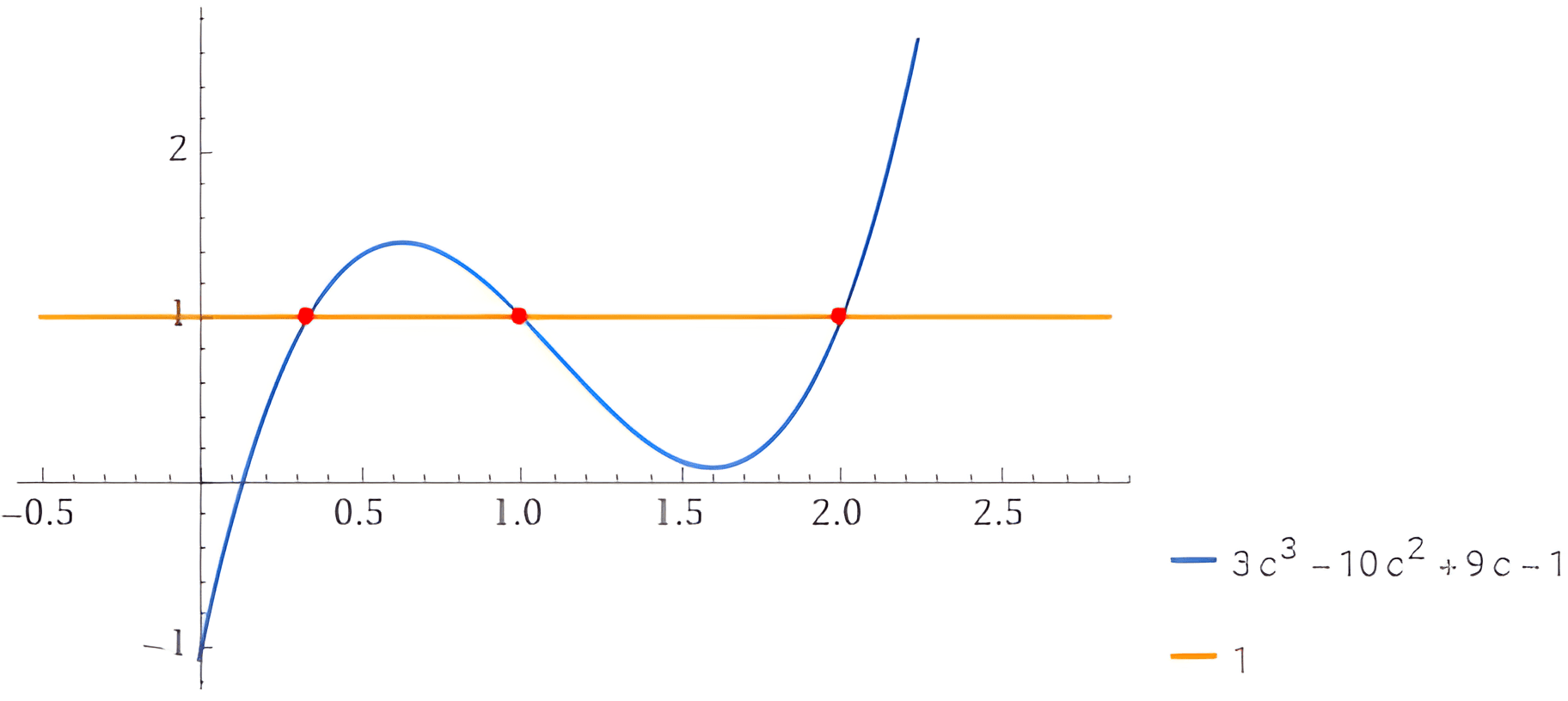
3c3−10c2+9c−1=1
3c3−10c2+9c−2=0
step 3
Solving the cubic equation 3c3−10c2+9c−2=0 for c, we get:
c=31,c=1,c=2
Since c must be a probability, we select c=31
step 4
Now, we find P(X<1), P(1<X \leq 2), and P(0<X \leq 2) using c=31:
P(0)=3(31)3=91
P(1)=4(31)−10(31)2=34−910=92
P(2)=5(31)−1=35−1=32
step 5
Calculating the required probabilities:
P(X<1) = P(0) = \frac{1}{9}
P(1<X \leq 2) = P(2) = \frac{2}{3}
P(0<X \leq 2) = P(1) + P(2) = \frac{2}{9} + \frac{2}{3} = \frac{8}{9}
Answer
c=31, P(X<1) = \frac{1}{9}, P(1<X \leq 2) = \frac{2}{3}, P(0<X \leq 2) = \frac{8}{9}
Key Concept
Probability Mass Function (pmf)
Explanation
The pmf of a discrete random variable must sum to 1, and solving the resulting equation gives the value of c. The individual probabilities are then calculated using this value.

Generated Graph
Solution by Steps
step 1
We start by finding the value of k using the integral of the density function over the given range. The density function is f(x)=k(1+x). We need to integrate this function from x=2 to x=5 and set it equal to 1 (since the total probability must be 1)
step 2
The integral of k(1+x) from x=2 to x=5 is given by:
∫25k(1+x)dx=k[2x2+x]25
Evaluating this, we get:
k[(252+5)−(222+2)]=k[(225+5)−(2+2)]=k(235−4)=k(227)
Setting this equal to 1, we solve for k:
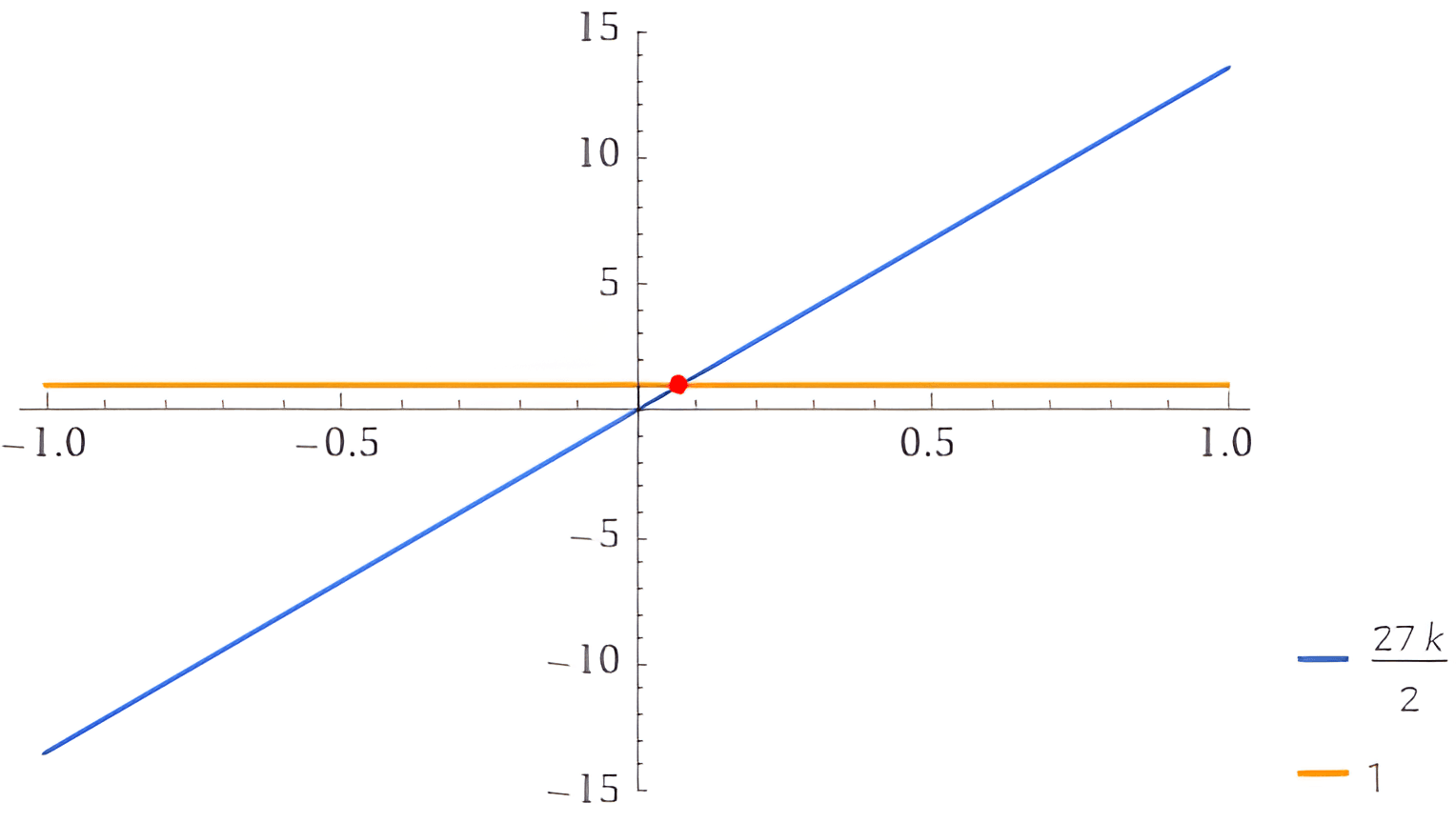
k(227)=1⟹k=272
step 3
Now, we need to find P(X < 4). This is given by the integral of the density function from x=2 to x=4:
P(X < 4) = \int_{2}^{4} k(1 + x) \, dx = \frac{2}{27} \left[ \frac{x^2}{2} + x \right]_{2}^{4}
Evaluating this, we get:
272[(242+4)−(222+2)]=272[(216+4)−(2+2)]=272(12−4)=272×8=2716
Answer
P(X < 4) = \frac{16}{27}
Key Concept
Integration of the density function
Explanation
To find the probability P(X < 4), we integrate the density function f(x)=k(1+x) from x=2 to x=4 using the value of k found from the normalization condition.

Generated Graph
Solution by Steps
step 1
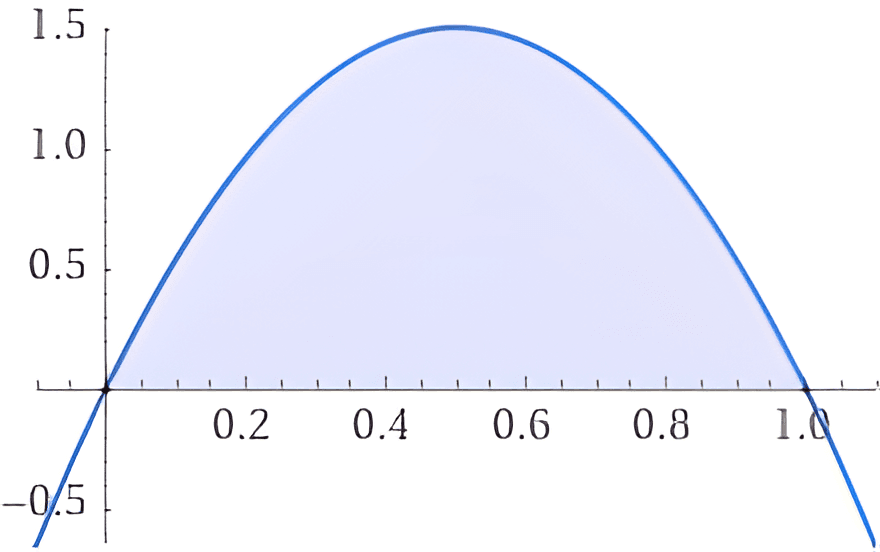
Given the probability density function f(x)=6(x−x2) for 0≤x≤1, we need to find the mean and variance
step 2
To find the mean, we calculate the expected value E(X)=∫01xf(x)dx
step 3
Substitute f(x) into the integral: E(X)=∫01x⋅6(x−x2)dx=∫016x(x−x2)dx
step 4
Simplify the integrand: E(X)=∫016(x2−x3)dx
step 5
Integrate term by term: E(X)=6(∫01x2dx−∫01x3dx)
step 6
Compute the integrals: ∫01x2dx=[3x3]01=31 and ∫01x3dx=[4x4]01=41
step 7
Substitute the results back: E(X)=6(31−41)=6(124−123)=6⋅121=21
step 8
To find the variance, we need E(X2)=∫01x2f(x)dx
step 9
Substitute f(x) into the integral: E(X2)=∫01x2⋅6(x−x2)dx=∫016x2(x−x2)dx
step 10
Simplify the integrand: E(X2)=∫016(x3−x4)dx
step 11
Integrate term by term: E(X2)=6(∫01x3dx−∫01x4dx)
step 12
Compute the integrals: ∫01x3dx=[4x4]01=41 and ∫01x4dx=[5x5]01=51
step 13
Substitute the results back: E(X2)=6(41−51)=6(205−204)=6⋅201=103
step 14
The variance is given by Var(X)=E(X2)−(E(X))2
step 15
Substitute the values: Var(X)=103−(21)2=103−41=103−102.5=100.5=201
Answer
Mean: 21, Variance: 201
Key Concept
Expected value and variance of a continuous random variable
Explanation
The mean (expected value) is calculated by integrating x times the probability density function over the given interval. The variance is found by integrating x2 times the probability density function and then subtracting the square of the mean.

Generated Graph
Solution by Steps
step 1
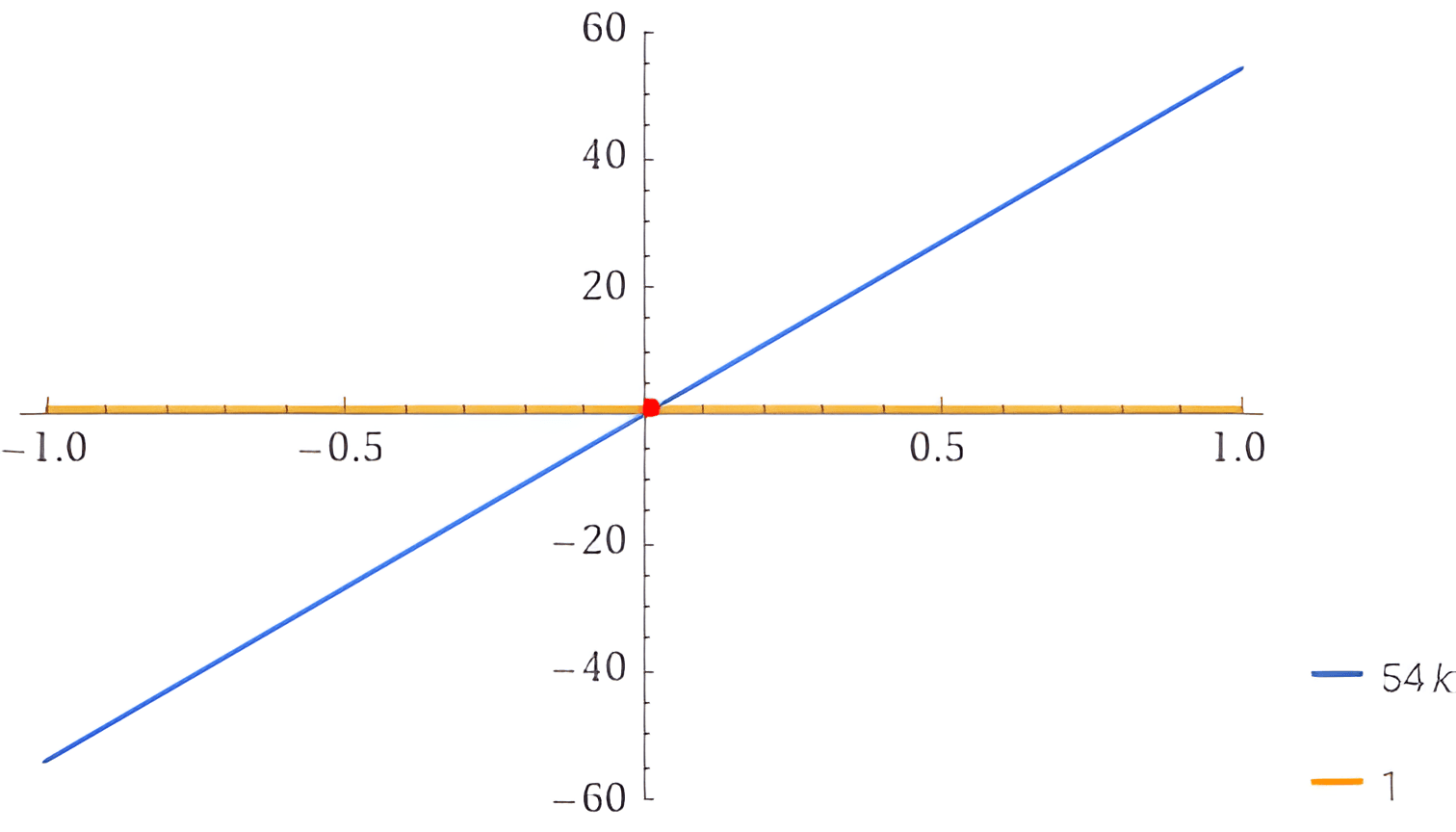
Given the probability density function (PDF) f(x)={kxe−x/3,0,amp;xamp;x≤0gt;0, we need to find the constant k such that the total probability is 1
step 2
To find k, we integrate the PDF over its entire range and set the integral equal to 1: ∫0∞kxe−x/3dx=1
step 3
Solving the integral: ∫0∞kxe−x/3dx=k∫0∞xe−x/3dx
step 4
Using integration by parts or a known integral result, ∫0∞xe−x/3dx=9
step 5
Therefore, k⋅9=1⟹k=91
step 6
To find the expectation E(X), we use the formula E(X)=∫0∞xf(x)dx=∫0∞x(91xe−x/3)dx
step 7
Simplifying, E(X)=91∫0∞x2e−x/3dx
step 8
Using integration by parts or a known integral result, ∫0∞x2e−x/3dx=54
step 9
Therefore, E(X)=91⋅54=6
step 10
To find the probability that the electric consumption is more than the expected value, we calculate P(X > 6)
step 11
This is given by P(X > 6) = \int_6^\infty f(x) \, dx = \int_6^\infty \frac{1}{9} x e^{-x/3} \, dx
step 12
Using integration by parts or a known integral result, ∫6∞xe−x/3dx=(3x+9)e−x/36∞=0−(3⋅6+9)e−6/3=−27e−2
step 13
Therefore, P(X > 6) = \frac{1}{9} \cdot 27e^{-2} = 3e^{-2} \approx 0.406
Answer
k=91, E(X)=6, P(X > 6) \approx 0.406
Key Concept
Finding the constant k in a PDF
Explanation
To ensure the total probability is 1, we integrate the PDF over its entire range and solve for k.
Key Concept
Expectation of a random variable
Explanation
The expectation is found by integrating x times the PDF over the entire range.
Key Concept
Calculating probabilities for continuous random variables
Explanation
To find the probability that X exceeds a certain value, we integrate the PDF from that value to infinity.

Generated Graph
Solution by Steps
step 1
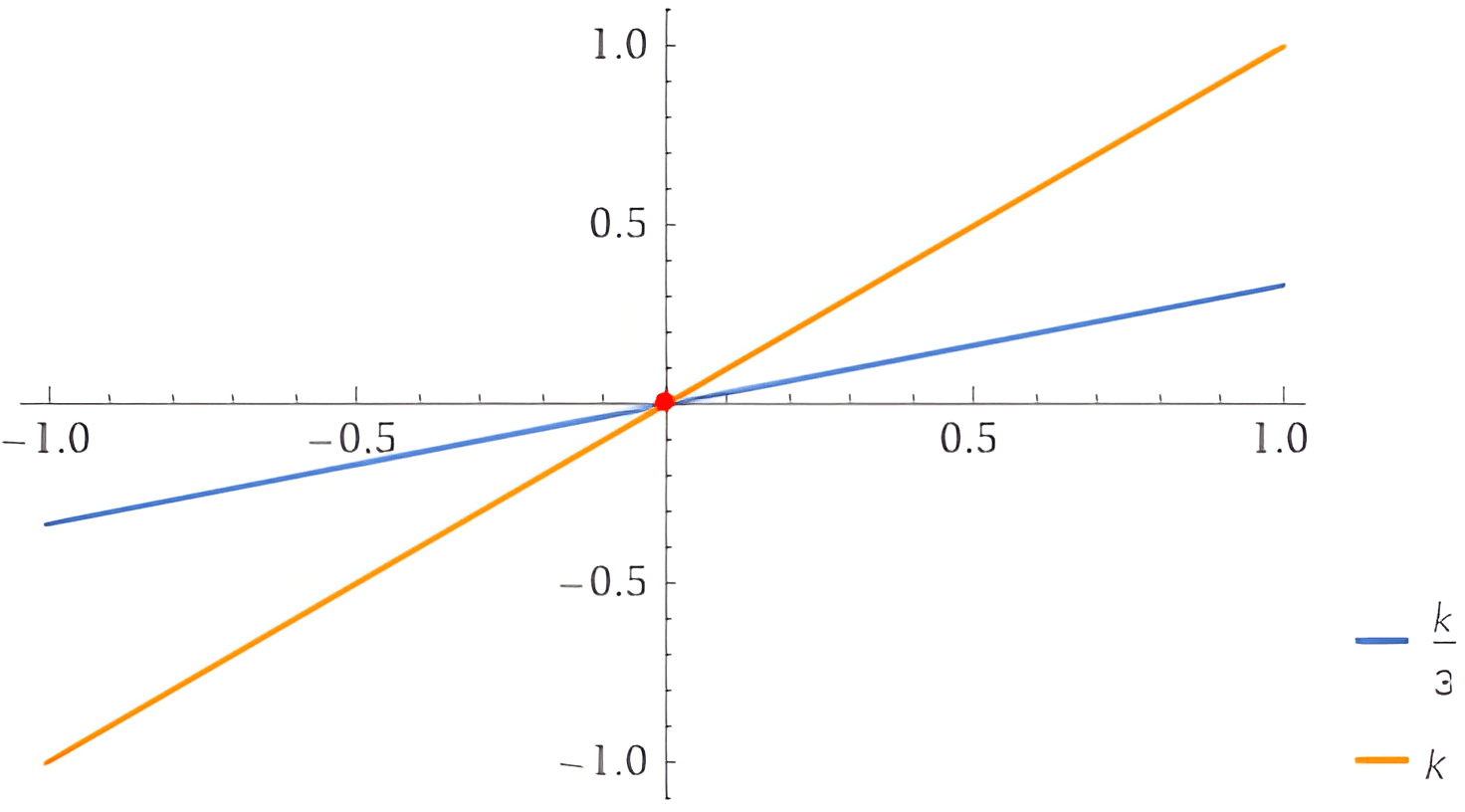
Given the probability density function (pdf) f(x)=kx2 for 0 < x < 1, we need to determine the constant k. Since the total probability must equal 1, we integrate f(x) over the interval [0,1] and set it equal to 1:
∫01kx2dx=1
step 2
Compute the integral:
∫01kx2dx=k∫01x2dx=k[3x3]01=k(31−0)=3k
step 3
Set the integral equal to 1 and solve for k:
3k=1⟹k=3
step 4
Now, we need to find P\left(\frac{1}{3} < x < \frac{1}{2}\right). We integrate the pdf over the interval (31,21):
P\left(\frac{1}{3} < x < \frac{1}{2}\right) = \int_{1/3}^{1/2} 3x^2 \, dx
step 5
Compute the integral:
∫1/31/23x2dx=3[3x3]1/31/2=[x3]1/31/2=(21)3−(31)3=81−271=21627−8=21619
step 6
To find the mean (expected value) μ of x, we compute:
μ=∫01xf(x)dx=∫01x(3x2)dx=3∫01x3dx=3[4x4]01=3(41−0)=43
step 7
To find the variance σ2, we first compute E[x2]:
E[x2]=∫01x2f(x)dx=∫01x2(3x2)dx=3∫01x4dx=3[5x5]01=3(51−0)=53
step 8
The variance is given by:
\[
\sigma^2 = E[x^2] - (E[x])^2 = \frac{3}{5} - \left( \frac{3}{4} \right)^2 = \frac{3}{5} - \frac{9}{16]}

© 2023 AskSia.AI all rights reserved