
AskSia
Plus

help me to learn american civil war
Jan 4, 2025

help me to learn american civil war

Sure! The American Civil War, which lasted from 1861 to 1865, was a pivotal conflict in U.S. history. It primarily revolved around issues such as slavery, states' rights, and economic differences between the North and the South.
Here are some key points to help you understand the Civil War:
1. Causes: The main cause was the disagreement over the institution of slavery. The Southern states wanted to maintain slavery for their agricultural economy, while the Northern states were increasingly opposed to it.
2. Secession: After Abraham Lincoln was elected president in 1860, several Southern states seceded from the Union, forming the Confederate States of America.
3. Major Battles: Some significant battles include the Battle of Gettysburg, the Battle of Antietam, and the Siege of Vicksburg. Each of these battles had a profound impact on the course of the war.
4. Emancipation Proclamation: In 1863, Lincoln issued the Emancipation Proclamation, which declared that all slaves in Confederate-held territory were to be set free. This shifted the war's focus to not just preserving the Union but also ending slavery.
5. End of the War: The war ended in April 1865 when General Robert E. Lee surrendered to General Ulysses S. Grant at Appomattox Court House. The war resulted in significant loss of life and set the stage for the Reconstruction era.
6. Legacy: The Civil War had lasting effects on American society, including the abolition of slavery and the ongoing struggle for civil rights.
If you have specific questions or topics within the Civil War that you want to learn more about, feel free to
I'm G11 now , please help me to make the outline of chapter 14 american civil war
Answer
Here is an outline for Chapter 14, which typically covers the American Civil War:
I. Introduction
A. Overview of the Civil War
B. Significance of the conflict
II. Causes of the Civil War
A. Slavery and its expansion
B. Economic differences between the North and South
C. States' rights vs. federal authority
D. Key events leading to war (e.g., Missouri Compromise, Dred Scott Decision)
III. Major Events of the Civil War
A. Outbreak of war (Fort Sumter)
B. Key battles and strategies
1. First Battle of Bull Run
2. Antietam
3. Gettysburg
4. Sherman's March to the Sea
C. Role of technology and warfare
IV. Political Developments
A. Leadership of Abraham Lincoln
B. Emancipation Proclamation
C. Role of Congress and the Confederacy
V. Social Impact
A. Effects on soldiers and civilians
B. Role of women and African Americans
C. Changes in societal norms
VI. Conclusion
A. Aftermath of the Civil War
B. Reconstruction and its challenges
∻Key Concept∻
∻Explanation∻
Related Video

The War Between the States (A Civil War Overview): The Civil War in Four Minutes

The American Civil War explained

What were the main causes of the American Civil War outlined in Chapter 14?
Answer
The main causes of the American Civil War outlined in Chapter 14 include the following: the issue of slavery and its expansion into new territories, economic differences between the industrial North and the agrarian South, the failure of political compromises such as the Missouri Compromise and the Compromise of 1850, the rise of abolitionist movements, and the election of Abraham Lincoln in 1860, which was perceived as a threat to the institution of slavery. These factors created deep-seated tensions that ultimately led to the secession of Southern states and the outbreak of war.
Key Concept
The sectional conflict over slavery and its expansion was a primary catalyst for the Civil War, reflecting broader economic, social, and political divisions in the United States. (KC-5.1.I)
Explanation
The Civil War was fundamentally rooted in the contrasting economic systems and social structures of the North and South, with slavery at the heart of these divisions, leading to a series of political crises that could not be resolved peacefully.
Related Video
Sectional conflict: Regional differences | Period 5: 1844-1877 | AP US History | Khan Academy
Sectional Crisis : Fighting Slavery's Expansion, 1848-1861 | US History Lecture
What role did slavery play in the economic differences between the North and South leading up to the Civil War?
Answer
Slavery was a fundamental economic institution in the South, where it underpinned the agrarian economy, particularly in the production of cash crops like cotton and tobacco. The Southern economy relied heavily on slave labor to maximize profits from these labor-intensive crops. In contrast, the North developed a more diversified economy that included manufacturing, trade, and small-scale agriculture, which did not depend on slavery. This economic divergence led to differing social structures and political ideologies, with the South advocating for the preservation of slavery as essential to its economic interests, while the North increasingly viewed slavery as morally and economically outdated. These contrasting economic systems contributed to tensions that ultimately culminated in the Civil War.
Key Concept
The economic differences between the North and South were rooted in their respective reliance on free labor versus slave labor, which shaped their social and political landscapes leading up to the Civil War. (KC-5.1.II)
Explanation
The South's dependence on slavery for its agricultural economy created a stark contrast with the North's industrial and diversified economy, leading to significant regional tensions that contributed to the outbreak of the Civil War.
Related Video
North vs. South: Contrasting Slavery in the American Colonies | 3-Minute History Comparison
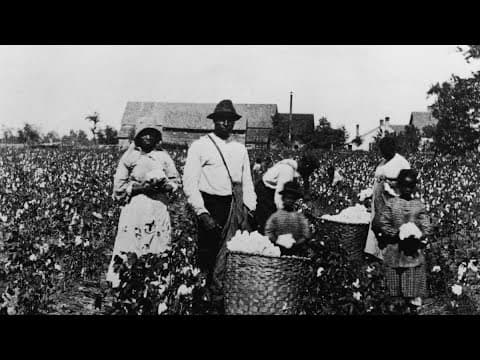
Slavery's Role In The Southern Us Economy
How did the inventions during the Industrial Revolution impact the North's economy compared to the South's reliance on slavery?
Answer
The inventions during the Industrial Revolution significantly transformed the North's economy by fostering industrialization, leading to increased production, urbanization, and a shift towards wage labor. Innovations such as the cotton gin, steam engine, and mechanized looms allowed for mass production and efficiency, which contributed to the growth of factories and a burgeoning workforce in the North. In contrast, the South remained largely agrarian and heavily reliant on slavery for its economic model, focusing on the cultivation of cash crops like cotton and tobacco. This reliance on slave labor created a stark economic divide, as the South's economy was less diversified and more vulnerable to fluctuations in agricultural markets. Ultimately, the North's industrial economy began to outpace the South's plantation economy, setting the stage for significant social and political tensions that would culminate in the Civil War.
Key Concept
The Industrial Revolution led to significant economic transformations in the United States, particularly in the North, which became increasingly industrialized and urbanized, while the South maintained an agrarian economy reliant on slavery. (KC-5.1)
Explanation
The North's embrace of industrialization contrasted sharply with the South's dependence on slavery, highlighting the economic disparities that contributed to sectional tensions in the pre-Civil War era.
Related Video
The Industrial Revolution: Inventions And Changes That Shaped Our World | Lesson For Kids
What was the Industrial Revolution?
How did the agricultural advancements in the South during the Industrial Revolution compare to the technological innovations in the North?
Answer
During the Industrial Revolution, the South and North experienced distinct agricultural and technological advancements. In the South, agricultural advancements were primarily focused on the cultivation of cash crops, such as cotton, which was made more efficient through the use of the cotton gin invented by Eli Whitney in 1793. This innovation significantly increased cotton production, leading to the expansion of plantations and reliance on slave labor. The South remained largely agrarian, with advancements centered around improving agricultural output rather than industrialization.
In contrast, the North underwent significant technological innovations, characterized by the rise of factories and mechanization. The introduction of steam power, the telegraph, and advancements in transportation, such as railroads, transformed the Northern economy. These innovations facilitated mass production and the growth of urban centers, leading to a more industrialized society. The North's focus was on manufacturing and technology, which contrasted sharply with the South's agricultural emphasis.
Overall, while the South's advancements were rooted in agriculture and the enhancement of crop production, the North's innovations were technological and industrial, reflecting the differing economic priorities of the two regions during the Industrial Revolution.
Key Concept
The Industrial Revolution led to significant economic transformations in the United States, with the North industrializing rapidly while the South remained predominantly agricultural. (KC-6.1.I)
Explanation
This answer highlights the contrasting economic developments in the South and North during the Industrial Revolution, emphasizing the South's focus on agriculture and the North's emphasis on technological innovation.
Related Video
The Industrial Revolution (18-19th Century)

The Economics of the Industrial Revolution [AP World History Review—Unit 5 Topic 7]

How did the reliance on cotton production in the South shape its economy compared to the industrial diversification in the North?
Answer
The reliance on cotton production in the South significantly shaped its economy by creating a monoculture that prioritized the cultivation of cotton, which became the backbone of the Southern economy. This reliance led to the establishment of a plantation system that depended heavily on enslaved labor, resulting in a society structured around agricultural wealth and social hierarchies. In contrast, the North experienced industrial diversification, with a focus on manufacturing, trade, and a growing labor force that included immigrants. This industrial economy fostered urbanization and technological innovation, leading to a more varied economic landscape. The stark differences in economic structures contributed to divergent social, political, and cultural developments, ultimately culminating in tensions that contributed to the Civil War.
Key Concept
The economic differences between the North and South in the 19th century were rooted in their distinct systems of production and labor, which influenced their social structures and political ideologies. (KC-5.1.I)
Explanation
The South's dependence on cotton and slavery created a rigid social structure, while the North's industrial economy promoted social mobility and innovation, leading to significant regional disparities.
Related Video
The Untold Story of the Richest Men on Earth #shorts

Part 4 of 11: Southern Economy Export Crops: Cotton and More

How did the invention of the cotton gin impact the economy and society of the South compared to the industrial advancements in the North?
Answer
The invention of the cotton gin by Eli Whitney in 1793 significantly transformed the economy and society of the South. It greatly increased the efficiency of cotton processing, allowing for the rapid separation of cotton fibers from seeds. This innovation led to a dramatic rise in cotton production, making it the dominant cash crop in the South and solidifying the region's reliance on agriculture, particularly slave labor. As a result, the Southern economy became increasingly dependent on cotton, which fueled the demand for enslaved people and entrenched the institution of slavery.
In contrast, the North experienced a different trajectory with industrial advancements during the same period. The North saw the rise of factories, mechanization, and a shift towards manufacturing and urbanization. This industrial growth led to a more diversified economy, with an emphasis on textiles, machinery, and transportation. The North's economy became less reliant on agriculture and more focused on industrial production and innovation.
Thus, while the South became more agrarian and dependent on slavery due to the cotton gin, the North advanced towards industrialization, leading to significant economic and social differences between the two regions that would eventually contribute to tensions leading up to the Civil War.
Key Concept
The invention of the cotton gin intensified the economic and social divide between the agrarian South and the industrializing North, contributing to sectional tensions in the United States. (KC-5.2.II)
Explanation
The cotton gin's impact on the Southern economy reinforced slavery and agricultural dependence, while the North's industrial advancements fostered economic diversification and urban growth, highlighting the contrasting paths of the two regions.
Related Video
The Cotton Gin and Slavery [Invention that changed America] | Daily Bellringer

Eli Whitney's Invention

How did the cotton gin contribute to the expansion of slavery in the Southern economy?
Answer
The cotton gin, invented by Eli Whitney in 1793, significantly increased the efficiency of cotton processing, allowing for the rapid separation of cotton fibers from seeds. This innovation made cotton production much more profitable and led to a dramatic increase in cotton cultivation in the Southern states. As cotton became a dominant cash crop, the demand for labor to plant, harvest, and process the cotton surged. Consequently, plantation owners sought to expand their labor force, which resulted in a substantial increase in the demand for enslaved people. The profitability of cotton and the expansion of plantations directly contributed to the entrenchment and expansion of slavery in the Southern economy, as more enslaved individuals were brought in to meet the labor needs of this booming industry.
Key Concept
The expansion of the cotton economy in the South during the early 19th century was a key factor in the entrenchment of slavery as an institution, as it created a high demand for labor that could only be met through the use of enslaved people. (KC-3.2.II)
Explanation
The cotton gin revolutionized cotton production, leading to increased profitability and a greater reliance on enslaved labor, thus expanding the institution of slavery in the Southern economy.
Related Video
The Rise of Cotton: Crash Course Black American History #13
Slavery - Crash Course US History #13
Describe the process of American Civil War in details
Essay
The American Civil War, which lasted from 1861 to 1865, was a pivotal conflict in United States history, fundamentally reshaping the nation’s political, social, and economic landscape. The war was primarily driven by the contentious issues of slavery and states' rights, leading to a violent confrontation between the Northern states (the Union) and the Southern states (the Confederacy). The process of the Civil War can be understood through its causes, key events, and consequences, illustrating a significant turning point in American history.
The broader historical context of the Civil War includes the long-standing tensions between the North and South, rooted in economic differences and divergent social structures. The North was rapidly industrializing, favoring a wage labor system, while the South remained agrarian, heavily reliant on slave labor for its cotton economy. The Missouri Compromise of 1820 and the Compromise of 1850 attempted to address the balance of power between free and slave states but ultimately only postponed the inevitable conflict. The publication of Harriet Beecher Stowe's "Uncle Tom's Cabin" in 1852 and the violent confrontations in "Bleeding Kansas" during the 1850s further inflamed sectional tensions.
The war officially began on April 12, 1861, when Confederate forces fired on Fort Sumter in South Carolina. This event galvanized public opinion in the North, leading to a call for troops to suppress the rebellion. Key battles such as the First Battle of Bull Run, Antietam, and Gettysburg marked significant turning points in the war. The Union's victory at Antietam in September 1862 allowed President Abraham Lincoln to issue the Emancipation Proclamation, which declared the freedom of all enslaved people in Confederate-held territory. This shifted the war's focus from solely preserving the Union to also encompassing the abolition of slavery, thereby redefining the war's purpose.
The process of the Civil War also involved significant military strategies and leadership. The Union, under generals like Ulysses S. Grant and William Tecumseh Sherman, employed strategies of total war, aiming to destroy not just Confederate armies but also the economic resources supporting them. Sherman's March to the Sea in 1864 exemplified this approach, as his troops devastated infrastructure and civilian property in Georgia, aiming to break the South's will to fight.
The war concluded with the surrender of Confederate General Robert E. Lee at Appomattox Court House on April 9, 1865. The aftermath of the Civil War was profound, leading to the Reconstruction era, which sought to reintegrate the Southern states into the Union and address the status of freed slaves. The passage of the 13th, 14th, and 15th Amendments aimed to secure civil rights for African Americans, although the struggle for equality would continue long after the war ended.
The American Civil War was not merely a conflict over territory or governance; it was a transformative event that redefined the nation’s identity and values. The war's legacy continues to influence American society, politics, and race relations, highlighting the enduring struggle for equality and justice.
Key Concept
The American Civil War was a transformative conflict that fundamentally altered the political, social, and economic landscape of the United States, leading to the abolition of slavery and the redefinition of citizenship and civil rights. (KC-5.2.II)
Related Video
Debunking the myth of the Lost Cause: A lie embedded in American history - Karen L. Cox
Reconstruction and 1876: Crash Course US History #22
What were the key causes that led to the outbreak of the American Civil War?
Answer
The key causes that led to the outbreak of the American Civil War include the following:
1. Slavery: The most significant cause was the issue of slavery, particularly its expansion into new territories and states. The Southern economy relied heavily on slave labor, while many in the North opposed the institution on moral and economic grounds.
2. States' Rights: Southern states believed in the doctrine of states' rights, arguing that they had the authority to nullify federal laws and secede from the Union. This belief was rooted in the desire to maintain their way of life, which included the institution of slavery.
3. Economic Differences: The North and South had developed distinct economies. The North was more industrialized and favored tariffs and a strong central government, while the South was agrarian and relied on exports, particularly cotton.
4. Political Tensions: The political landscape was fraught with tension, particularly with events like the Missouri Compromise (1820), the Compromise of 1850, and the Kansas-Nebraska Act (1854), which attempted to address the balance of power between free and slave states but ultimately led to increased conflict.
5. Cultural Divisions: There were significant cultural differences between the North and South, including attitudes toward slavery, economic practices, and social structures, which contributed to mutual distrust and animosity.
6. The Election of 1860: The election of Abraham Lincoln, who was seen as anti-slavery, prompted several Southern states to secede from the Union, leading directly to the outbreak of war.
These factors combined created a volatile environment that ultimately led to the secession of Southern states and the start of the Civil War in 1861.
Key Concept
The sectional conflict over slavery and states' rights led to the secession of Southern states and the outbreak of the Civil War (KC-5.2.II)
Explanation
The Civil War was fundamentally rooted in the clash between differing economic systems, cultural values, and political ideologies, particularly regarding slavery and the rights of states versus federal authority.
Related Video
Debunking the myth of the Lost Cause: A lie embedded in American history - Karen L. Cox
How one piece of legislation divided a nation - Ben Labaree, Jr.

What role did slavery play in the political tensions leading up to the American Civil War?
Answer
Slavery was a central issue that exacerbated political tensions in the United States leading up to the Civil War. The expansion of slavery into new territories and states became a contentious topic, particularly with the Missouri Compromise of 1820 and the Compromise of 1850, which attempted to balance the interests of slave and free states. The Kansas-Nebraska Act of 1854 further inflamed tensions by allowing settlers in those territories to decide on the legality of slavery through popular sovereignty, leading to violent conflicts known as "Bleeding Kansas." Additionally, the Dred Scott decision of 1857, which ruled that African Americans could not be citizens and that Congress had no authority to regulate slavery in the territories, deepened the divide between the North and South. The moral and economic implications of slavery, along with the rise of abolitionist movements, contributed to a growing sectionalism that ultimately culminated in the secession of Southern states and the onset of the Civil War.
Key Concept
The sectional conflict over slavery and its expansion into new territories was a significant factor leading to the Civil War, highlighting the deep divisions within American society. (KC-5.2.II)
Explanation
The political debates and compromises surrounding slavery reflected the broader societal divisions and ultimately set the stage for the Civil War, as both sides became increasingly entrenched in their positions.
Related Video
SECTIONAL Conflict: Regional Differences [APUSH Review Unit 5 Topic 5] Period 5: 1844-1877

The FAILURE of Compromise Pre-Civil War [APUSH Review Unit 5 Topic 6] Period 5: 1844-1877

How did the Dred Scott decision influence the national debate over slavery and its expansion in the years before the Civil War?
Answer
The Dred Scott decision, delivered by the Supreme Court in 1857, had a profound impact on the national debate over slavery and its expansion. The Court ruled that Dred Scott, an enslaved man who had lived in free territories, was not a citizen and therefore had no right to sue in federal court. This decision effectively nullified the Missouri Compromise of 1820, which had attempted to limit the spread of slavery in certain territories. By declaring that Congress had no authority to prohibit slavery in the territories, the ruling intensified sectional tensions between the North and South. It galvanized anti-slavery sentiment in the North, leading to increased support for the Republican Party and its platform against the expansion of slavery. The decision also emboldened pro-slavery advocates in the South, who viewed it as a validation of their rights. Overall, the Dred Scott decision deepened the divide between the North and South, contributing to the conditions that led to the Civil War.
Key Concept
The Dred Scott decision exemplified the deepening sectional conflict over slavery, illustrating how legal rulings influenced political and social dynamics in the years leading up to the Civil War. (KC-5.2.II)
Explanation
The ruling not only denied citizenship to African Americans but also undermined legislative efforts to limit slavery's expansion, thus polarizing the nation further and setting the stage for conflict.
Related Video
In 1857 These 7 Supreme Court Justices Denied Blacks Citizenship and All Have This in Common

The Dred Scott Decision Missouri - It rejected the legitimacy of black citizenship in America
what were the major event of the American Civil War
Answer
The major events of the American Civil War include the following:
1. Fort Sumter (April 12, 1861) - The war began when Confederate forces fired on Fort Sumter in South Carolina, leading to its surrender.
2. First Battle of Bull Run (July 21, 1861) - The first major battle of the war, resulting in a Confederate victory and dispelling the illusion of a quick war.
3. Battle of Antietam (September 17, 1862) - The bloodiest single-day battle in American history, leading to a strategic Union victory and giving President Lincoln the opportunity to issue the Emancipation Proclamation.
4. Emancipation Proclamation (January 1, 1863) - Lincoln's declaration that freed slaves in Confederate-held territory, changing the war's focus to include the fight against slavery.
5. Battle of Gettysburg (July 1-3, 1863) - A turning point in the war, this Union victory halted Lee's invasion of the North and resulted in significant Confederate losses.
6. Siege of Vicksburg (May 18 - July 4, 1863) - The Union's victory gave them control of the Mississippi River, effectively splitting the Confederacy.
7. Sherman's March to the Sea (November 15 - December 21, 1864) - General Sherman led a destructive campaign from Atlanta to Savannah, aiming to cripple the South's war effort.
8. Appomattox Court House (April 9, 1865) - General Lee surrendered to General Grant, effectively ending the Civil War.
Key Concept
The American Civil War (1861-1865) was a pivotal conflict that determined the fate of the Union and the future of slavery in the United States. (KC-5.1.I)
Explanation
The Civil War was marked by significant battles and political changes, including the Emancipation Proclamation, which transformed the war into a fight for freedom and reshaped the nation’s social fabric.
Related Video
How the American Civil War Changed History Forever | The Fight for Freedom and Unity
The American Civil War: How a Nation Divided, Fought, and Transformed Forever

what were the Political Developments in the American Civil War
Answer
The political developments during the American Civil War (1861-1865) were marked by significant changes and tensions that shaped the nation. The war led to the emergence of strong federal authority, as President Abraham Lincoln took unprecedented actions to preserve the Union, including the suspension of habeas corpus and the issuance of the Emancipation Proclamation in 1863, which declared the freedom of slaves in Confederate-held territory. The conflict also saw the rise of the Republican Party as the dominant political force, while the Democratic Party faced divisions between War Democrats and Peace Democrats. Additionally, the war prompted debates over states' rights versus federal power, as Southern states asserted their rights to secede, leading to a redefinition of the relationship between the states and the federal government. The political landscape was further complicated by issues such as conscription, war financing, and the role of African Americans in the military and society. Ultimately, the war resulted in a shift towards a more centralized government and laid the groundwork for Reconstruction and future civil rights advancements.
Key Concept
The American Civil War represented a pivotal moment in U.S. history, leading to significant changes in federal authority and the status of slavery, which would have lasting implications for the nation (KC-5.2.II).
Explanation
The Civil War not only transformed the political landscape by strengthening federal power but also initiated critical discussions about civil rights and the role of government, setting the stage for future reforms.
Related Video
Reconstruction and 1876: Crash Course US History #22
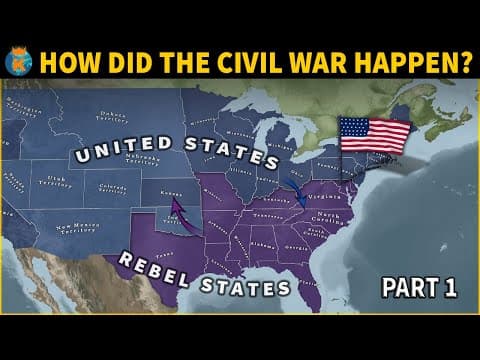
How did the American Civil War Actually Happen? (Part 1) - From 1819 to 1861
what were the political impacts like Effects on soldiers and civilians , Role of women and African Americans , Changes in societal norms of the American Civil War
Essay
The American Civil War had profound political impacts that reshaped the roles of soldiers and civilians, transformed societal norms, and significantly altered the status of women and African Americans. The war catalyzed a shift in political power dynamics, leading to increased federal authority and the redefinition of citizenship and rights in the United States.
The broader historical context of the Civil War includes the long-standing tensions between the North and South over issues such as slavery, states' rights, and economic differences. The war, fought from 1861 to 1865, was not only a military conflict but also a pivotal moment in American history that prompted significant social and political changes. The aftermath of the war set the stage for Reconstruction, a period aimed at reintegrating the Southern states and addressing the status of newly freed African Americans.
The effects of the Civil War on soldiers were profound, as many returned home with physical and psychological scars. The war led to the establishment of veterans' organizations and a growing recognition of the need for support systems for those who served. Civilians, particularly in the South, faced devastation from battles fought on their land, leading to economic hardship and a reconfiguration of social structures. The war also prompted a shift in the perception of government responsibility, as the federal government took on a more active role in addressing the needs of both soldiers and civilians.
The role of women during the Civil War expanded significantly. With many men away fighting, women took on roles traditionally held by men, including working in factories, serving as nurses, and managing farms and businesses. This shift not only challenged existing gender norms but also laid the groundwork for the women's suffrage movement in the post-war years. Women like Clara Barton and Dorothea Dix became prominent figures, advocating for the rights and recognition of women in society.
African Americans experienced a dramatic transformation in their societal status due to the Civil War. The Emancipation Proclamation of 1863, issued by President Abraham Lincoln, declared the freedom of slaves in Confederate-held territory, marking a significant step toward the abolition of slavery. The war also saw the enlistment of African American soldiers in the Union Army, who fought bravely for their freedom and the future of the nation. This participation not only challenged prevailing racial stereotypes but also contributed to the eventual passage of the 13th, 14th, and 15th Amendments, which aimed to secure rights for African Americans.
The Civil War thus acted as a catalyst for change, reshaping political structures and societal norms. The increased involvement of women and African Americans in public life, along with the redefinition of citizenship and rights, reflected a significant shift in American society. The war's legacy continued to influence political discourse and social movements long after the last shots were fired.
Key Concept
The American Civil War and Reconstruction era led to significant changes in the political landscape, including the expansion of federal power and the redefinition of citizenship, which had lasting impacts on societal norms and the roles of women and African Americans. (KC-6.2.I)
Related Video
Reconstruction and 1876: Crash Course US History #22
Reconstruction: The Good, the Bad and the Ugly | 5 Minute Video

what were the aftermath of the American Civil War
Answer
The aftermath of the American Civil War (1861-1865) was profound and multifaceted, leading to significant social, political, and economic changes in the United States. The most immediate consequence was the preservation of the Union and the abolition of slavery, which was formalized by the 13th Amendment in 1865. The war also resulted in the Reconstruction era, a complex period aimed at rebuilding the South and integrating formerly enslaved people into society. This era saw the passage of the 14th and 15th Amendments, granting citizenship and voting rights to African Americans, respectively. However, Reconstruction faced significant resistance, leading to the rise of Jim Crow laws and systemic racism that would persist for decades. Economically, the South was devastated, requiring extensive rebuilding, while the North experienced industrial growth. The war also shifted the balance of power in the federal government, leading to increased federal authority over states. Overall, the Civil War's aftermath set the stage for ongoing struggles over civil rights and the role of government in American life.
Key Concept
The Civil War and Reconstruction fundamentally transformed American society, politics, and the economy, leading to both progress and persistent challenges regarding civil rights and federal authority. (KC-5.2.I)
Explanation
The aftermath of the Civil War initiated significant changes, including the abolition of slavery, the Reconstruction efforts to integrate African Americans into society, and the establishment of new amendments that aimed to secure civil rights, all of which shaped the future trajectory of the United States.
Related Video
Reconstruction and 1876: Crash Course US History #22
Reconstruction: The Good, the Bad and the Ugly | 5 Minute Video
What were the key social and economic changes in the United States following the American Civil War?
Answer
Following the American Civil War, the United States experienced significant social and economic changes. Economically, the war accelerated industrialization, particularly in the North, leading to the rise of factories and urbanization as people moved to cities for work. The South, however, faced devastation and a shift from an agrarian economy reliant on slavery to one that had to adapt to free labor. The introduction of sharecropping and tenant farming became common as many former slaves sought economic independence. Socially, the Reconstruction era aimed to integrate formerly enslaved people into society, leading to the establishment of the Freedmen's Bureau and the passage of the 13th, 14th, and 15th Amendments, which sought to secure rights for African Americans. However, this period also saw the rise of Jim Crow laws and systemic racism, which enforced segregation and disenfranchised Black citizens. Overall, the post-Civil War era was marked by a complex interplay of progress and regression in social and economic spheres.
Key Concept
The post-Civil War era was characterized by significant transformations in social structures and economic practices, particularly regarding race relations and industrial growth. (KC-5.1)
Explanation
The changes following the Civil War laid the groundwork for modern America, highlighting the tensions between progress and the persistence of inequality.
Related Video
my tummy looks like this 🫠👀 #ashortaday

Obama speaks on police, race relations

Explain following items in details1.Dred Scott v.Sandford
2.Lincoln-Douglas debates
3.The election of 1860
4.Southern states seceded and established the Confederate State of America
5.Salmon Chase and Greenbacks
6.Conscription Law and “Commutation Fee”
7.Emancipation Proclamation
8.Battle of Gettysburg
1 Answer
The Dred Scott v. Sandford case (1857) was a landmark Supreme Court decision that ruled African Americans, whether enslaved or free, could not be American citizens and therefore had no standing to sue in federal court. The case arose when Dred Scott, an enslaved man, sued for his freedom based on his residence in free territories. The Court, led by Chief Justice Roger B. Taney, ruled that the Missouri Compromise was unconstitutional, asserting that Congress did not have the authority to prohibit slavery in the territories. This decision intensified national divisions over slavery and contributed to the rise of the Republican Party.
2 Answer
The Lincoln-Douglas debates (1858) were a series of seven debates between Abraham Lincoln and Stephen A. Douglas during their campaign for the U.S. Senate from Illinois. The debates focused primarily on the issue of slavery and its expansion into the territories. Lincoln argued against the spread of slavery, while Douglas advocated for popular sovereignty, allowing territories to decide for themselves. Although Douglas won the election, Lincoln gained national recognition, which helped him secure the presidency in 1860. The debates highlighted the deepening sectional conflict over slavery.
3 Answer
The election of 1860 was a pivotal moment in American history, marked by the fragmentation of the Democratic Party into Northern and Southern factions. Abraham Lincoln, the Republican candidate, opposed the expansion of slavery into the territories, while the Southern Democrats, led by John C. Breckinridge, supported it. The election resulted in Lincoln winning the presidency without carrying a single Southern state, which alarmed many in the South and contributed to the secession of Southern states. Lincoln's election was seen as a direct threat to the institution of slavery, leading to the Civil War.
4 Answer
Following Lincoln's election in 1860, several Southern states seceded from the Union, beginning with South Carolina in December 1860. They formed the Confederate States of America in February 1861, with Jefferson Davis as its president. The secession was driven by fears that the federal government would abolish slavery and infringe upon states' rights. This act of rebellion against the Union was a significant factor leading to the outbreak of the Civil War in April 1861. The Confederacy sought to establish itself as a separate nation, fundamentally challenging the unity of the United States.
5 Answer
Salmon Chase was a prominent politician and abolitionist who served as Secretary of the Treasury under President Lincoln. He was instrumental in the introduction of "greenbacks," or paper currency, to help finance the Civil War. The Legal Tender Act of 1862 allowed the government to issue these notes, which were not backed by gold or silver, to meet wartime expenses. This move was controversial but necessary for the Union's financial stability during the war, marking a significant shift in American monetary policy. Chase's efforts helped establish a more flexible and modern banking system.
6 Answer
The Conscription Law, enacted in 1863, was the first federal draft in American history, requiring men aged 20 to 45 to serve in the military. Those who could afford it could pay a "commutation fee" to avoid service, which led to resentment among poorer citizens who could not afford to buy their way out. This law was controversial and sparked riots, most notably the New York City Draft Riots in July 1863, where anti-draft sentiment and racial tensions erupted into violence. The law was a reflection of the desperate need for troops as the Civil War dragged on.
7 Answer
The Emancipation Proclamation, issued by President Lincoln on January 1, 1863, declared that all enslaved people in Confederate-held territory were to be set free. While it did not immediately free a single slave, it was a crucial turning point in the Civil War, transforming the conflict from a fight for the Union into a battle for freedom. The proclamation also allowed for the enlistment of African American soldiers in the Union Army, bolstering its ranks and adding a moral imperative to the war effort. It signaled a shift in Lincoln's policy towards slavery and aimed to weaken the Confederacy.
8 Answer
The Battle of Gettysburg, fought from July 1 to July 3, 1863, was a significant turning point in the Civil War. It was the largest battle ever fought in North America and resulted in a Union victory, halting the Confederate invasion of the North led by General Robert E. Lee. The battle resulted in heavy casualties, with approximately 51,000 soldiers killed, wounded, or missing. The Union's victory at Gettysburg, coupled with the fall of Vicksburg the day before, marked a turning point in the war, boosting Northern morale and leading to a shift in the momentum of the conflict in favor of the Union.
Key Concept
The events leading up to and during the Civil War illustrate the deepening divisions in American society over issues of slavery, states' rights, and national identity, culminating in a conflict that would reshape the nation. (KC-5.1.II)
Explanation
Each of these events played a crucial role in the lead-up to the Civil War, highlighting the tensions between North and South and the struggle over the future of slavery in America.
Related Video
Key Events That Sparked the American Civil War | Short Video - Civil War Explained
Shattered Union: The Years Leading Up To The American Civil War | Episode 1 | The American Story
Make ap test questions for this chapter, including 20MCQ, 10SAQ, 5DBQ, 2LEQ with answer in details
Sure! To create AP test questions for a specific chapter in U.S. History, I would need to know which chapter or topic you're focusing on. Could you please provide that information?
Unit 5 Chapter 14 American Civil War
Sure! Unit 5, Chapter 14 focuses on the American Civil War, a pivotal conflict in U.S. history that lasted from 1861 to 1865. This chapter typically covers the causes of the war, key battles, significant figures, and the impact of the war on American society.
Some important topics you might explore include:
1. Causes of the Civil War: Issues like slavery, states' rights, and economic differences between the North and South.
2. Key Battles: Major battles such as Gettysburg, Antietam, and Fort Sumter.
3. Important Figures: Leaders like Abraham Lincoln, Jefferson Davis, Ulysses S. Grant, and Robert E. Lee.
4. Emancipation Proclamation: Lincoln's 1863 order that freed slaves in the Confederate states.
5. Impact of the War: The war's effects on the nation, including Reconstruction and the long-term consequences for civil rights.
If you have specific questions or topics within this chapter that you'd like to discuss, feel free to ask!
Make ap test questions for chapter 14 American Civil War, including 20MCQ, 10SAQ, 5DBQ, 2LEQ with answer in details
Sure! Here’s a set of AP test questions for Chapter 14 on the American Civil War, including multiple-choice questions (MCQ), short answer questions (SAQ), document-based questions (DBQ), and long essay questions (LEQ).
Multiple Choice Questions (MCQ)
1. What was the primary cause of the American Civil War?
a) Economic differences
b) Slavery
c) States' rights
d) Territorial expansion
Answer: b) Slavery
2. Which event marked the beginning of the Civil War?
a) The Battle of Gettysburg
b) The firing on Fort Sumter
c) The Emancipation Proclamation
d) The Dred Scott decision
Answer: b) The firing on Fort Sumter
3. Who was the President of the Confederate States during the Civil War?
a) Ulysses S. Grant
b) Jefferson Davis
c) Robert E. Lee
d) Abraham Lincoln
Answer: b) Jefferson Davis
4. The Emancipation Proclamation was issued in what year?
a) 1861
b) 1862
c) 1863
d) 1864
Answer: c) 1863
5. Which battle is considered the turning point of the Civil War?
a) Battle of Antietam
b) Battle of Vicksburg
c) Battle of Gettysburg
d) Battle of Bull Run
Answer: c) Battle of Gettysburg
6. What was the significance of the Battle of Antietam?
a) It was the first major battle in the North.
b) It led to the Emancipation Proclamation.
c) It was the bloodiest single-day battle in American history.
d) All of the above.
Answer: d) All of the above.
7. Which of the following was a major advantage of the North during the Civil War?
a) Superior military leadership
b) Larger population
c) Stronger commitment to the war
d) Better knowledge of the terrain
Answer: b) Larger population
8. What was the main purpose of the Freedmen's Bureau?
a) To provide military support to the South
b) To assist freed slaves and poor whites in the South
c) To promote the construction of railroads
d) To enforce the Emancipation Proclamation
Answer: b) To assist freed slaves and poor whites in the South
9. Which amendment abolished slavery in the United States?
a) 13th Amendment
b) 14th Amendment
c) 15th Amendment
d) 16th Amendment
Answer: a) 13th Amendment
10. What was the primary goal of the Union's Anaconda Plan?
a) To invade the South
b) To blockade Southern ports
c) To capture Richmond
d) To gain foreign allies
Answer: b) To blockade Southern ports
11. Who was the commander of the Union Army at the end of the Civil War?
a) George McClellan
b) Ulysses S. Grant
c) William Tecumseh Sherman
d) Robert E. Lee
Answer: b) Ulysses S. Grant
12. The term "total war" is most closely associated with which Union general?
a) George Meade
b) William Tecumseh Sherman
c) Philip Sheridan
d) Ulysses S. Grant
Answer: b) William Tecumseh Sherman
13. What was the main outcome of the Battle of Vicksburg?
a) The Union gained control of the Mississippi River.
b) The Confederacy won a decisive victory.
c) It ended the war.
d) It led to the capture of Atlanta.
Answer: a) The Union gained control of the Mississippi River.
14. Which of the following was a key factor in the South's defeat?
a) Lack of military leadership
b) Economic disadvantages
c) Poor morale among troops
d) All of the above
Answer: d) All of the above
15. What was the significance of the Gettysburg Address?
a) It declared the war was over.
b) It emphasized the principles of liberty and equality.
c) It called for immediate peace negotiations.
d) It was a military strategy.
Answer: b) It emphasized the principles of liberty and equality.
16. The term "Copperheads" referred to:
a) Southern sympathizers in the North
b) Radical Republicans
c) Northern Democrats who opposed the war
d) Union soldiers
Answer: c) Northern Democrats who opposed the war
17. What was the main purpose of the 14th Amendment?
a) To grant women the right to vote
b) To define citizenship and guarantee equal protection
c) To abolish slavery
d) To allow income tax
Answer: b) To define citizenship and guarantee equal protection
18. Which battle was fought in 1861 and resulted in a Confederate victory, boosting Southern morale?
a) Battle of Shiloh
b) Battle of Bull Run
c) Battle of Fredericksburg
d) Battle of Antietam
Answer: b) Battle of Bull Run
19. What was the main goal of Sherman's March to the Sea?
a) To capture Richmond
b) To destroy Southern morale and resources
c) To recruit more soldiers
d) To negotiate peace
Answer: b) To destroy Southern morale and resources
20. The Civil War officially ended with the surrender of which Confederate general?
a) Stonewall Jackson
b) Robert E. Lee
c) Jefferson Davis
d) John Bell Hood
Answer: b) Robert E. Lee
Short Answer Questions (SAQ)
1. Explain the significance of the Emancipation Proclamation in the context of the Civil War.
Answer: The Emancipation Proclamation, issued by President Lincoln in 1863, declared that all slaves in Confederate-held territory were to be set free. This shifted the war's focus to include the abolition of slavery as a goal, bolstered the Union's moral cause, and allowed for the enlistment of African American soldiers in the Union Army.
2. Describe the impact of the Civil War on the Southern economy.
Answer: The Civil War devastated the Southern economy, leading to the destruction of infrastructure, loss of labor due to emancipation, and a shift from an agrarian economy to one that had to adapt to new realities. Many plantations were destroyed, and the South faced significant challenges in rebuilding and transitioning to a new economic system.
3. Analyze the role of women during the Civil War.
Answer: Women played crucial roles during the Civil War, serving as nurses, spies, and even soldiers in disguise. They organized aid societies, provided medical care, and took on roles in factories and farms as men went off to fight. The war also laid the groundwork for the women's suffrage movement as women began to advocate for their rights more vigorously.
4. Discuss the significance of the Battle of Gettysburg.
Answer: The Battle of Gettysburg, fought in July 1863, was a turning point in the Civil War. It marked the end of Lee's invasion of the North and resulted in significant casualties for both sides. The Union victory bolstered Northern morale and is often seen as a pivotal moment that shifted the momentum of the war in favor of the Union.
5. Evaluate the effectiveness of the Union's Anaconda Plan.
Answer: The Anaconda Plan was an effective strategy that aimed to suffocate the Confederacy economically by blockading Southern ports and controlling the Mississippi River. While it took time to implement fully, the blockade significantly reduced the South's ability to trade and resupply, contributing to the eventual Union victory.
6. What were the main goals of Reconstruction after the Civil War?
Answer: The main goals of Reconstruction were to rebuild the South, integrate formerly enslaved people into society as free citizens, and restore the Union. This involved political, social, and economic changes, including the establishment of new laws and amendments to protect the rights of African Americans.
7. How did the Civil War affect the concept of federalism in the United States?
Answer: The Civil War reinforced the power of the federal government over the states. The conflict highlighted the limitations of states' rights when it came to issues like slavery and secession, leading to a stronger federal authority and the establishment of constitutional amendments that aimed to protect individual rights.
8. Identify and explain one major military strategy used by the Union during the Civil War.
Answer: One major military strategy used by the Union was the use of total war, exemplified by General Sherman's March to the Sea. This strategy aimed to destroy not only enemy troops but also the economic resources and infrastructure that supported the Confederate war effort, thereby breaking the will of the Southern populace.
9. Discuss the role of African American soldiers in the Civil War.
Answer: African American soldiers played a vital role in the Civil War, with approximately 180,000 serving in the Union Army. They fought bravely in numerous battles, contributed to the Union's manpower, and their participation challenged prevailing racial stereotypes, ultimately leading to greater recognition of their rights and contributions.
10. What were the long-term effects of the Civil War on American society?
Answer: The long-term effects of the Civil War included the abolition of slavery, significant changes in social and economic structures in the South, and the beginning of the civil rights movement. The war also set the stage for ongoing debates about federal versus state power and the rights of individuals, shaping the future of American democracy.
Document-Based Questions (DBQ)
1. Analyze the impact of the Emancipation Proclamation on the Civil War and its aftermath. Use specific examples from the documents provided.
Answer: The Emancipation Proclamation shifted the war's focus to include the abolition of slavery, encouraged African American enlistment in the Union Army, and altered international perceptions of the conflict. It also laid the groundwork for the 13th Amendment, which abolished slavery.
2. Evaluate the effectiveness of military strategies employed by both the Union and the Confederacy. Use evidence from the documents to support your analysis.
Answer: The Union's Anaconda Plan and total war strategies were effective in weakening the Confederacy, while the Confederacy relied on defensive tactics and aggressive offensives. The effectiveness varied, with the Union ultimately achieving victory through a combination of strategies that targeted both military and economic resources.
3. Discuss the role of key individuals in the Civil War, such as Abraham Lincoln, Ulysses S. Grant, and Robert E. Lee, using the documents provided.
Answer: Lincoln's leadership and vision for a united nation were crucial, Grant's military strategies and determination led to Union victories, and Lee's tactical brilliance kept the Confederacy competitive. Each played a significant role in shaping the course and outcome of the war.
4. Analyze the social changes that occurred in the United States as a result of the Civil War, referencing the documents.
Answer: The Civil War led to significant social changes, including the abolition of slavery, the rise of African American communities, and shifts in gender roles as women took on new responsibilities. These changes laid the foundation for future civil rights movements.
5. Assess the impact of the Civil War on the political landscape of the United States, using the documents as evidence.
Answer: The Civil War resulted in a stronger federal government, the passage of amendments that expanded civil rights, and the emergence of new political ideologies. The conflict also set the stage for Reconstruction and ongoing debates about civil rights and federal authority.
Long Essay Questions (LEQ)
1. Assess the causes of the American Civil War, focusing on the social, economic, and political factors that contributed to the conflict.
Answer: The causes of the Civil War were multifaceted, including the moral and economic conflicts over slavery, states' rights versus federal authority, and the impact of westward expansion. The differing economic systems of the North and South created tensions that ultimately led to secession and war.
2. Analyze the consequences of the Civil War on American society, particularly in terms of race relations and the role of the federal government.
Answer: The Civil War had profound consequences for American society, including the abolition of slavery and the establishment of civil rights for African Americans. It also resulted in a more powerful federal government, which took on a greater role in regulating social and economic issues, setting the stage for future reforms and conflicts over civil rights.
Feel free to ask if you need more questions or further details on any topic!
list the documents from which did the 5 DBQ come
Answer
The documents for the 5 Document-Based Questions (DBQs) in AP US History can vary by year and exam, but they typically include primary sources such as letters, speeches, government documents, and historical analyses. To provide a specific list, one would need to refer to the particular DBQ prompt for the exam in question. Commonly used documents might include the Declaration of Independence, Federalist Papers, Supreme Court decisions, and various historical treaties or legislation.
Key Concept
The use of primary sources in historical analysis is essential for understanding the complexities of historical events and perspectives. (KC-1.2.I)
Explanation
The DBQs are designed to assess students' abilities to analyze and interpret historical documents, which is crucial for developing a nuanced understanding of U.S. history. Each document provides insight into the historical context and perspectives of the time.
Related Video
How to Analyze Primary Sources and Secondary Sources

Analyzing Primary Sources

© 2023 AskSia.AI all rights reserved