
AskSia
Plus

What were the primary causes of the United States' entry into World War I?
Dec 15, 2023

What were the primary causes of the United States' entry into World War I?

Answer
The primary causes of the United States' entry into World War I were unrestricted submarine warfare by Germany, the Zimmermann Telegram, economic ties with the Allies, and a push for moral diplomacy.
Key Concept
The role of the United States in World War I and its reasons for entering the conflict in 1917. (KC-7.2.II.C)
Explanation
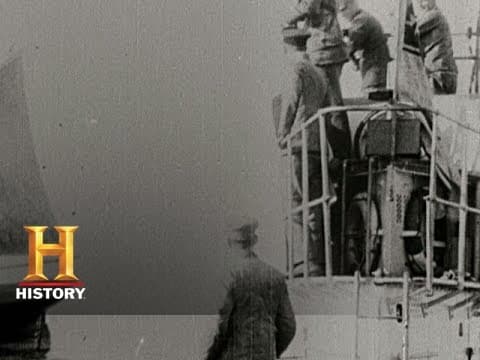
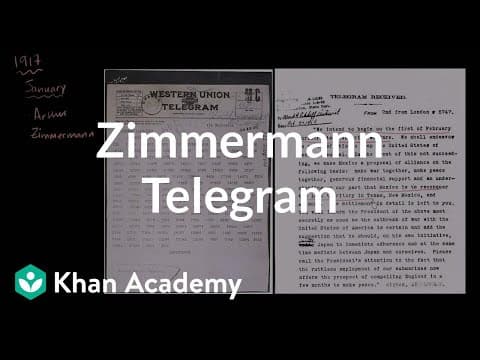
The unrestricted submarine warfare by Germany, which included the sinking of the Lusitania and other ships with American passengers, violated the traditional rights of neutrals and provoked public outrage in the US. The Zimmermann Telegram, in which Germany proposed a military alliance with Mexico against the United States, was intercepted and further inflamed American public opinion. Economic ties with the Allies, particularly with Britain and France, also played a role, as American banks and businesses had significant financial stakes in an Allied victory. Lastly, President Woodrow Wilson's ideal of moral diplomacy and the desire to make the world "safe for democracy" contributed to the decision to enter the war.
Related Video

WWI The First Modern War: The Germans Engage In Unrestricted Submarine Warfare | History
Zimmermann Telegram | The 20th century | World history | Khan Academy
© 2023 AskSia.AI all rights reserved