
AskSia
Plus

What was the primary purpose of the Monroe Doctrine?
Dec 19, 2024

What was the primary purpose of the Monroe Doctrine?

Answer
The primary purpose of the Monroe Doctrine, articulated in 1823 by President James Monroe, was to assert that the Western Hemisphere was no longer open to European colonization and that any attempt by European powers to interfere in the affairs of the Americas would be viewed as a hostile act against the United States. This doctrine aimed to protect the newly independent nations of Latin America and to establish the U.S. as a dominant power in the region.
Key Concept
The Monroe Doctrine established a significant U.S. foreign policy principle that aimed to limit European influence in the Americas, reflecting the growing assertiveness of the United States in international affairs. (KC-3.2.II)
Explanation
The Monroe Doctrine was a pivotal moment in U.S. history, as it marked the beginning of a more interventionist American foreign policy and set the stage for future U.S. involvement in Latin America. It demonstrated the U.S. commitment to protecting its interests and those of its neighbors from European intervention.
Related Video

Monroe Doctrine 101 | What is the Monroe Doctrine?
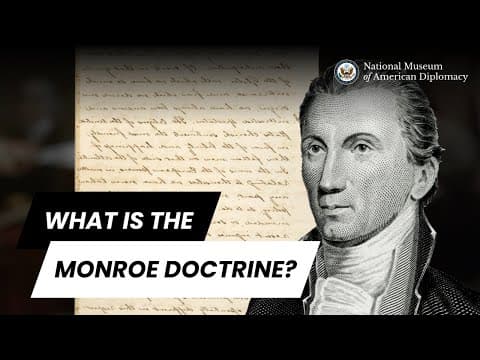
President James Monroe STANDS UP to European Colonialism in 1823!
© 2023 AskSia.AI all rights reserved