
AskSia
Plus

Describe two major reasons that led to the Salem Witch Trials in the late 17th c...
Jan 13, 2024

Describe two major reasons that led to the Salem Witch Trials in the late 17th century.

Answer
Two major reasons that led to the Salem Witch Trials in the late 17th century were widespread fear and uncertainty due to various social, political, and religious factors, and existing local conflicts. The fear and uncertainty were partly a result of the recent smallpox epidemic, frontier wars with Native Americans, and the threat of attack from neighboring New France, which contributed to a general sense of peril and the need to find scapegoats. Additionally, the Puritan belief system, which emphasized the reality of the Devil and the presence of witchcraft, provided a religious framework that made accusations of witchcraft plausible to the community. Local conflicts, including family feuds and rivalries, as well as disputes over property and status, often played out in the context of witchcraft accusations, as individuals used the trials as an opportunity to settle scores or assert authority.
Key Concept
The Salem Witch Trials reflected the tensions and anxieties of a rapidly evolving society facing both internal and external pressures. (KC-2.1.II)
Explanation
The Salem Witch Trials can be understood as a manifestation of the broader anxieties and conflicts within Puritan society in New England. The trials were a way for the community to address and attempt to control the uncertainties and fears that arose from both tangible threats, such as disease and warfare, and intangible ones, like the spiritual danger posed by the Devil, as understood within their religious framework. The local conflicts that played out in the trials underscore the personal and social dimensions of these historical events.
Related Video

The Truth of the Salem Witch Trials
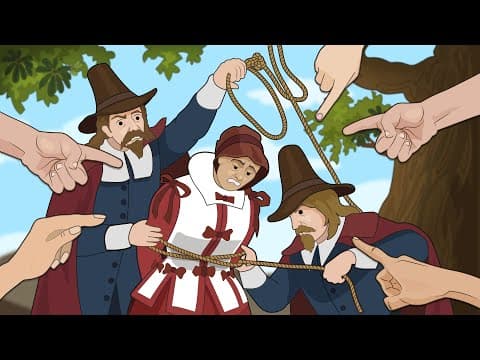
The Salem Witch Trials
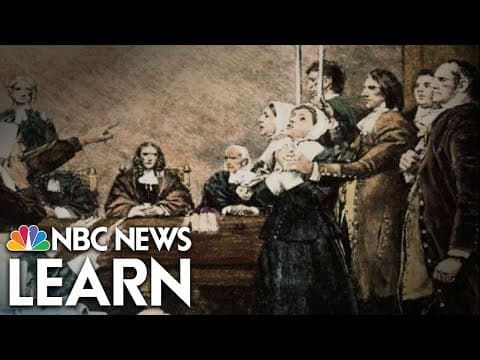
What were the primary accusations made during the Salem Witch Trials?
Answer
The primary accusations made during the Salem Witch Trials were that individuals were practicing witchcraft, consorting with the devil, and using supernatural powers to harm others or influence events. These accusations often stemmed from personal vendettas, community tensions, and widespread fear of the unknown, leading to a series of trials and executions in Salem, Massachusetts, in 1692.
Key Concept
The Salem Witch Trials reflected the social, religious, and economic tensions within colonial American communities, as well as the Puritan belief system and the fear of the supernatural. (KC-2.1.II.C)
Explanation
The Salem Witch Trials occurred within the context of a Puritan society that was deeply religious and superstitious. The trials were a manifestation of the fears and anxieties of the time, including the belief in the devil's active presence in the world and the threat he posed through witches. These events also highlighted the dangers of isolationism, religious extremism, and a lack of due process in the legal system.
Related Video
What really happened during the Salem Witch Trials - Brian A. Pavlac

I Was There: The Dark History of the Salem Witch Trials (Season 1)

What was the role of spectral evidence in the Salem Witch
Answer
The role of spectral evidence in the Salem Witch Trials was significant. Spectral evidence refers to testimony that the spirit or specter of the accused witch appeared to the witness in a dream or vision and was perceived as causing harm or affliction. This type of evidence, which was not tangible and could not be proven or disproven, was heavily relied upon during the trials. Many people were convicted and some were executed based largely on spectral evidence, which was later deemed unreliable and inadmissible in court.
Key Concept
The Salem Witch Trials and the role of spectral evidence can be understood within the context of the religious and social dynamics of the time, reflecting the Puritan community's fear of the devil and the supernatural, as well as the tensions arising from social and economic changes in New England. (KC-2.1.II)
Explanation
The Salem Witch Trials occurred in a period of intense religious belief where the Puritanical worldview included a literal belief in the devil and witchcraft. Spectral evidence was a manifestation of these beliefs and was used to settle personal vendettas or address community anxieties during a time of social upheaval and change. The acceptance of such evidence highlights the intersection of religion, law, and community dynamics in early colonial America.
Related Video
What really happened during the Salem Witch Trials - Brian A. Pavlac
I Was There: The Dark History of the Salem Witch Trials (Season 1)
What were the consequences of the use of spectral evidence in the Salem Witch trials?
Answer
The use of spectral evidence in the Salem Witch Trials had several significant consequences. It led to a heightened sense of hysteria and panic, as accusations could be made without tangible proof, only based on visions or dreams. This resulted in the conviction and execution of 20 individuals, as well as the imprisonment of many others. The trials also caused lasting divisions within the community of Salem and damaged reputations that affected families for generations. Furthermore, the trials highlighted the dangers of extremism and the importance of due process and rational legal procedures. In the aftermath, the use of spectral evidence was eventually discredited and ceased to be acceptable in court, leading to the release and exoneration of many of the accused.
Key Concept
The Salem Witch Trials reflect the social, political, and religious tensions in late 17th-century Puritan New England, as well as the challenges of establishing a cohesive community in the face of external and internal threats. (KC-2.2.II.C)
Explanation
The Salem Witch Trials occurred within the context of a society that was deeply religious and often fearful of the unknown, including the threat of witchcraft. The trials exacerbated existing community tensions and reflected the broader challenges of maintaining order and social cohesion in the early colonial period. They also underscored the importance of establishing legal norms and procedures that could prevent such miscarriages of justice in the future.
Related Video
What really happened during the Salem Witch Trials - Brian A. Pavlac
I Was There: The Dark History of the Salem Witch Trials (Season 1)
© 2023 AskSia.AI all rights reserved